 Mokhtar Yonis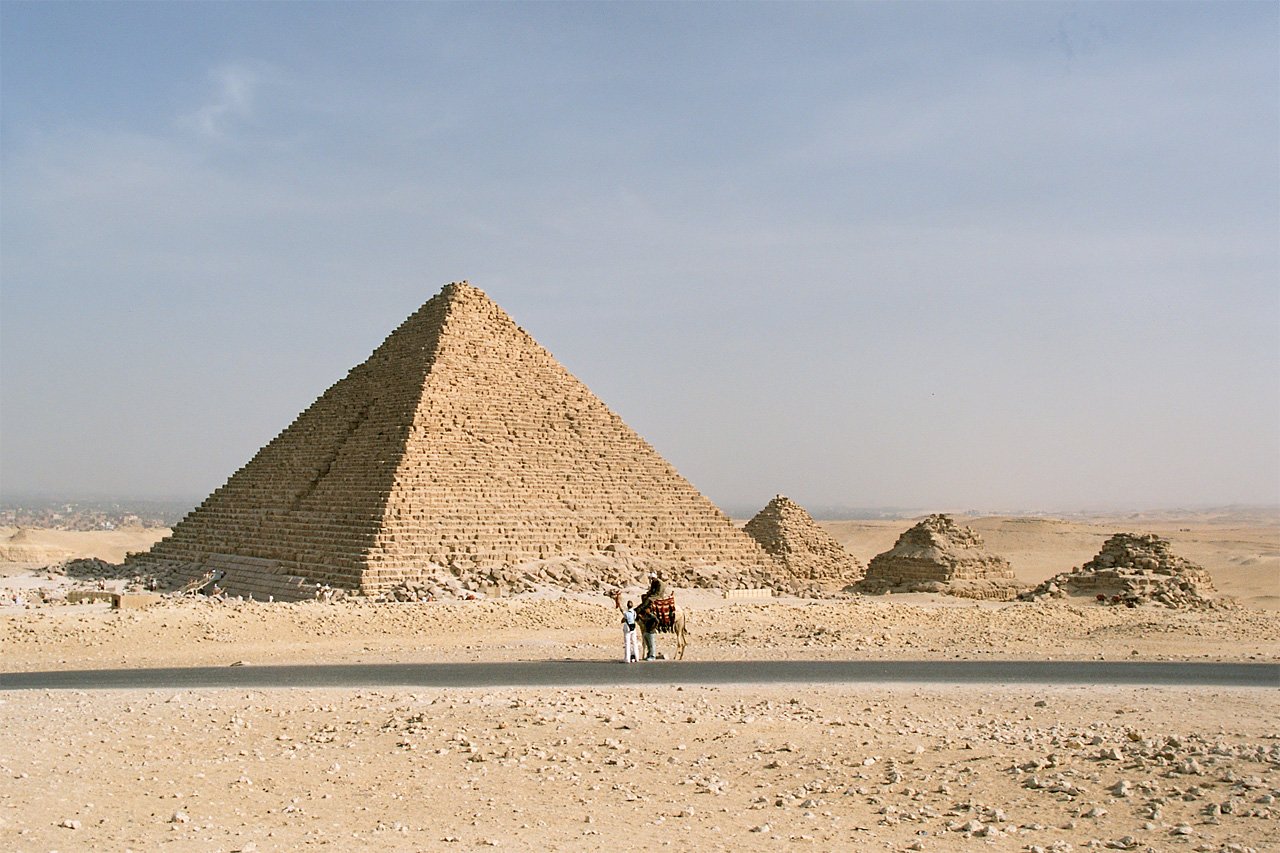
Quick Summary
The pyramid of Menkaure is the smallest of all at the Giza Plateau, which was built for the pharaoh Menkaure, who is widely known from his Greek name, Mycerinus; he was the ruler in the fourth dynasty of the Old Kingdom. Visitors at the pyramid of Menkaure notice very unique features, which makes it a must-visit pyramid in Giza. Below we are mentioning the Menkaure pyramid in detail. So, know about it in depth before you actually witness it from close during your Egyptian vacation.
Table of Contents
-
Introduction—The Pyramid of Menkaure
-
Construction and Archaeology of the Pyramid Menkaure
-
What is inside the pyramid of Menkaure?
-
What was found inside Menkaure’s pyramid?
-
Pyramid Complex of the Smallest Pyramid in Egypt—Menkaure
-
What was found in the smaller pyramids?
-
Is it worth visiting the Menkaure pyramid?
-
Why was Menkaure’s pyramid the smallest?
-
Can you go inside the Menkaure Pyramid?
-
Conclusion
Introduction—The Pyramid of Menkaure
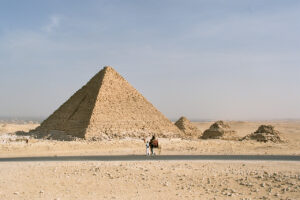
The pyramid of Menkaure is the third and also considered the smallest pyramid in the world, located in the Giza plateau, which is located 13 to 18 kilometers from Cairo. It is a tomb that was built for Menkaure and was named “Netjer-er-Menkaure” in the historic Egyptian language, which translates as “Menkaure Is Divine.” Although it is smaller than the pyramids of Khufu and Khafre, it remains an important monument because of its unique design, construction material, and historical value.
Location: The pyramid of Menkaure stands on the southwestern side of the Giza Plateau, beside the larger pyramids of Khufu and Khafre. It is part of a complete pyramid complex that includes a mortuary temple where rituals for the king are performed, a valley temple connected by a causeway, and three smaller pyramids built near its southern side.
The pyramid is an architectural wonder; it was designed as Menkaure’s eternal resting place, following the ancient Egyptian belief that kings needed a grand tomb to continue their journey into the afterlife. It is believed that it was constructed during the Fourth Dynasty, yet the exact dates of Menkaure’s reign are uncertain, but historians believe that the pyramid was completed around the 26th century BCE. With that, the archaeologists have also found the sign that some parts of the pyramid complex were not fully completed. The unfinished area suggested that Menkaure may have died before the entire project was finished; then his successor, the pharaoh Shepseskaf, is believed to have completed the remaining work.
Construction and Archaeology of the Pyramid Menkaure
The pyramid of Menkaure’s height originally was 65.5 meters (215 feet) high, which makes it the smallest of all three major pyramids. Today it stands around 61 meters (200 feet) tall with a square base of approximately 108.5 meters (356 feet); the pyramid was built with a slope angle of about 51 degrees. These are basic features of the pyramid. Now let’s explore the other aspects of the archaeology that make it unique.
- In the research it was found that the builders first had to prepare the uneven rocky ground of the Giza Plateau, so they cut and removed the limestone from the nearby areas and used the pieces to level the foundation.
- The inner core of the pyramid was made from the large blocks of limestone arranged in layers, and the outer section was covered with red granite, brought from Aswan, which was a rare and valuable material. Some granite sections have remained unfinished, possibly because Pharaoh Menkaure died before the work was completed.
- The pyramid may have originally been planned as a step pyramid, with large horizontal levels; later, the builders filled the steps and covered them with smooth casing stones to create the final pyramid shape. A large opening on the northern side of the pyramid provides a clue about its internal construction.
- The entrance of the Menkaure pyramid is located on the northern side, which leads to a descending passage made partly with granite. The Pyramid of Menkaure was different from earlier pyramids because some of its internal rooms had decoration.
- It is believed that the Pyramid of Menkaure introduced new ideas in pyramid design and burial architecture. Its detailed internal layout influenced later royal tombs and has become an important step between the earlier simple pyramid designs and the more complex royal tombs that followed later in the Egyptian civilization.
What is inside the pyramid of Menkaure?
The entrance is on the northern face with a descending passage that takes you to the antechamber, whose walls feature carved panels designed to resemble a palace façade. Then there is a sloping corridor that leads to a large rectangular chamber with a broad niche at its western end. Beneath that chamber there is another passage that leads you to the main burial chamber, which is lined with red Aswan granite and has a distinctive roof made from large granite beams. Near the burial chamber is another room with six smaller storage chambers cut into the rock. This complex internal arrangement made Menkaure’s pyramid an important development in the design of later Egyptian royal tombs.
What was found inside Menkaure’s pyramid?
The famous Menkaure sarcophagus discovered by Howard Vyse in the 1830s was later lost when the ship carrying it, the Beatrice, which was taking it to London, sank in the Mediterranean Sea in 1838. Archaeologists also found human remains and burial materials associated with the pyramid complex, but their connection with the pharaoh has been debated. The six small storage rooms may have been intended for canopic equipment and royal burial items, although archaeologists cannot establish their exact contents with certainty.
A boat-shaped hieroglyph painted on a limestone block was discovered near the pyramid, possibly indicating a connection with a solar boat installation. Importantly, no confirmed original burial treasure of Menkaure has survived inside the pyramid. Like other ancient royal pyramids, it was probably robbed in antiquity.
Pyramid Complex of the Smallest Pyramid in Egypt—Menkaure
The pyramid of Menkaure was part of a larger funerary complex that includes a mortuary temple, valley temple, and a long causeway; with that, it also consists of three pyramids that were built on the southern side.
Mortuary Temple: It is located on the eastern side of the pyramid and used for rituals and offerings for the dead king. The temple has an open court, storeroom, chapel, and other rooms; the alabaster statue of Menkaure was discovered here.
Causeway: This connects the mortuary temple with the valley te mple, and it was more than 600 meters long and was probably unfinished when Menkaure died and was later completed by Shepseskaf, his successor.
Valley Temple: It is located at the lower end of the complex near the ancient harbor. It contained an entrance area, open court, sanctuary, and store rooms; also, several Menkaure triads were discovered. Shepseskaf completed much of the temple after the pharaoh’s death.
Queens’ Pyramids: Three smaller pyramids were built on the southern side of the pyramid of Menkaure, which are known as G3-a, G3-b, and G3-c. These pyramids were part of Menkaure’s funerary complex and were likely connected with members of the royal family, possibly his queens. However, the exact owners are still uncertain. Each pyramid had its own small temple on the eastern side and underground chambers, and they were surrounded by their own enclosure walls and connected to the main pyramid complex.
What was found in the smaller pyramids?
G3-a: A granite sarcophagus was found, but its original owner is uncertain.
G3-b: A small granite sarcophagus containing bones, wood, and bandage fragments was found.
G3-c: No sarcophagus was found, and the burial chamber was unfinished.
Is it worth visiting the Menkaure pyramid?
Yes, as you start your vacation in Egypt by visiting the seventh wonder, the Great Pyramid of Khufu, exploring Khafre’s and Menkaure’s pyramids will make your exploration complete at Giza, and then further, you can explore the history of pharaohs with a Nile cruise in Egypt between Aswan and Luxor, as then you can also get a chance to explore the Valley of the Kings in Luxor, and you can get an insight into how the royal burial process was a part of the Egyptian civilization from the Old Kingdom to the New Kingdom.
Why was Menkaure’s pyramid the smallest?
The smaller size of the Pyramid of Menkaure was partly linked to the early death of the pharaoh, as he died before the monument could be completed. Also, another reason can be that pyramid construction used the imported granite from Aswan, which placed additional pressure on the royal administration and may have influenced the pyramid’s smaller scale.
Some archaeologists suggested that by Menkaure’s time, the best locations on the Giza Plateau had already been occupied by the larger pyramids of his predecessors, Khufu and Khafre, and the available space may have also influenced the size and design of his pyramid. Menkaure’s pyramid was not simply a smaller version of earlier pyramids; it reflected a change in the construction style of the royal tombs.
Can you go inside the Menkaure Pyramid?
Yes, you can go inside the Menkaure pyramid; it is a less busy pyramid compared to Khufu’s burial place. It requires a separate entry of around EGP 280, which is approximately $5-$6 US dollars; the exchange rate may vary. The visitors can enter the interior of the Pyramid of Menkaure through the official entrance passage, which is located on the northern side of the pyramid.
Conclusion
The pyramid reflects the craftsmanship of ancient Egyptian builders, the belief of Pharaoh Menkaure’s time, and the evolution of pyramid construction during the Old Kingdom, as it remains a fascinating part of the Giza plateau, so during your visit to Egypt, explore all three pyramids of Giza.

Mokhtar Yonis
A professional tour guide since 2008, I have led thousands of tours all over Egypt. As an Egyptologist with a Master's degree in Egyptology from Cairo University, I bring a deep knowledge of and passion for Islamic history, monuments, and modern Egyptian culture. A Cairene for most of my life, I joined NileCruisen company in 2016 as a professional tour guide and travel editor.
- Mokhtar Yonis
- Mokhtar Yonis
- Mokhtar Yonis
- Mokhtar Yonis