The story of God’s Prophet Moses and the ruler of ancient Egypt is one of the most controversial and passionate human and historical stories of all time. This interest is not limited to researchers and Egyptologists alone; it extends to millions of travelers and cultural tourism lovers in Egypt, who annually come to embark on a unique experience that combines historical authenticity and the magic of nature through Nile River Cruises in Egypt, where the colossal temples and carved tombs stand as witnesses to a civilization that has inspired humanity for thousands of years.
1. The problem of historical documentation: Why wasn’t the Pharaoh’s name explicitly mentioned?
When studying historical and religious sources, historians face significant linguistic and archaeological challenges; the Quran Al Kareem and the Torah use the title “Pharaoh” without mentioning his actual personal name, such as Ramses or Thutmose.
From a linguistic and archaeological perspective, the word “Pharaoh” derives from ancient Egyptian ( Per-Aa ), and it actually means “ the great house” or “the royal palace”. This title was not used directly for the king till the New Kingdom period, especially during Akhenaten and Thutmose III, to become officially title for the ruler during the Eighteenth and Nineteenth period. This linguistic shift has limited historical research to the kings of the New Kingdom, excluding the construction of the pyramids during the Old or Middle Kingdom.
2. The most prominent kings historically proposed as candidates for the Title “Pharaoh of Moses”
The archaeologists and historians of the ancient Near East are divided into several schools of thought based on the textual clues and materials discovered in Wadi Al Nile and the Delta:
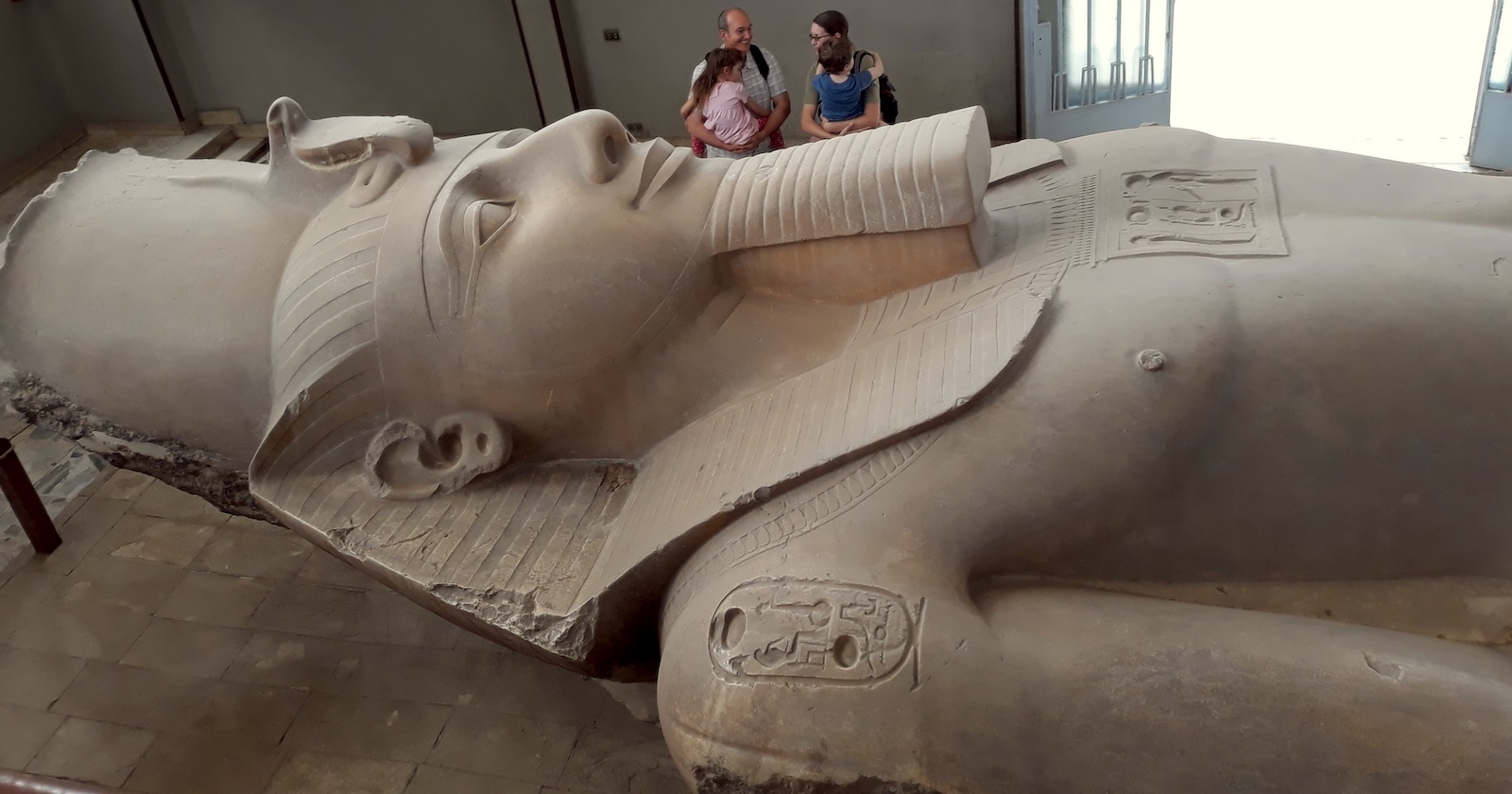
A. Ramses II (The greatness of architecture age).
The great Ramses (The most famous king of the Nineteenth Dynasty) is considered the first candidate and most widely recognized among Western and local researchers, based on several major pieces of evidence:
- Building the Per-Aa capital: the ancient texts indicate that the Hebrews were enslaved to build the city “Pithom Raamses”. The archeological excavations in the “Qantir” area of the Sharqia Governorate in the Delta indicate that Ramses II was the one who built this capital to be a military and administrative center and close to the eastern borders.
- The extended reign period: Ramses II ruled for about 66 years, and it’s a duration extending to cover the details of the story of Moses from his beginning in the royal palace, his departure to Midian, and his return once again later to summon the king.
B. Merneptah and the Mystery of the “Victory Stela”
Another group of researchers believes that Ramses II was not the Pharaoh of the Exodus, but the “Pharaoh of oppression and birth”, while his son and successor Merneptah was the one who faced the Exodus and drowning:
- The famous Israel painting: Discovered by the English archaeologist Flinders Petrie in 1896 in Thebes (modern-day Luxor), it is now preserved in the Egyptian Museum in Tahrir. The painting records Merneptah’s victories in his military campaigns and includes the only mention of the name “Israel” in Pharaonic records, reflecting their presence as a group in the land of Canaan during the early years of his rule.
- Study of the royal mummy:* Medical examinations of Merneptah’s mummy showed traces of water, salt deposits, and bone damage, which some physicians interpreted as a clue of drowning, while others attributed it to the nature of mummification and damage in the tomb.
C. Amenhotep II and Thutmose III (The early theory)
A few researchers adopt the early date for the Exodus (around 1446 BC), placing Thutmose III as the Pharaoh of oppression and his son Amenhotep II as the Pharaoh of the Exodus:
-This view is based on ancient biblical chronological calculations without clear archaeological texts supporting the events of the Exodus during this period, as the reigns of these two kings were characterized by wide internal and external military stability.
3. The analytical comparison between the major archaeological hypotheses
| Comparison Criterion | Amenhotep II | Merneptah | Ramses II | |
| Ruling family | 18th family (1427–1401 BC) | 19th family (1213–1203 BC) | 19th family (1279–1213 BC) | |
| Nature of the hypothesis |
|
Pharaoh of the Exodus and drowning | Pharaoh of forced labor and exodus | |
| Strongest archaeological clue |
|
Victory painting (Merneptah painting) | Capital of Pi-Ramses in the Delta | |
| Sites to visit his monuments | KV35 Tomb in the Wadi Al Melouk | Tahrir Museum, Wadi Al Melouk | Abu Simbel, Karnak, Luxor temples |
4. Historical tourism in Egypt: following the Footsteps of the Kings in the Moses Era.
The research journey doesn’t end up in the pages of books and references; if this story transfers into a tangible reality when visiting the historical landmarks that those figures left. Archaeological tourism in Egypt has become a window that allows visitors to examine those clues via integrated programs that combine Cairo and the historical capitals of Upper Egypt.
- Meeting the mummies: The National Museum of Egyptian Civilization: In the Fustat area of Cairo, the Royal Mummies Hall at the National Museum of Egyptian Civilization allows visitors to stand face-to-face before the mummies of Ramses II, Merneptah, and Thutmose III. Their features and the details of the mummies are preserved through highly scientific methods that allow for an accurate historical reading of those eras.
- San el-Hagar (Tanis): situated now north of Cairo in the delta, it was the capital of the 21st and 22nd Dynasties, filled with ruins and statues from the Ramses II era that were brought from his ancient capital, Pi-Ramesses.
- The Sinai Peninsula: The path of the historical Exodus, where visiting Mount Sinai and Saint Catherine’s Monastery stands out as one of the most important destinations for spiritual and historical tourism in the world.
5. The Nile cruises between Luxor and Aswan: The heart of civilization and the seat of ancient rule
- The luxury Nile cruise between Luxor and Aswan represents the best choice to discover the New Kingdom sites, where the tourist boats sail along the lifeblood itself that witnessed the development and the end of that ruling family.
- Karnak Temple (Luxor): the largest house of worship in the ancient world, which contains the hypostyle hall that the king Ramses II contributed to complete with 134 colossal columns that reflect the greatness of the art and engineering during his reign.
- Wadi Al-Melouk ( Valley of the Kings in the West Bank in Luxor): This rocky Wadi contains the tombs of the kings of Egypt’s great era; one of them is the tomb of Ramesses II (KV7) and the tomb of Merneptah (KV8), with their funerary inscriptions carved into the rock walls.
- Abu Simbel Temple (South of Aswan): The architectural masterpiece built by Ramses II into the Nubian rocks, which is considered one of the most prominent transit and tourist tour in southern Egypt.
- The Ramesseum temple: The funerary temple of Ramses II in Western Thebes, which contains the ruins of the giant statue, which inspired world literature for decades.
How to plan an integrated historical tourist journey in Egypt?
To achieve the highest benefit from visiting the landmarks that are associated with the New Kingdom, preferred to organize the tourism program according to the events:
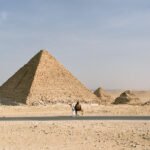
- Cairo: Spend 3 days visiting the Giza Pyramids, the museum complex (the Egyptian Museum in Tahrir and the National Museum of Egyptian Civilization), and a field visit to the antiquities of San el-Hagar in Sharqia.
- Nile cruise (Luxor to Aswan): Book a Nile cruise program for 3 or 4 nights to sail between the Pharaonic temples, explore the royal tombs of the 18th and 19th Dynasties on the West Bank of Luxor, and visit the Edfu and Kom Ombo temples.
- Aswan and Abu Simbel Temple: continue sailing towards Aswan to visit Philae Temple, then towards to Abu Simbel Temple to watch the rock-cut of Ramses II.
- Sinai: End the trip in South Sinai to visit Mount Sinai and Saint Catherine, with an opportunity to relax in the resorts of Sharm El-Sheikh or Dahab.
This experience combines diving into the details of the most precise historical puzzles that occupied human thought, and enjoying a tourism experience that combines calm sailing on the banks of the Nile with the charm of the ancient Egyptian architect.

Mokhtar Yonis
A professional tour guide since 2008, I have led thousands of tours all over Egypt. As an Egyptologist with a Master's degree in Egyptology from Cairo University, I bring a deep knowledge of and passion for Islamic history, monuments, and modern Egyptian culture. A Cairene for most of my life, I joined NileCruisen company in 2016 as a professional tour guide and travel editor.
- Mokhtar Yonis
- Mokhtar Yonis
- Mokhtar Yonis
- Mokhtar Yonis