Ancient Egypt is well known for its amazing pyramids, gold treasures and mighty pharaohs, but have you ever thought about how the ancient Egyptians bought things, bartered for stuff, or earned a living thousands of years ago?
The economy of ancient Egypt was different from the current economy in that it did not trade in coins. The economy was based on produce, notably grain, and pieces were valued by weight, with standard measures.
Discover how ancient Egyptian money evolved and learn about the value of an Egyptian coin. Find out how much an Egyptian coin would be today.
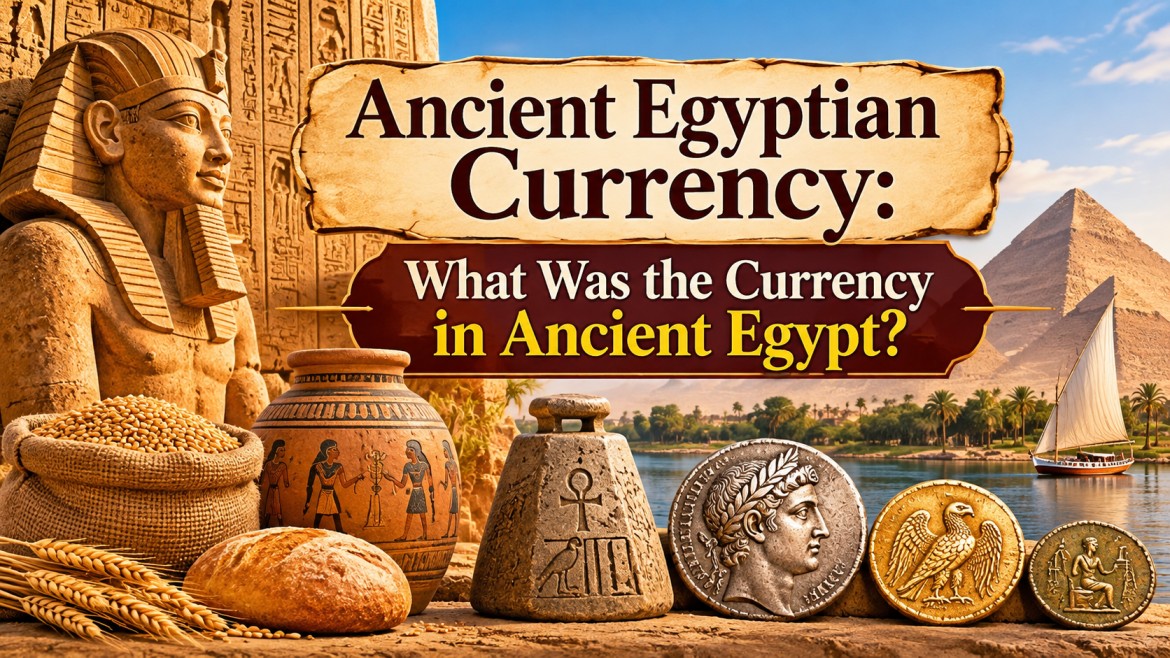
What Was the Currency in Ancient Egypt?
The monetary unit used in ancient Egypt was not coinage, but rather a system of exchange and accountancy.
For much of the pharaonic period, the commodities used by Egyptians were:
- Wheat and barley were used for trade, wages, and taxation.
- Bread and beer: Ordinary items that could be swapped for services and other items.
- Oil: For household use, shrines, and trade.
- Gold, silver, and copper: Items of high metal content which are weighed to establish the value of articles.
Grain was of particular significance as it was produced, stored and distributed on a large scale in temples and royal administrations.
So, the answer to what kind of currency did old Egypt have is just a mixture of commodity payments and accounting based on weighed metals.
Get to know the Deben, the Currency of Ancient Egypt
Deben is among the many terms that have survived in ancient Egyptian financial history. A deben was a common unit of weight used to determine the value of metal and items. The amount of a deben would vary by time period and substance. The deben was not actually a coin. It was used by traders, labourers, and accountants to set wages and prices. It was also used as an exchange method for precious goods when there was no money to carry with people.
When Did Ancient Egypt Introduce Coinage?
Coinage was not a high priority in Egypt, although it became important when, in the Late Period, the country was invaded by various foreign rulers, and coins with the kings’ portraits were already minted in the Ptolemaic period.
Major historical highlights are:
1. Before 500 BC: Commodity-based exchange
The majority of transactions were made with Agricultural products, precious items such as Metal weights and others.
2. 500-332 BC: Early coin use
Ancient Egyptian coins began appearing around the late pharaonic period, especially after Alexander the Great’s conquest in 332 BCE.
3. 332-30 BC: Ptolemaic coinage
Egypt was exposed to Greek monetary practices after Alexander the Great’s conquest in 332 BC. The Ptolemies introduced a well developed system of royal coinage in gold, silver and bronze.
4. From 30 BC onwards: Roman currency
The fall of Cleopatra VII and the Roman annexation of Egypt led to the establishment of a new monetary system, under which the Roman imperial system was introduced. Alexandria kept minting Egyptian provincial coinage.
What Were the Main Ancient Egyptian Coins?
Types of coins used in Egypt in the Ptolemaic and Roman period are.
- Tetradrachm: A coin of four drachmas in Ptolemaic coinage (silver).
- Drachma: A fundamental unit of currency in Greek and Egyptian accounts.
- Obol: A minor denomination, typically one-sixth of a drachma.
- Octadrachm: A gold coin of 8 drachmas.
- Bronze Coins: For everyday spending, especially minor purchases.
The rulers of the kingdom sometimes appeared on the Ptolemaic coins (e.g., Ptolemy I appeared in representation and symbols for the eagle of the dynasty).
These were more than decorations; they spoke to political assertions and royal might.
How Much Is an Ancient Egyptian Coin Worth?
The value of an ancient Egyptian coin depends on its age, rarity, condition, metal content, and historical significance. Not all ancient Egyptian coins are the same. The collector’s value of an ordinary bronze coin is low, but the value of rare gold or silver coins might be in thousands of dollars. Here are some factors that significantly influence market value:
- Rarity: Coins with very few examples surviving will be more valuable.
- Condition: The portraits and details preserved on the coins may make a significant difference in the coin price.
- Precious metal: For example, coins of silver and gold can be more valuable.
- Authenticity/provenance: Value depends on verified sources and provenance.
For a fair appraisal, seek the advice of a well-established coin dealer or professional coin grader. Metal value by itself is not equal to collector value.
Keep in mind that what a coin once bought can vary from what a collector is willing to pay now.
Explore the Ancient Egyptian Past by the Nile River
The currency of the Egyptian civilization holds its own story about its growth and prosperity, but the real story begins when you start exploring the city monuments which it created and helped develop.
A Nile River cruise is a great way to explore Egypt’s history and culture while sailing along the river between Luxor and Aswan.
Explore stunning historical monuments at Karnak Temple, Luxor Temple, Edfu Temple, Kom Ombo and Philae Temple. Each site offers a glimpse into another time period in ancient Egypt history, culture and commerce.
Find various Nile cruise options by Nile Cruisen and select a luxury, deluxe, traditional Dahabiya or standard Nile cruise.
Explore the ancient wonders of Egypt while taking in the stunning scenery of the legendary Nile.
Frequently Asked Questions (FAQs)
1. What was the main currency in ancient Egypt?
Payments were normally made with some sort of commodity, and also for accounting the equivalent weight in metal. Coins became more common in the Ptolemaic period.
2. Did ancient Egyptians use gold coins?
No, the currency in those early pharaoh times was not gold but had a good deal. It was a widely used precious metal and later was coined (Ptolemy reign).
3. What is a deben in ancient Egypt?
The deben was a weight unit for valuing goods and metals. It was never a coin.
4. When were there coins in ancient Egypt?
Coins were introduced slowly in the Late Period, but in larger and more controlled numbers with the Ptolemaic rule of Egypt from 332 BC.
5. Are ancient Egyptian coins valuable today?
Yes. They are worth anything depending on rarity and authenticity, how good condition and content of metal, how ancient it is. There are many high-value coins with many thousands of dollars.

This article was created by the team at Nile Cruisen, one of the best tour operators in Egypt for Nile cruises and tailor-made Egypt tours.
With years of experience sailing between Luxor and Aswan, our team knows the Nile better than anyone.
We share trusted travel advice, from the best time to visit and what to pack to simple tips for avoiding crowds.
Our goal is to help you enjoy the timeless beauty of Egypt with comfort, confidence, and an unforgettable travel experience.
- Nile Cruisen Team

- Nile Cruisen Team

- Nile Cruisen Team

- Nile Cruisen Team