 Mahmoud Ali (Ocean)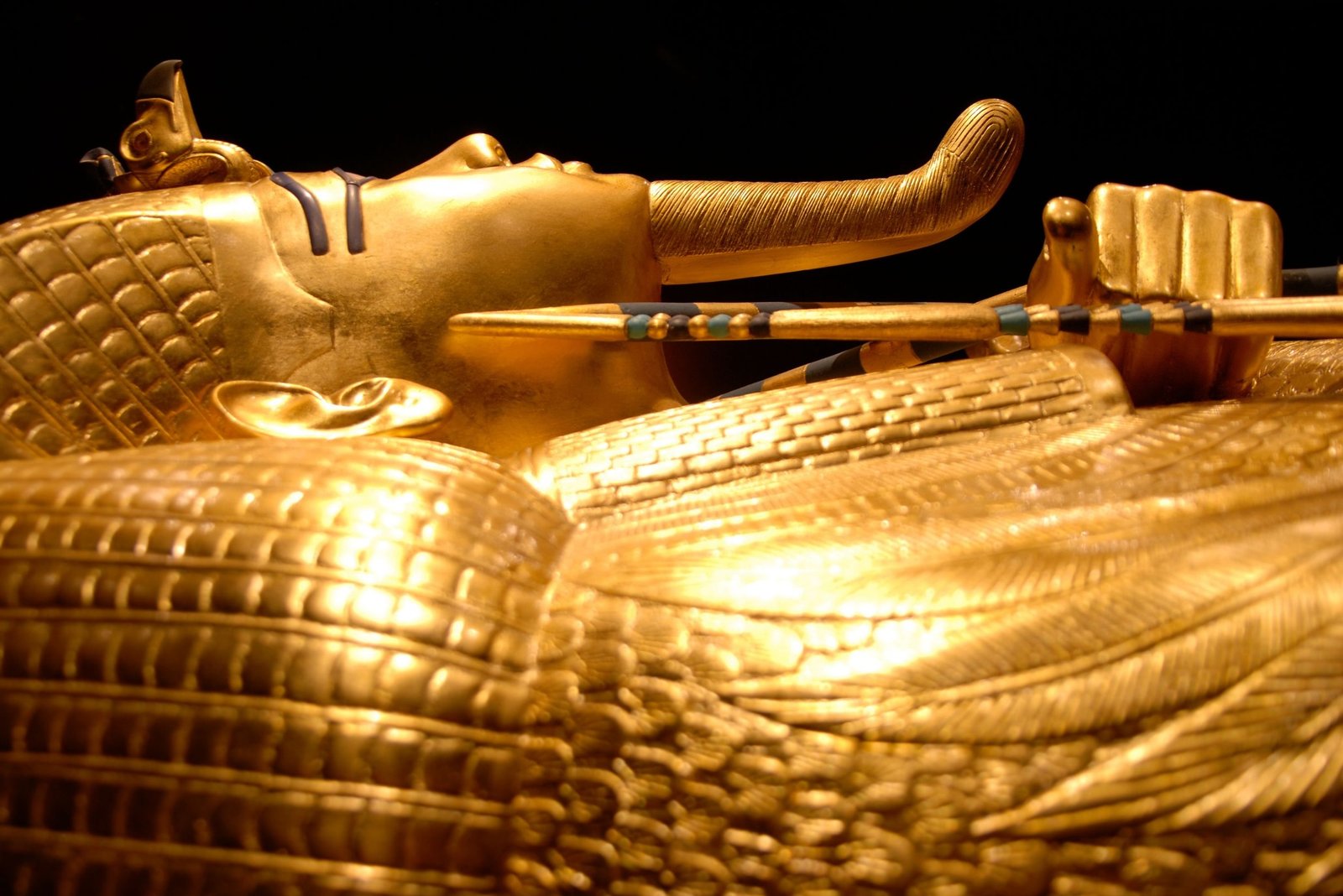
Table of Contents
-
Introduction
-
Where is the Mummification Museum located?
-
What is the purpose of the Mummification Museum?
-
When was the Mummification Museum open?
-
What does the museum contain?
-
Why was mummification important in ancient Egypt?
-
How was the mummification process carried out?
-
What can you see inside the Mummification Museum?
-
Is the mummification museum worth it?
-
Which museum has real mummies?
-
What are the Mummification Museum’s opening hours?
-
What makes the Mummification Museum different from other Luxor attractions?
-
Tips for visiting the Mummification Museum
-
Conclusion
Introduction
If you want to understand how and why ancient Egyptians preserved the dead, the Mummification Museum in Luxor is one of the most focused museums to visit in the city. For history lovers who are interested in Egyptian history and mummies, this museum can be a highlight of their journey. So, through this blog, learn about the mummification museum, what you will see there, and if it is worth visiting.
Where is the Mummification Museum located?
The Mummification Museum is an archeological museum in Luxor, Upper Egypt, the ancient city of Thebes, also known as the open-air museum of ancient Egyptian archaeology. The museum stands along the Nile’s corniche, overlooking the river, and is located to the north of the Luxor Temple, which makes it convenient to visit with other East Bank attractions.
What is the purpose of the Mummification Museum?
The “museo della mummificazione” in Italian means the Mummification Museum, which is constructed to depict and explain the ancient Egyptian practice of mummification and embalming. It shows that Egyptians preserved animals as well as humans, and the exhibits in the museum include mummified cats, fish, and crocodiles, along with objects and tools used in the preservation process. The displays also explain the religious beliefs and funerary practices connected with mummification in Egyptian culture; it is best if you have a keen interest in Egyptian history and want to uncover the mysteries behind mummies.
When was the Mummification Museum open?
The museum was created from a former visitor center building, and its management was transferred from the Ministry of Tourism to the Ministry of Culture through the Supreme Council of Antiquities. The museum was officially opened in 1997 by Egyptian President Hosni Mubarak.
What does the museum contain?
The museum covers an area of approximately 2,035 square meters.
Its facilities include:
- Artifact exhibition hall
- Lecture hall
- Video room
- Cafeteria
The main exhibition hall is divided into two sections. The first section is an ascending corridor displaying ten insulated panels based on scenes from the Papyrus of Ani and the Papyrus of Huneferm, where you can see the scenes explaining ancient Egyptian funerary journey from death to burial, and the second section contains more than 60 objects displayed in 19 cases.
Why was mummification important in ancient Egypt?
Ancient Egyptians have believed that preserving the body was important for the deceased’s existence in the afterlife; therefore, mummification becomes a complete system of burial customs, religious beliefs, rituals, and funerary practices. In simple words, the process was not simply a method of preventing decomposition, but it was accompanied by rituals that are intended to protect the deceased and prepare them for the next stage of existence. Egyptians also have a deity, Anubis, the jackal-associated god, who was strongly connected with the embalming and mummification processes in ancient times.
How was the mummification process carried out?
Egyptians believe that death was a gateway to the afterlife, and the museum provides you with in-depth knowledge of the mummification process and explains to you the stages involved in the process of embalming. For better understanding, here we are mentioning the process in simple words that you can witness physically at the museum through illustrations.
The 70-Day Ancient Egyptian Embalming Process
Removing the brain: Embalmers removed the brain through the nose using specialized instruments. Ancient Egyptians generally did not consider the brain as important as the heart in relation to thought and identity.
Removing the internal organs: An incision was made on the left side of the abdomen to remove organs such as the liver, lungs, stomach, and intestines. Removing these organs helped prevent the body from decomposing.
Keeping the heart in place: The heart was usually left inside the body because Egyptians considered it the center of thought, emotion, and personal identity. It was also important in the deceased’s judgment in the afterlife.
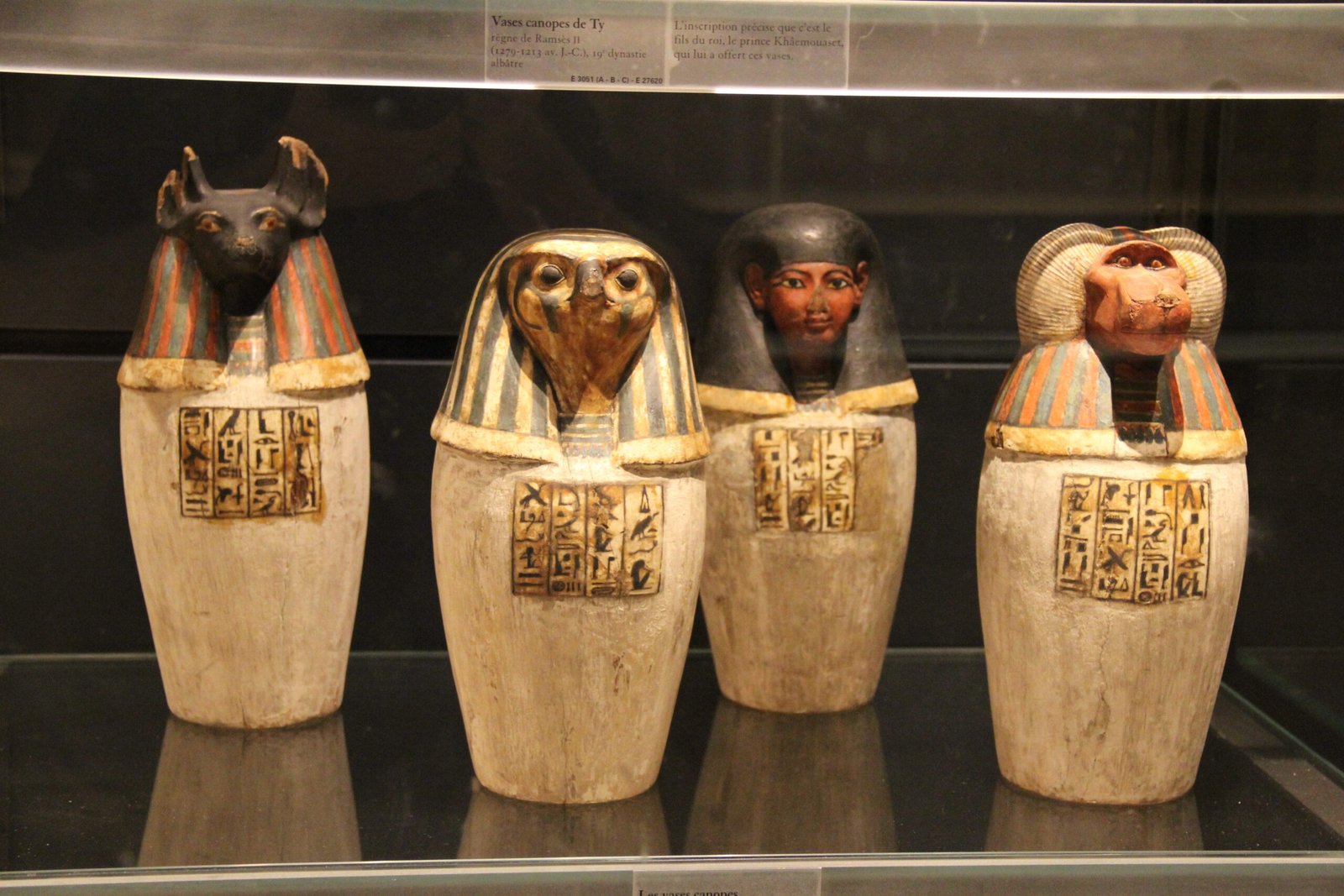
Preserving the organs: The removed organs were treated and dried before being placed in Canopic jars. The four jars were traditionally associated with the protection of the liver, lungs, stomach, and intestines.
Drying the body with natron: The body was covered and packed with natron, a naturally occurring salt, to remove moisture. This drying stage lasted approximately 40 days and was essential for slowing decomposition.
Preparing the body for wrapping: Once thoroughly dried, the body was cleaned and treated with oils, resins, and other substances to help preserve it and prepare it for burial.
Wrapping and protecting the mummy: The body was carefully wrapped in numerous layers of linen bandages. Protective amulets were placed between the layers, as they were believed to protect the deceased and help them safely enter the afterlife.
Final preparation: After the wrapping was completed, the mummy was placed inside a coffin or series of coffins, depending on the person’s status and period, and prepared for the funerary ceremonies and burial.
What can you see inside the Mummification Museum?
Mummified remains: You can find a collection of mummified remains, which provides you insight into the ancient practice of body preservation. You will see the preserved remains and tools and various funerary objects that help visitors understand the process in a more realistic way.
Canopic jars: They were used in ancient Egyptian funerary practices to preserve organs removed during embalming and are also among the most recognizable objects associated with mummification.
Coffins: The museum displays the elaborately decorated coffins, as these are not just mere containers for the dead, but their decoration could include religious imagery and protective symbolism. Looking at the coffins alongside the mummies gives visitors a better understanding of how burial and mummification are connected.
Amulets: They are placed with the mummy’s wrapping and are believed to provide protection and magical assistance to the deceased.
Tools and Equipment: The museum displays various tools and equipment connected with embalming, and these objects help explain the practical side of the process. Together with the written explanations and funerary objects, they provide a clearer picture of how ancient embalmers carried out their work.
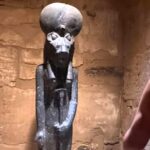
Statues of funerary deities: Visitors can also see statues of Egyptian deities associated with funerary beliefs like Anubis, who is particularly relevant because of his association with embalming and the protection of the dead.
Is the mummification museum worth it?
Yes, especially if you are interested in ancient Egyptian burial customs, mummies, or Egyptian religion. It is a focused museum, so you do not need several hours to understand its main collection, and the biggest advantage is that it explains one specific aspect of ancient Egyptian civilization in depth. It is better for the visitors to visit it after the Valley of the Kings, as it provides background on the beliefs and practices behind ancient Egyptian burials.
It is also a good complement to Luxor’s temples because it shows a different side of ancient Egyptian culture, which is death, preservation, funerary rituals, and the afterlife. However, for anyone wanting to understand what happened to the body after death and why Egyptians invested so much effort in preservation, it offers useful context.
Which museum has real mummies?
Most of the royal mummies are kept at the National Museum of Egyptian Civilization (NMEC) in Cairo which includes in total 22 royal mummies (18 kings and 4 queens) At Luxor’s Mummification Museum, you can actually see a real mummy of Masaharta, who was a high priest of Amun from the 21st dynasty and governed upper Egypt after Rameses XI; his mummy was found inside the Deir el-Bahari cache near Luxor.
But the museum in Luxor features real mummified animals such as cats, crocodiles, fish, and a ram. Here you can see the equipment, canopic jars, and other essentials that are being used during the embalming process of the dead, which helps you in understanding the mummification process.
What are the Mummification Museum’s opening hours?
The Muesum opens daily in two shifts. During Ramadan the visiting hours are different, so you can check them on the official sites.
Morning shift: 9:00 AM – 2:00 PM (Morning ticket window closes around 1:00 PM)
Evening shift: 5:00 PM – 9:00 PM (The evening ticket window closes around 8:00 PM.)
Ticket pricing for the Mummification museum in the Luxor
Adult admission generally falls around $5.50–$11 USD, depending on the ticket type and where it is purchased. This is roughly equivalent to 270–550 EGP, although prices can change with exchange rates and official ticket updates.
What makes the Mummification Museum different from other Luxor attractions?
The Karnak and Luxor temples primarily introduce the visitors to ancient Egyptians, religion, architecture, kingship, and monumental art. Also, the Valley of the Kings focuses on royal tombs and burial landscapes. But the mummification museum provides the missing piece by explaining the treatment of the deceased and the beliefs behind preservation, and this makes it useful for travelers, so prefer visiting it during your Nile cruise in Egypt journey while exploring the East Bank near the Nile corniche.
Tips for visiting the Mummification Museum
- At least allow 45-90 minutes to explore the museum if you want to read the displays without rushing.
- Do not touch the exhibits or display cases.
- Food and drinks are generally not permitted inside the galleries, apart from small water bottles.
- You must follow the rules of museums; flash photography is prohibited, and the museum has specific rules concerning photography and video.
- Combine it with the nearby Luxor Temple and other East Bank attractions during your 3-night Nile cruise trip shore excursion.
- From Luxor Temple, it is just 180 m away, and with a walk of 10 minutes, you can explore it.
Conclusion
The Mummification Museum is worth adding to a Luxor itinerary if you want more than photographs of temples and tombs, as you will be getting knowledge of how the mummification process is being done in ancient times; it is easily accessible from the Luxor Temple, so you can visit there effortlessly.
Mahmoud Ali (Ocean)
Mahmoud Ali, affectionately known to our guests as "Ocean," began his career as a tour guide in 2007 and quickly established himself as one of the very best in Luxor. He brought his expertise to Nile Cruisen in 2012 as a dedicated guide. Today, through his exceptional leadership, he serves as our Chief Tour Guide and Luxor Operations Manager. When he is free, Ocean is deeply passionate about travel and photography.
- Mahmoud Ali (Ocean)

- Mahmoud Ali (Ocean)
- Mahmoud Ali (Ocean)
- Mahmoud Ali (Ocean)