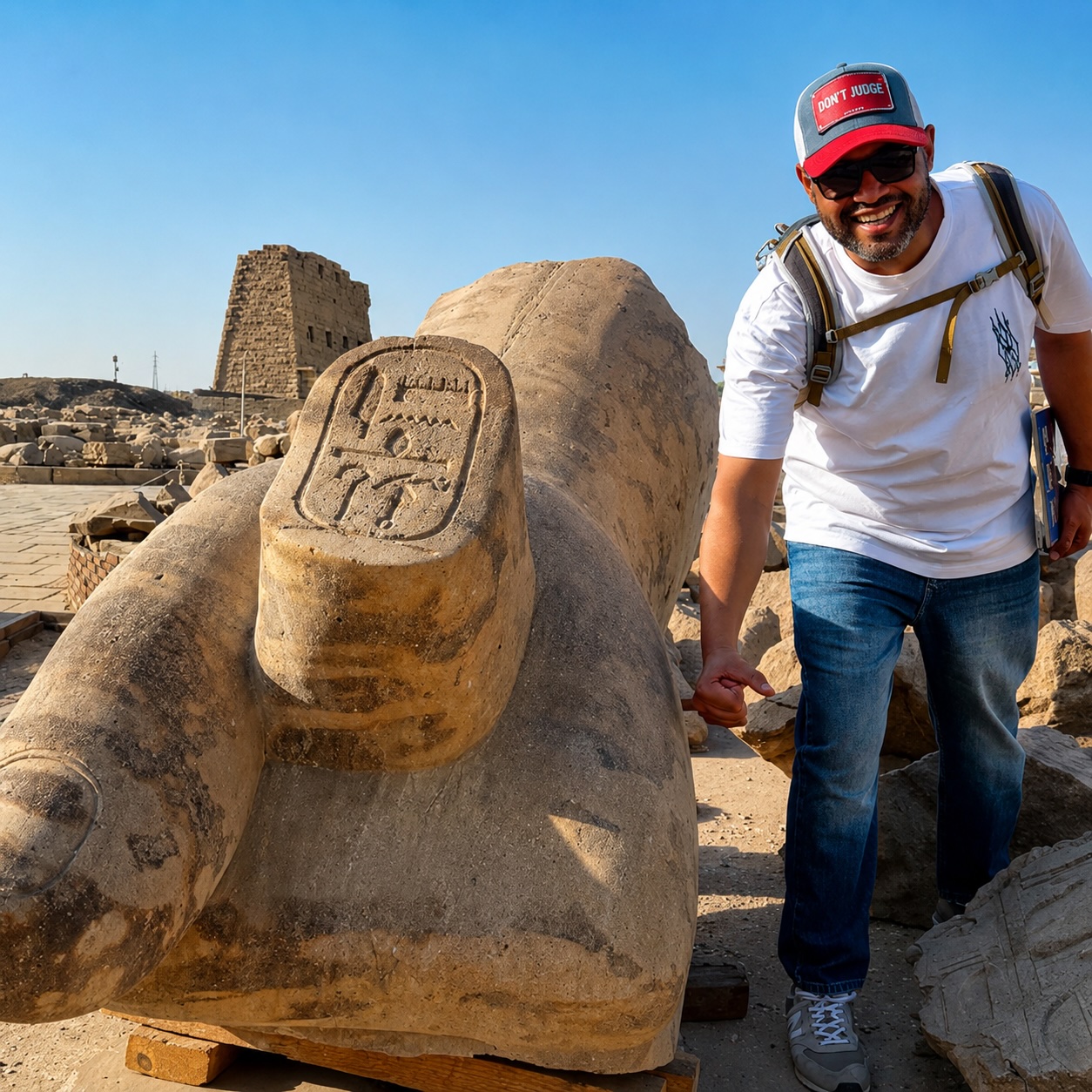
 Mahmoud Ali (Ocean)

What Can You See Inside Luxor Museum?
A major highlight of the museum is its collection of statues dating from the New Kingdom period, among which are finely carved images of the pharaohs and the deities, demonstrating the skill of the artists who lived thousands of years ago.
You are also able to see some of the objects belonging to Tutankhamun, thus allowing you to get a better view of the craftsmanship and the materials employed during the royal period in ancient Egypt.
Another highlight is the group of statues found in a concealed cache at Luxor Temple in 1989; they had been buried under the temple’s courtyard and were subsequently retrieved by archaeologists. Seeing these statues together, visitors are able to appreciate the significance of religious sculpture and the effort that goes into preserving ancient artifacts.
The museum also displays the royal mummies of Ahmose I and Ramesses I, along with other historical objects. Each exhibit provides a different perspective of Egypt’s rulers, their religious beliefs, and their artistic accomplishments.
Why Is The Luxor Museum Worth Visiting During a Nile Cruise?
Visiting the Luxor Museum can make the rest of your sightseeing more worthwhile. Once you’ve looked at the huge statues and the carved walls at Karnak or the Luxor Temple, you can then look at the smaller details and individual objects in a more peaceful indoor environment.
It is also a good choice for travelers interested in Egyptian art, archaeology, and royal history. You don’t have to be an expert in order to enjoy the exhibits; a guide might help you to understand the stories associated with certain objects.
If you find that you have any extra time in Luxor either before or after your cruise, then you should arrange some time to visit this museum rather than restricting your visit to the great temples.
The Mummification Museum: Explore the Ancient Technique of Preserving the Dead
The experience at the Mummification Museum is quite different. Situated on the Nile Corniche, north of the Luxor Temple, this smaller museum concentrates on one of the most interesting aspects of ancient Egyptian culture—the preservation of the body after death.
Ancient Egyptians believed that preserving the body was important for the afterlife. Mummification was closely connected to their religious beliefs and burial rituals. The museum illustrates these practices using objects, exhibitions, and examples of mummified remains. It is a useful stop for anyone wishing to understand what took place behind the scenes in ancient Egyptian burial customs.
What Can You See at the Mummification Museum?
The collection consists of the tools and materials used in embalming, the canopic jars, the decorated coffins, the protective amulets, and the statues of deities connected with death and the afterlife.
Canopic jars are especially interesting. In some cases during the mummification process, the internal organs were removed and kept in containers associated with protective deities. These objects show how religious beliefs affected the treatment of the dead.
You can also find out about natron, which is a mixture of salts that occurs naturally and was used for drying the body, as well as the linen wrappings that helped in the preservation of the remains.
The museum also has mummies of both humans and animals. Certain animals were linked to specific gods or religious practices, which shows that mummification was not only done for humans.
These exhibits together illustrate the various stages of the process and the beliefs associated with them; instead of just looking at a mummy, visitors can understand the reasons why the ancient Egyptians put so much effort into preparing the dead for the next life.
Why Should You Add This Museum to Your Luxor Itinerary?
Travelers often see mummies in photographs or learn about them when they are visiting tombs. The Mummification Museum provides more context by linking the physical process to the religious beliefs that influenced it.
If you intend to go to the Valley of the Kings, this is something that is especially interesting. Knowing about mummification can help you to realize why tombs included coffins and other items meant to support the deceased in the afterlife.
The museum is fairly small and so can serve usefully as a short stop when combining it with other activities. Nevertheless, those visitors who have an interest in history might prefer to stay longer and read the exhibits as well as look at the objects.
If you want to find out about ancient Egyptian burial practices, then this museum deserves a place on your itinerary.
Luxor Museum vs. the Mummification Museum: Which Should You Visit?
Even though the two museums are in the same city, they concentrate on different aspects of ancient Egyptian civilization. The choice you make should be based on what interests you most, but if you visit both, then you will get a more complete picture.
| Feature | Luxor Museum | Mummification Museum |
| Main focus | Art, royal history, and archaeological finds. | Mummification and beliefs about the afterlife. |
| What to see | Statues, royal artifacts, and historical objects. | Mummies, embalming tools, canopic jars, and coffins. |
| Best for | Travelers interested in pharaohs, sculpture, and archaeology. | Travelers interested in burial rituals and ancient religious beliefs. |
| Experience | A broad collection of ancient Egyptian artifacts. | A focused look at one ancient Egyptian practice. |
| Suggested planning | Allow around 1-2 hours, depending on your interests. | Around 30-60 minutes depending on your interest. |
The above are only recommended planning figures and not the official visit lengths. The amount of time you spend may depend on how much you wish to read and explore.
If you can only visit one museum, then go to the Luxor Museum to get a more comprehensive overview of ancient Egyptian art and royal history, and go to the Mummification Museum if your interest lies specifically in mummies and burial practices.
If your timetable permits, it is better to visit both places since their collections complement each other.
How to Visit Both Museums During Your Nile Cruise
Both museums are located along Luxor’s East Bank Corniche, making them convenient additions to your sightseeing plans. Depending on your cruise schedule, you may be able to visit them before boarding or after your cruise ends.
The best time to visit depends on your cruise schedule. Some travelers arrive in Luxor before boarding, while others have extra time to explore the city after their cruise.
Before Your Nile Cruise
If you reach Luxor one day before your cruise, you will have the opportunity to see the museums without having to rush from one sightseeing spot to another, and you might also have some time to explore Luxor Temple or take a walk along the Corniche.
It is a practical choice for travelers who wish to see more of the city without making their main cruise excursion timetable too crowded.
After Your Nile Cruise
If your cruise concludes in Luxor and your arrangements for travelling afterwards permit it, you might want to stay in the city a bit longer. A museum visit can be a relaxing way to continue exploring after several days of temple visits and guided excursions.
It’s important to check your departure plans, especially when you have a flight or a long transfer on the same day.
Combine the Museums With Other East Bank Attractions
The Luxor Temple is also a major attraction in this region. If you look at the opening hours and take into account how much time you have, then you might arrange to visit the temple and one or both of the museums on the same day.
It’s best not to attempt to fit all the visits into a tight schedule since the purpose of going to these museums is to understand the exhibits, not merely to cross one more attraction off your list. Before you visit, you should check the current opening hours, ticket prices, and any rules about photography by referring to the official sources. The museum’s schedule and entry arrangements can change.
Practical Tips Before Visiting Luxor’s Museums
A bit of planning will enable you to get the most out of your visit.
Check opening hours: Make sure you know the current schedule before visiting, particularly if you plan to visit in the evening or on a public holiday.
Leave sufficient time: Do not book a trip to a museum right before leaving on a cruise, a flight, or some other fixed commitment.
Consider a guide: If you want to gain a better understanding of the exhibits, a guide can explain some of the historical details, which may not be obvious.
Follow photography rules: When taking photographs, check the museum’s present policy and adhere to the rules concerning individual exhibits.
When you are booking a cruise package on the Nile, find out if the museum visits are listed in the itinerary or if you have to make arrangements for them yourself. You should not assume that all the packages come with entry tickets, transfers, or a guide.
Make More of Your Time in Luxor With a Nile Cruise
A Nile cruise is an excellent way of visiting the ancient sites lying between Luxor and Aswan, but your time in Luxor can provide far more than just visits to the main temples.
The Luxor Museum offers exposure to royal artifacts, ancient sculpture, and archaeological discoveries. The Mummification Museum deals with the tools, rituals, and beliefs connected with preserving the dead. Taken together, the two museums enrich the stories you encounter in Egypt. If you are planning a trip, leave enough time in Luxor to explore more than just your cruise’s scheduled excursions.
Look at the Nile cruise packages offered by Nile Cruisen to compare the itineraries and plan your time in Luxor. Before you book, find out which excursions, transfers, entrance tickets, and guide services are included so that you can organize your visit according to your interests.
Frequently Asked Questions
Is the Luxor Museum worth a visit?
Yes, if your interest lies in ancient Egyptian art, royal history, and archaeological discoveries, then the Luxor Museum is worth a visit, and its collection consists of statues, royal artifacts, and objects taken from important sites surrounding ancient Thebes.
What is the Luxor Mummification Museum known for?
The Mummification Museum features exhibitions that deal with ancient Egyptian embalming practices, and in these exhibitions visitors may see mummified remains, canopic jars, coffins, protective amulets, and other objects connected with burial rituals.
Is it possible to go to the Luxor Museum and the Mummification Museum on the same day?
Yes, because both museums are situated on the East Bank Corniche in Luxor, it is feasible to visit them on the same day. You should check their opening hours and set aside sufficient time for each visit, especially if you also intend to see Luxor Temple.

Mahmoud Ali (Ocean)
Mahmoud Ali, affectionately known to our guests as "Ocean," began his career as a tour guide in 2007 and quickly established himself as one of the very best in Luxor. He brought his expertise to Nile Cruisen in 2012 as a dedicated guide. Today, through his exceptional leadership, he serves as our Chief Tour Guide and Luxor Operations Manager. When he is free, Ocean is deeply passionate about travel and photography.
- Mahmoud Ali (Ocean)

- Mahmoud Ali (Ocean)

- Mahmoud Ali (Ocean)
- Mahmoud Ali (Ocean)