 Mo Kamal
 Elephantine Island, Egypt, is a major historical site that is located on the River Nile, opposite Aswan city in Upper Egypt. Elephantine Island gets its name from the ancient Egyptian word “Abu,” which stands for “elephant” or “ivory.” This island is important because it is located near the first cataract of the Nile River, and in ancient times it was a major point for trade, travel, administration, and military activity. Today, Elephantine Island is known for its ancient ruins and Nubian communities, the Nilometers, and the Aswan Museum.
Table of Contents:
-
Quick Information Regarding Elephantine Island
-
Where Is Elephantine Island Located?
-
History of Elephantine Island
-
Why Is Elephantine Island Important?
-
What You Can See On Elephantine Island
-
How Much Time Is Enough For Elephantine Island?
-
Elephantine Island Travel Tips
-
How To Get To Elephantine Island?
-
Best Time To Visit Elephantine Island
-
Explore Elephantine Island on a Nile Cruise
-
FAQs

Quick Information Regarding Elephantine Island
| Feature | Details |
| Location | Aswan, Upper Egypt |
| Famous for | Ancient ruins, Nubian culture, Nilometers, and the Aswan Museum |
| Historical Importance | Trade, military defense, administration, region |
| Main deity | Khnum |
| Best For | History, archaeology, culture, and photography |
| Recommended visit time | Around 1.5-3 hours |
Where Is Elephantine Island Located?
Elephantine Island is located on the Nile River; it is situated directly opposite Aswan in Upper Egypt. It is considered important because of its location; it is located near the first cataract of the Nile River, which was a major point for trade, travel, and military activity. Its location also makes Elephantine Island a convenient stop for travelers exploring Aswan as part of Nile cruises in Egypt.
History of Elephantine Island
This island acts as a natural boundary between Egypt and Nubia; Egypt’s Ministry of Tourism and Antiquities also describes it as a gateway into Egypt for traders arriving from Nubia. Elephantine Island has a history stretching back thousands of years, and, because of its location, it also played an important role in ancient Egypt. It served as a southern frontier, which helped Egyptians control trade and movements between Egypt and Nubia. Moreover, this island is also an important religious center, particularly for the worship of a god associated with the Nile and fertility, Khnum.
This island was also home to the Jewish community, whose letters and documents provide valuable information regarding daily life at that time; these documents also became known as the Elephantine Papyri. The Elephantine Island also remained important during the Roman and Greek periods and is now an important site in Aswan, which is popularly known for its ancient ruins, temples, and museum.
Why Is Elephantine Island Important?
Elephantine Island is considered important because it served as a natural southern border of defense, a major trade hub, and a sacred religious center.
Trade Hub: As Elephantine is situated opposite the modern-day Aswan, its location makes it an important frontier and trading point between Egypt and Nubia.
Military importance: Elephantine Island also acts as an important military and defensive settlement, as its nearby area is used to monitor the movements along the Nile and protect its southern border.
Religious importance: Elephantine Island also serves as an important religious center, as it is known for the worship of Khnum (an ancient Egyptian ram-headed god).
The Elephantine Papyri: Elephantine Island is also famous for the Elephantine Papyri; it is basically a collection of 5th-century BCE legal documents, letters, and administrative records.
Ancient Nilometers: Nilometers are measuring devices that are used to track water levels, prevent flood damage, and predict the annual harvest success.
Archaeological importance: The island provides a long record of how people used to live at an important cultural crossroads.
Aswan Museum: The Aswan Museum is located on the southeastern side of Elephantine Island. This museum was set up in 1912, and it contains local archaeological finds from the island and remains of artifacts from Nubia, which were collected during the construction of the Aswan Dam.
What You Can See On Elephantine Island
If you are planning to visit Elephantine Island during your Nile cruise journey, then you will get an opportunity to explore the Elephantine Island Temple complex, including the Temple of Khnum, the Temple of Satet, the Ancient Nilometer, the Aswan Museum, the ancient settlement ruins, Nubian villages, and amazing Nile River views.
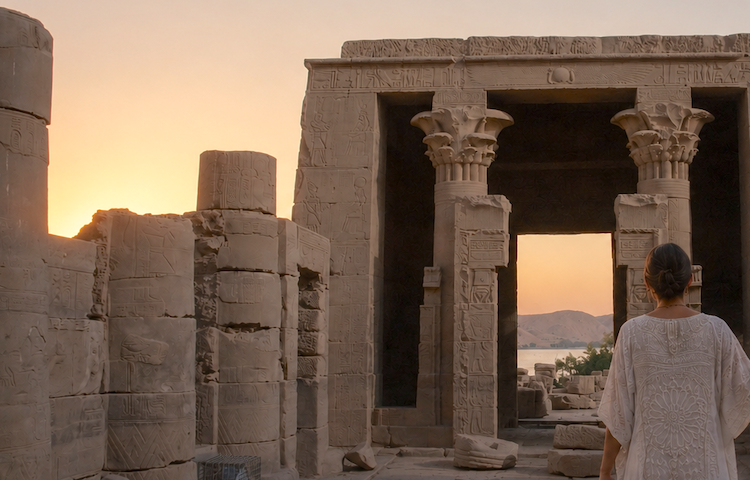
Temple of Khnum: The temple is dedicated to the god Khnum (a ram-headed creator), who is associated with the Nile and fertility. While visiting this temple, you can witness ancient stonework, parts of the site dating back to the Old and Middle Kingdoms, and later additions.
Temple of Satet: The Temple of Satet is another important ancient temple on the Elephantine Island. Satet was associated with the annual Nile flood and was regarded as a goddess who protected Egypt’s southern frontier.
Aswan Museum: The Aswan Museum displays archaeological objects that were found on Elephantine Island and the surrounding region; basically, it displays local artifacts (pottery, tools, weapons, and utensils), a mummified ram, and Nubian relics.
Ancient settlement ruins: While visiting Elephantine Island, you can also explore the remains of houses, temples, and other structures that show how people lived on the island in ancient times.
Nubian Villages: An excursion to Elephantine Island will also allow you to enjoy the local culture and traditions by visiting colorful traditional houses and experiencing aspects of Nubian culture.
Ancient Nilometer: This historic structure was used to measure the level of the Nile; it will show you how ancient Egyptian life was connected to the river.
Nile views: If you are a photography enthusiast, then don’t forget to bring an extra memory card, as this place will offer you some amazing views of the Nile River.
Elephantine Island Attractions at a Glance
| Attraction | What you can see |
| Temple of Khnum | Temple remains and ancient stonework |
| Temple of Satet | Remains that are connected with the goddess Satet and Elephantine religious history. |
| Ancient Nilometer | Stone steps and Nile-level markings |
| Aswan Museum | Archaeological artifacts and local finds |
| Ancient settlement | Remains of houses, temples, and other structures |
| Nubian communities | Traditional homes and local culture |
| Nile viewpoint | Views of the Nile and Aswan |
How Much Time Is Enough For Elephantine Island?
The majority of travelers consider 1.5 to 3 hours ideal for an Elephantine Island excursion. This is enough time to explore the main attractions, including the southern archaeological zone, the ruins of the Temple of Khnum, the Temple of Satet, the ancient nilometer, the Aswan museum, and the Nubian village. If you have more time, you can stay longer to enjoy local cafes, restaurants, and views of the Nile.
Elephantine Island Travel Tips
If you are planning to visit Elephantine Island, then these tips can help you plan a comfortable and safer journey.
- Wear comfortable walking shoes
- Carry a water bottle
- Bring sun protection (sunscreen, a hat, and sunglasses).
- Carry cash if you want to explore the local markets
- Do respect the local customs, especially if you are planning to visit residential Nubian areas.
- If you are interested in Egypt’s history, hiring a guide could be a great option.
How To Get To Elephantine Island?
If you are planning to visit Elephantine Island, then you don’t need to worry about transportation, as there are several available options, including a public ferry, motorboat, felucca, and private boat. You can choose as per your budget and travel style.
| Transport Option | Best For | What to expect |
| Public ferry | Budget travelers | Public ferry offers a simple and affordable way to explore the island independently. |
| Motorboat | Families and small groups | They offer more flexibility with time and are also faster than a felucca. |
| Felucca | Scenic experience | A traditional sailboat that offers a more relaxing way to enjoy the Nile River journey around the Elephantine Island. |
| Private boat | Couples, families, and groups | Private boats offer more privacy and flexibility as compared to other available transportation options. |
| Guided tour | First-time visitors | A convenient option for combining Elephantine Island with other Aswan excursions. |
Best Time To Visit Elephantine Island
The months between October and November are considered the best time to visit Elephantine Island, as during these months the weather is more comfortable for walking around the sites. However, if you are planning to visit during the summer (May to September), then it is suggested to visit early in the morning or later in the afternoon.
Best time of day to visit Elephantine Island
Early morning: Best for comfortable walking and exploring the sites.
Late afternoon: Best for capturing breathtaking views of the Nile
Whether you are planning to visit in summer or winter, it is suggested to carry a water bottle, sun protection (sunscreen, a hat, and sunglasses), and comfortable shoes.
Explore Elephantine Island on a Nile Cruise
If you are planning a Nile cruise and want to explore more of Aswan, then you can consider adding a visit to Elephantine Island to your itinerary. Nile Cruisen offers cruise packages where a felucca ride around Elephantine Island is included as an optional experience. This gives travelers an opportunity to enjoy the island, Nile views, and Nubian surroundings while keeping the rest of your cruise itinerary flexible.
FAQs
Can you visit Elephantine Island?
Yes, you can visit Elephantine Island by arranging a ferry, motorboat, or felucca from Aswan. Once you arrive there, you can explore the archaeological sites, museum, and Nilometer and surrounding Nubian communities.
Can you walk around Elephantine Island?
Yes, you can walk around Elephantine Island and explore many of its major attractions on foot.
What can you see on Elephantine Island?
The major attractions of Elephantine Island include the Temple of Khnum, the Temple of Satet, the Nilometer, the Aswan Museum, archaeological ruins, and Nubian communities.
Is Elephantine Island Worth Visiting?
Yes, it is worth visiting, as it allows travelers to combine ancient Egyptian history with Nubian culture and Nile scenery. It is also a convenient place to visit if you are staying in Aswan or taking a Nile cruise, as you can explore it in a few hours.

Mo Kamal
Mohamed "Mo" Kamal is one of the leading Egyptologists in Luxor and Aswan. With a strong academic background and a deep passion for ancient Egyptian history, he brings every site to life with engaging stories and expert knowledge. Mo joined the Nile Cruisen team in 2017 and has been creating unforgettable experiences for our guests ever since. He is also a writer and researcher, specializing in the history and architecture of ancient Egyptian temples, tombs, and monuments.
- Mo Kamal

- Mo Kamal
- Mo Kamal

- Mo Kamal