Among the most recognizable images of Egyptian culture is the Egyptian Lotus Flower. This flower has been a part of the royal art, the tomb illustrations, temple carvings, religious ceremonies, etc. The Egyptian lotus flower was essentially a symbol of renewal, rebirth and the cyclical nature of life. The Egyptian lotus flower has many distinct species, especially the blue lotus flowers that were a significant part of Egyptian mythology and life.
What Is the Egyptian Lotus Flower?
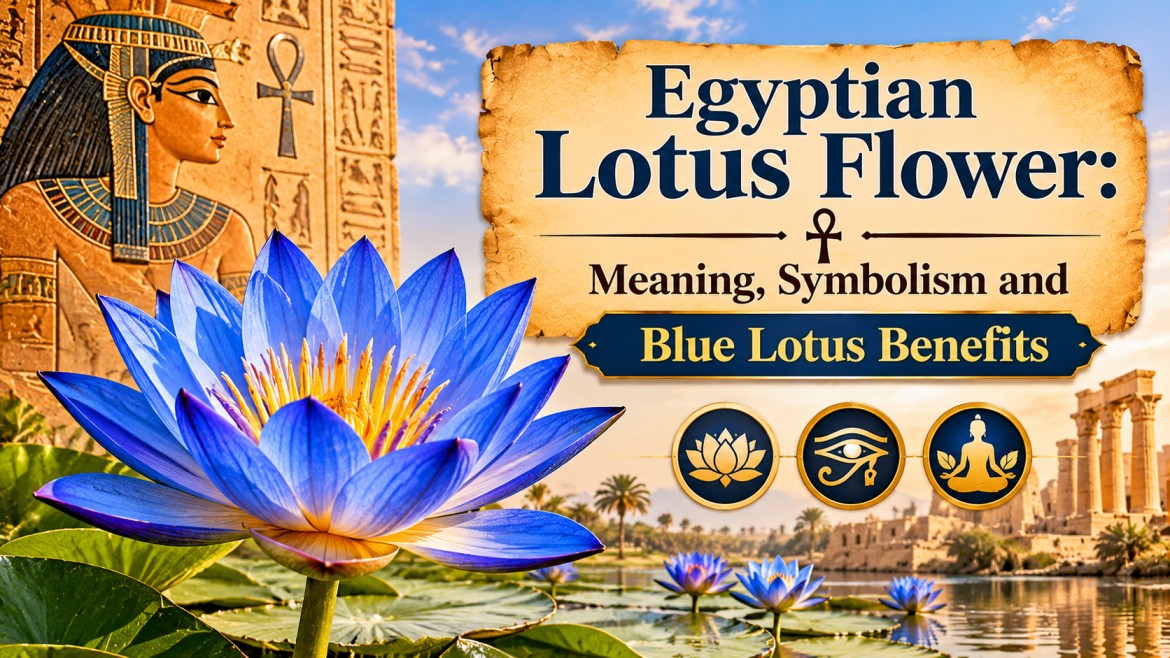
There are two native water lily species with which this Egyptian lotus is associated: the blue water lily (Nymphaea caerulea) and the white water lily (Nymphaea lotus). Don’t get confused by their name; these plants are technically water lilies rather than true lotuses. Aquatic environments are ideal for their growth, including lakes, ponds, and slow-moving waterways. The blue lotus is popular because of its delicate fragrance, blue petals, and association with ancient Egyptian religious beliefs. These lotuses held significance in ancient Egyptians’ lives as they emerged from the water and spread their petals in sunlight, making a great connection between the daily movement of the sun and nature.
Egyptian Blue Lotus Flower: Why Was It Sacred?
Egyptian blue lotus flower was among the most essential flowers found in ancient Egyptian culture. It was considered a powerful religious symbol due to its connection with the sun and creation. It has been believed that a blue lotus emerged from the primordial waters of Nun, and then the appearance of the young sun god from its middle point. Additionally, there was a connection with Nefertem, a deity linked to fragrance, beauty, and healing. He used to wear a blue lotus on his head. The appearance of the Egyptian blue lotus flower was noticed in decorative objects, religious ceremonies, tomb paintings, and royal artwork. It had an important place in ancient Egyptian perfumery.
What Does the Lotus Flower Symbolize in Egypt?
The Egyptian lotus flower carried several important meanings:
1. Rebirth and Eternal Life
The sunrise and sunset times of the flower closed and opened their petals was due to the movement of the sun through the sky. The opening and closing of petals was associated with resurrection, rebirth and the life continuing on. This symbolism was important to ideas on the afterlife.
2. Creation and the Sun
According to Egyptian mythology, the connection of the lotus represented the beginning of creation. On the other hand, some believed that the sun god emerged from a lotus appearing from the primordial waters. This is how the flower symbolized the creation of the universe and the beginning of life.
3. Purity and Spiritual Renewal
There’s no denying that the lotus emerges from muddy water, but the rise of beautiful petals makes it beautiful. This made it a powerful representation of purity and spiritual cleanliness.
4. The beauty of the Divine Power
It was linked to the blue lotus and Nefertem, representing beauty and renewal. It was depicted in religious art, making it sacred.
5. Unity of Upper and Lower Egypt
Papyrus and lotus also symbolized union in the royal symbols of Egypt, combining the two plants on the same symbol to show the unity of Upper and Lower Egypt.
What Is Egyptian Lotus Flower Good For?
Historically, the Egyptian blue lotus flower was valued for its significance in ritual, its scent, and its historical/medicinal connection.
- Psychoactive effects
The blue lotus flower held an important place in spiritual ceremonies and banquets. There is limited evidence showing psychoactive effects of the blue lotus flower.
- Cultural impact
Dating back to the Middle Kingdom, artifacts such as jewelry, drinking vessels, and cosmetic boxes were decorated with blue lotus flower patterns.
- Role in religious ceremonies
At the time, lotuses were offered before the images of gods and deceased ancestors, especially during temple rites and ancient Egyptian festivals.
- Healing properties of the lotus flower
It’s believed that some parts of the plant were used for their mild therapeutic properties.
Where Can You See the Egyptian Lotus Flower’s Historical Legacy?
Although you may not stumble upon the sacred blue lotus dotted all along the modern-day Nile, its influence is still evident throughout Egypt.
Here are some of the best places to see this:
- Karnak Temple, Luxor: Explore the lotus-themed decorations and columns.
- Luxor Temple: Admire the ancient Egyptian religious illustrations and symbols.
- Temple of Philae, Aswan: Get a taste of the art and religion of old Egypt.
- Egyptian Museum, Cairo: View artefacts, decorative pieces and symbolism of Egyptian flowers.
- Learn about the role that the lotus played in old Egyptian religion, construction and day-to-day living through these archaeological sites.
Explore the wonders of Ancient Egypt on a Nile Cruise
Grown from a seed, the Egyptian lotus flower’s history is rooted in the story of the Nile, which fed one of the world’s most ancient civilisations.
A Nile cruise from Luxor to Aswan on the Nile River is a magnificent way to discover the sites, monuments and wonderful scenery which make up this amazing cultural legacy. Each site, from the stunning columns of the Karnak Temple to the riverside splendour of the Philae Temple, unveils yet another tale from ancient Egyptian civilisation.
Frequently Asked Questions
What is the name of the Egyptian lotus flower?
Name of the Egyptian blue lotus: Nymphaea caerulea. The Egyptian blue lotus is a species of water lily that is native to various parts of Africa.
Why was the blue lotus important in ancient Egypt?
It symbolized not only creation but also rebirth, the sun, and the afterlife. The symbol of the lotus was also connected to Nefertem and used in the context of religious ceremonies.
Is the Egyptian blue lotus a real lotus?
Though it’s called “blue lotus,” it is actually a water lily from the genus Nymphaea and not a genuine lotus, which comes from the genus Nelumbo.
What is the difference between the white and blue Egyptian lotus flowers?
The water lily with blue petals is the blue water lily, and it is very significant in Egyptian mythology. The water lily with white petals is the white water lily, and it was one of the most common water lilies in early Egyptian art and symbolism.
Is it possible to see lotus flowers on a Nile cruise?
A Nile cruise is the best chance to visit the ancient sites and temples which feature lotus as a theme. It is, however, unlikely that you will find a real, wild grown blue lotus.

This article was created by the team at Nile Cruisen, one of the best tour operators in Egypt for Nile cruises and tailor-made Egypt tours.
With years of experience sailing between Luxor and Aswan, our team knows the Nile better than anyone.
We share trusted travel advice, from the best time to visit and what to pack to simple tips for avoiding crowds.
Our goal is to help you enjoy the timeless beauty of Egypt with comfort, confidence, and an unforgettable travel experience.
- Nile Cruisen Team

- Nile Cruisen Team

- Nile Cruisen Team

- Nile Cruisen Team