 Nile Cruisen Team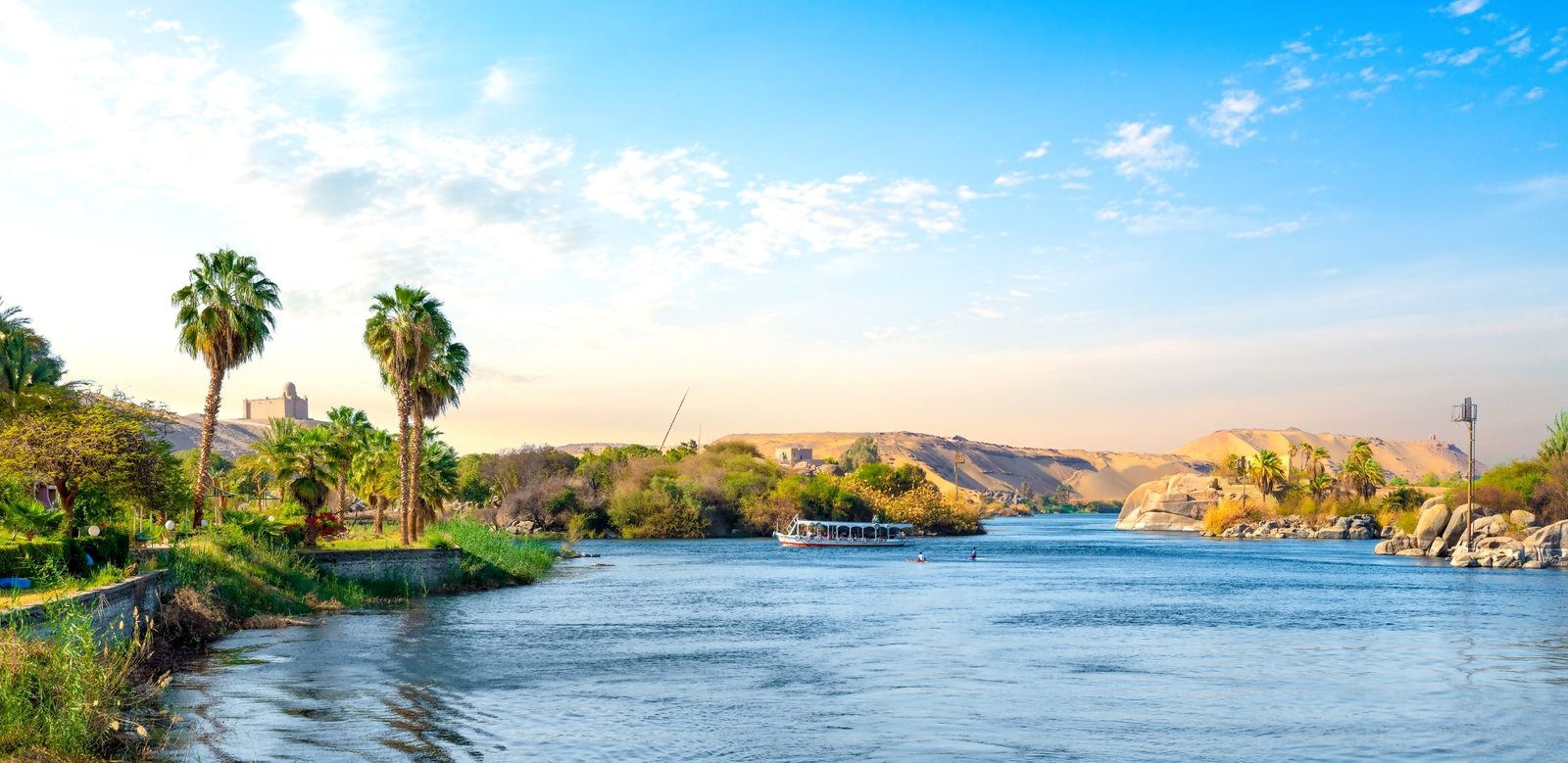
Table of Contents
-
Introduction
-
Where does the Nile River start in Egypt?
-
What do you mean by the Nile Deltas?
-
Where does the Nile River start in Africa?
-
What is the true source of the River Nile?
-
Where does the Nile River start and end?
-
Conclusion
Introduction
The White Nile River’s starting point is Lake Victoria, which is shared by Tanzania, Uganda, and Kenya in East Africa. But the Nile does not only originate from Lake Victoria; as it flows towards the Mediterranean Sea, the Blue Nile, which originates from Lake Tana in Ethiopia, also meets with the White Nile at Khartoum, Sudan. Here, the longest river, the Nile, forms.
The Nile River crosses around 11 countries, which are Egypt, Sudan, South Sudan, Ethiopia, Uganda, Kenya, Tanzania, Rwanda, Burundi, the Democratic Republic of the Congo, and Eritrea.
This great flowing stream is one of the important water bodies on the African continent, especially for countries like Egypt, which are covered with 90% desert sand. The longest river is responsible for lush greenery across this continent and is the largest source of fresh water. It starts from two major points and ends with the Nile Delta before emptying into the Mediterranean Sea on the northeastern coastline of Egypt.
Where does the Nile River start in Egypt?
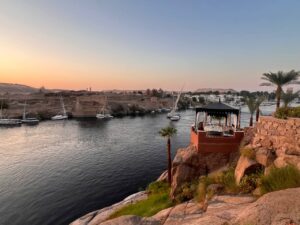
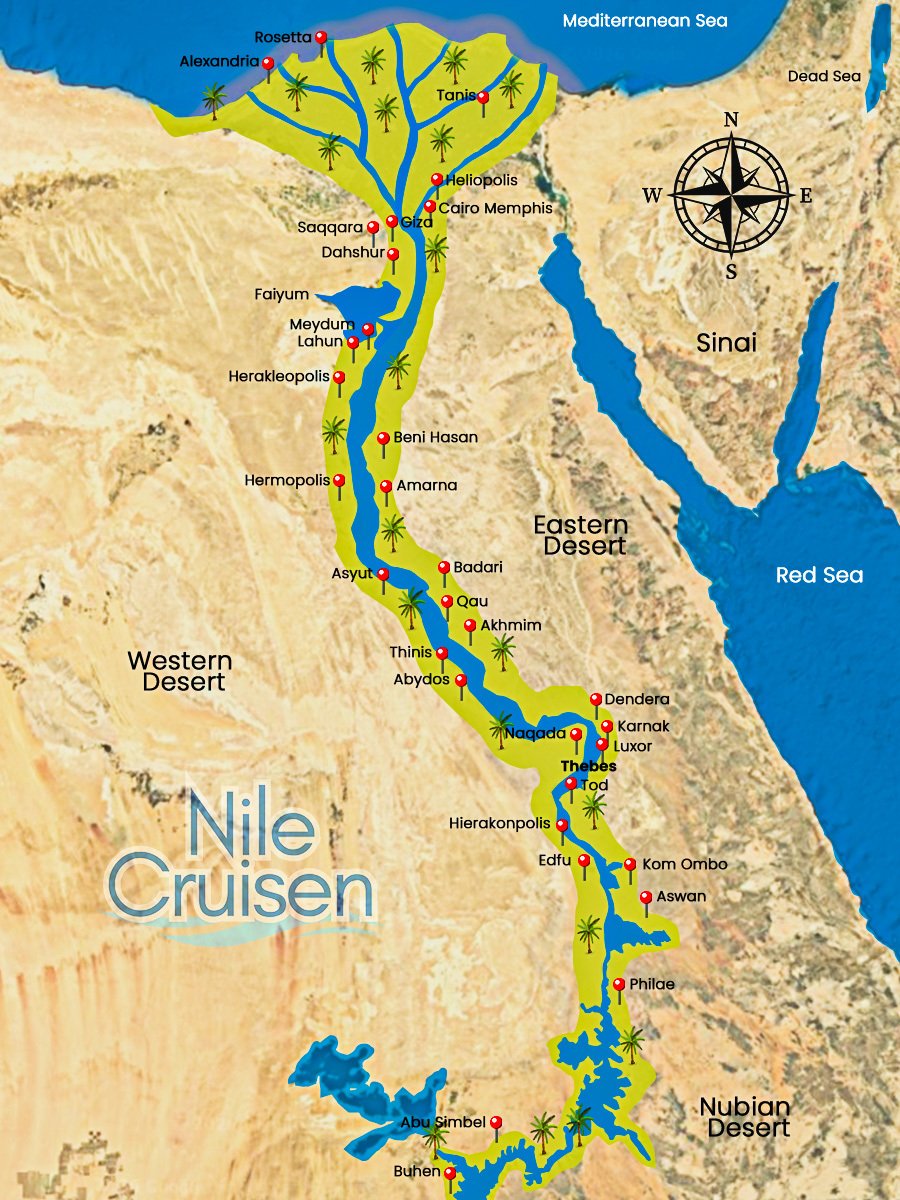
The river itself does not start in Egypt; it enters Egypt from the border of Sudan. A major spot in Egypt for the Nile River is Lake Nasser. Then it continues flowing through Aswan, Luxor, and Cairo, and then finally the Nile divides into the Nile deltas.
It enters from the south at Lake Nasser in Aswan; the lake is formed due to the Aswan High Dam. From Aswan, the Nile flows northwards; this is how it has become a primary source of water for the people of Egypt. The dam produces electricity; Egypt gets hydroelectric power from the Nile River.
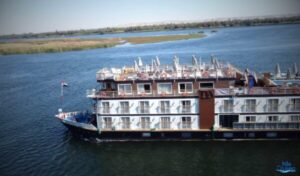
The flow of the Nile River is controlled and regulated by the officials, and water is used thoughtfully for irrigation and other purposes. The Egypt river cruises are also a part of the Nile as of today; many tourists every year come to Egypt for river cruising experiences. Egypt strongly represents the final stretch of the Nile River.
What do you mean by the Nile Deltas?
The Nile deltas are the slow-flowing water bodies that originate from one river before flowing into the sea. Nile deltas are known as the Rosetta branch on the west and the Damietta branch on the east.
The Nile River and its deltas carry nutrient-rich minerals from the mountains of Africa and deposit them during the floods on the riverbanks. It later resulted in the fertile land in the middle of the desert. Farmable land in Egypt is situated along the riverbanks, and crops like cotton, rice, wheat, and citrus fruits are most commonly grown.
These deltas are responsible for the livelihood of the people of Egypt. Besides Cairo, the capital, most of the Egyptian population lives around the deltas. Major cities like Tanta and Mansoura are situated along the deltas of the Nile. Then the major deltas end in the sea from the coastline of Alexandria, making it a famous city for being home to the Nile deltas and also a major port for shipping.
Where does the Nile River start in Africa?
The Nile River originates from the eastern part of the African continent. The Nile is an ancient and major water body in Egypt. From Lake Victoria, the White Nile, and from Lake Tana in Ethiopia, blue nile is oroiginated.
Both the White and Blue Nile then flow north towards the Sudan. In Khartoum, Sudan, both the tributaries of the Nile meet and then enter Egypt for the final stretch. If the river did not exist, a larger part of the coastal areas or fertile lands would be missing from the African continent. In ancient times, the Nile was seen as the source of the lifeline for humans.
Even today, for the people of Egypt, it is seen as beside the point. The modern trend of the Nile Cruise in Egypt has also come into existence and now provides jobs and monetary benefits from tourism purposes. The temples on the Nile riverbanks are largely explored by Nile Cruisen cruise itineraries with the exclusive experience of sailing.
What is the true source of the River Nile?
If it’s about the true source of the River Nile, then it would surely be Lake Victoria, as from there the White Nile, the longest flowing source of the Nile, and the Blue Nile later meet the Nile at Sudan. The significance of the Blue Nile stands, as it adds volume to the river. It is also seen in research and historically verified that seasonal flooding occurs due to the Blue Nile. Both unitedly create the longest flowing water bodies, so making just one a true source may not be justified.
Where does the Nile River start and end?
It starts in central and eastern Africa. The White Nile headwaters lie near the African Great Lake Victoria, and the Blue Nile headwaters lie in the Ethiopian Highlands at Lake Tana. The two rivers merge in Sudan.
The Nile ends at the Mediterranean Sea; it forms a large delta in northern Egypt and forms a delta that splits into several branches. These branches empty into the sea; this delta has supported agriculture for the people of Egypt for centuries. To date, the delta remains densely populated, and the Nile Delta ends at the coastline in Alexandria, Egypt, after crossing northeastern Africa.
Conclusion
The Nile has shaped ancient Egypt and its trade, and now in the modern era, it provides support to tourism with Nile cruises from Luxor and Aswan, and also the high dam generates electricity for the Egyptian people. The source of fresh water has now become the backbone of Egypt before ending in the Mediterranean Sea.

This article was created by the team at Nile Cruisen, one of the best tour operators in Egypt for Nile cruises and tailor-made Egypt tours.
With years of experience sailing between Luxor and Aswan, our team knows the Nile better than anyone.
We share trusted travel advice, from the best time to visit and what to pack to simple tips for avoiding crowds.
Our goal is to help you enjoy the timeless beauty of Egypt with comfort, confidence, and an unforgettable travel experience.
- Nile Cruisen Team
- Nile Cruisen Team
- Nile Cruisen Team

- Nile Cruisen Team