 Nile Cruisen Team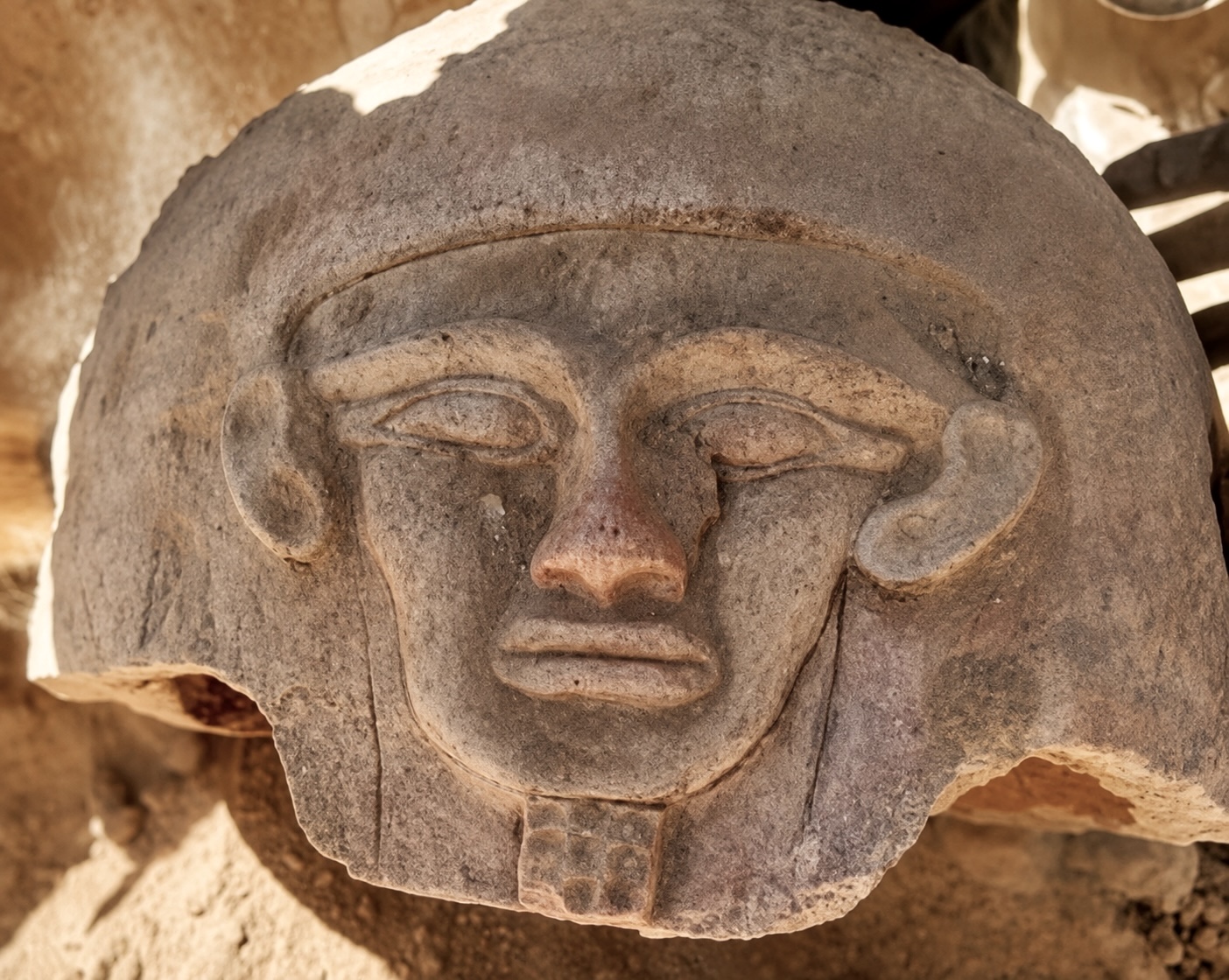
The Egyptian archaeological mission working at the Sheikh Subi site in the Bahariya Oasis, headed by the Director General of Bahariya Oasis Antiquities, revealed a number of tombs dating back to different historical periods, in addition to a group of archaeological finds, during its current excavation season at the site.
The Secretary-General of the Supreme Council of Antiquities stated that the mission uncovered three tombs. The first was a mass grave carved into the sandstone rock, and was likely intended for one family of five individuals, while the second tomb was not engraved, and likely dates back to the Roman era, and belongs to the style of tombs with stairs. As for the third cemetery, it is a mass grave that also likely dates back to the Roman era, and belongs to the type of graves with wells.
The first tomb from the Late Garonian period:
For his announcement, the head of the Egyptian Antiquities Sector at the Supreme Council of Antiquities explained that the first tomb consists of a square-shaped well about 3 meters deep, and at the end of it there are two burial chambers. The first is located on the western side. It is a small rectangular chamber in which a limestone coffin was found, inside which was a mummy covered with linen wrappers. The body of the coffin rests in a cavity in the floor of the chamber, which is consistent with the way coffins were placed in Late Period tombs at the site.
As for the second chamber, it is located on the northern side of the well. It is larger in size and also rectangular in shape, and it appears that it was used to bury the rest of the family members, as 4 limestone coffins were found inside it, each containing a mummy covered with linen wraps.
The second tomb from the Roman era:
He added that the second cemetery consists of a small well that leads to a staircase consisting of 3 steps, ending with a burial chamber of approximately 100 feet, and it appears from archaeological evidence that it was not used for burial.
The third tomb from the Roman era:
As for the third tomb, it consists of a rectangular well at the end of an entrance that leads to a small hall without a roof. It is likely that this hall was designated to receive the mummy during the burial process, before transporting it to its final location inside one of the tomb’s rooms, according to what was prevalent in tomb styles during this period. The hall leads to two rooms: The first is located in the southern side, and parts of a pottery coffin were found inside it. As for the second room, it is located on the eastern side, and inside it was found a limestone coffin, parts of its lid missing.
There are also 4 small entrances on the eastern, northern and western sides of the well. Excavation work at the eastern entrance revealed that it leads to a side burial, inside which a cylindrical pottery coffin was found, broken into several parts as a result, and its lid bears a prominent embodiment of a human face with clear features.
Other discoveries from the Pharaonic era in the Bahariya Oasis:
The head of the Central Administration of Antiquities of Cairo and Giza added that the excavation work also resulted in the discovery of a number of archaeological finds, including a variety of pottery vessels, small bottles, and dishes of various shapes and sizes, in addition to a number of offering tables made of limestone and sandstone.
A number of small votive statues made of baked clay “terracotta” were also found, including statues of maternal bodies and others of modified animal bodies.
The head of the Egyptian archaeological mission confirmed that the mission will continue its archaeological work at the site during the coming seasons, in light of the importance of the site and the abundant archaeological evidence it contains. He expressed his hope that future excavations will lead to the discovery of more tombs that may reveal the value of the oasis’ inhabitants to successive generations and shed more light on its history.
It is noteworthy that the site of Sheikh Subi includes the cemetery of the rulers and priests of the Bahariya Oasis during the late era. It is a cemetery carved into the archaeological hill known as “Sheikh Subi”, which is considered one of the most important archaeological sites in the Bahariya Oasis, as it includes the tombs of the rulers and priests of the oasis during that period. The site also includes the Bawiti Temple, which was built by the ruler of the Bahariya Oasis during the 26th Dynasty, the grandfather of Khonsu Iofankh, in honor of King Ahmose II.