 Mo Kamal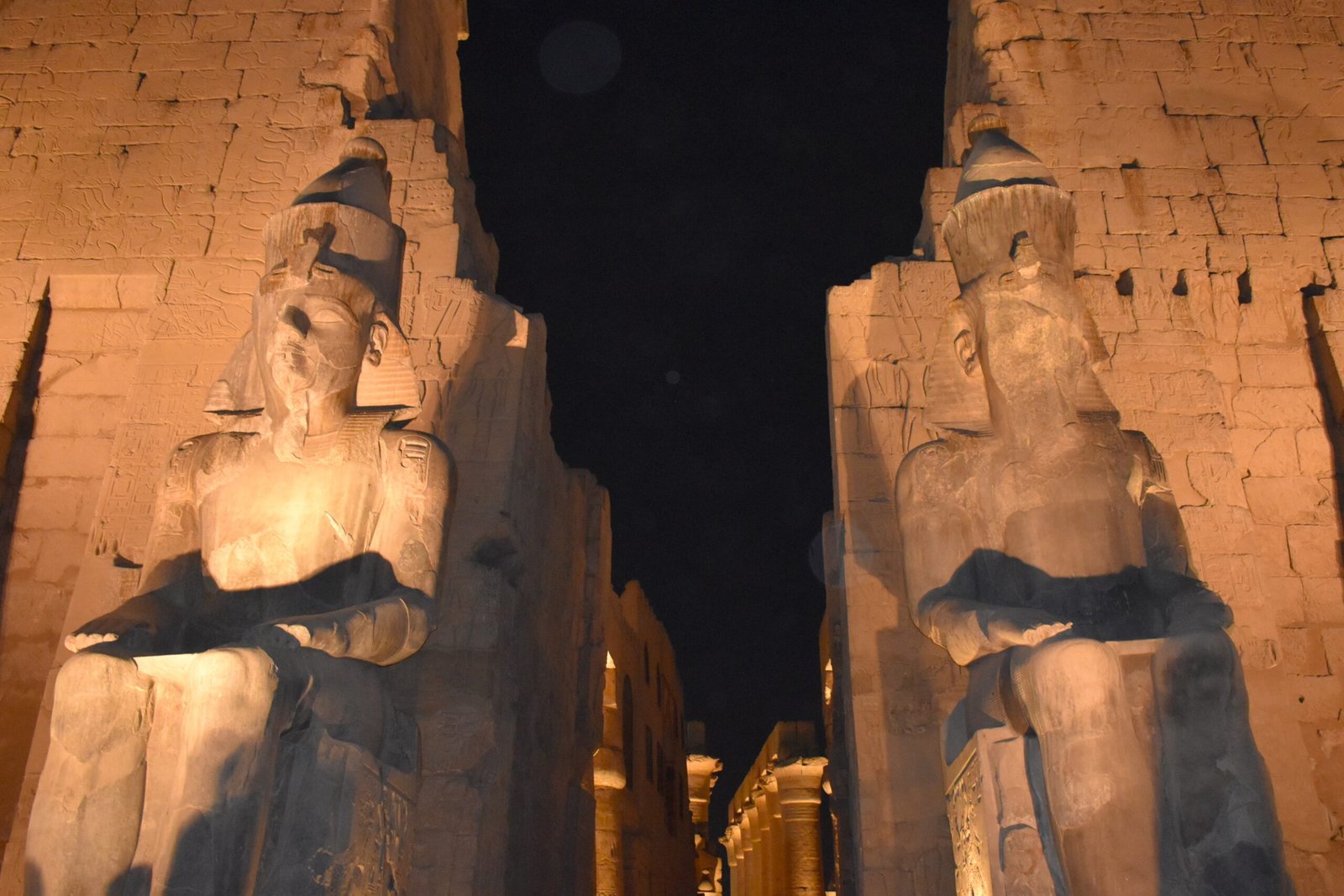
Quick Overview
- The Opet festival was one of the most important religious celebrations in ancient Thebes, the modern-day Luxor
- The Opet festival was closely associated with the Theban Triad, which consists of Amun, his consort Mut, and their son Khonsu.
- The Karnak and Luxor temples are the principal archeological locations associated with the festival, which are located on the eastern banks of the Nile at Thebes.
- The festival was closely connected with the renewal of the king, divine power, fertility, and the continued prosperity of Egypt.
- Learn about the Opet Festival in detail and its significance and also how it is celebrated in modern Egypt.
Table of Contents
-
What is the origin of the Opet Festival?
-
What does “Opet” mean in Egyptian history?
-
What did the Opet Festival celebrate, and what was the purpose of the Opet Festival?
-
What rituals were performed during the Opet Festival?
-
What was the route of the Opet Festival procession?
-
How long did the Opet Festival last?
-
The Opet Festival’s Legacy in Modern Luxor
-
Modern revival of the Opet-style procession
-
Conclusion
What is the origin of the Opet Festival?
The Opet Festival in ancient Egypt was developed as an important religious celebration in ancient Thebes, the city that became a major religious center of Amun during the New Kingdom, especially from the 18th Dynasty, approximately during 1539–1075 BC, which came to power after the expulsion of the Hyksos from northern Egypt. The new rulers made Thebes an important ceremonial center, and the Opet Festival became a major public religious celebration there and is significantly connected to the Karnak temple complex, Avenue of the Sphinx, and the Luxor Temple. It was held during the second of Akhet, the Nile flooding season, and was connected with fertility and renewal of powers.
What does “Opet” mean in Egyptian history?
“Opet” or “Ipet” was an ancient Egyptian term associated with a sacred sanctuary or favored sacred place and was also particularly connected with Luxor Temple, which was regarded as the southern sanctuary of Amun. The word is also associated with the goddess Opet (Ipet), a protective goddess linked with fertility, childbirth, motherhood, and renewal, and also the name Opet gave rise to the “Beautiful Feast of Opet,” the annual religious festival held at Thebes during the Akhet season, when the Nile flooded. Thus, in the above context, the word “Opet” refers to both the sacred place associated with Luxor Temple and to the deity connected with fertility and renewal.
What did the Opet Festival celebrate, and what was the purpose of the Opet Festival?
As per the religious context, the festival celebrates the presence and renewal of Amun-Re, together with Mut and Khonsu, the members of the Theban Triad, and their ceremonial journey from Karnak to Luxor represented an important act of religious renewal. A major focus was the renewal of the pharaoh’s life force and divine authority. The Pharaoh was regarded as the earthly ruler connected to Amun-Re, and the festival reinforced this sacred relationship.
Also, some sources suggest that the festival is associated with fertility, abundance, and prosperity. Its timing during Akhet, the season of the Nile’s annual flooding, connected the celebration with the renewal of the land and agricultural fertility. The ceremonies performed during the Opet Festival strengthen the belief that the pharaoh’s authority came from the gods, and it is believed that the pharaoh reaffirms the connection with Amun-Re, which will help him legitimize his position as Egypt’s divinely sanctioned ruler.
The festival is also responsible for reinforcing the Egyptian concept of ma’at, or the proper order and balance of the world. Through major rituals, the relationship between the gods, pharaohs, land, and people was symbolically renewed. The procession from Karnak Temple to Luxor Temple was therefore much more than a ceremonial parade, as it represented the renewal of divine and royal power, fertility, and the continued prosperity of Egypt.
What rituals were performed during the Opet Festival?
The Red Chapel at the Karnak temple is the oldest evidence of the Opet Festival, and it was constructed from grey diorite and red quartzite, which depicts the ceremonial barque of Amun-Re when the vessel was not being used. Also, the reliefs and inscriptions provide information about the festival and its procession. The visitors during their shore excursion of the Nile cruise in Egypt can see it at the Karnak Open-Air Museum. Below are the major rituals that were particularly celebrated during the Opet Festival.
Sacred Procession of the Theban Triad: It is one of the central rituals of the ceremonial procession of the sacred images of Amun-Re, Mut, and Khonsu. During the procession, the priests carry their divine images in sacred barques from the sanctuaries at Karnak toward the Luxor temple.
Journey to Luxor Temple: The procession route changed over time. In some periods, the sacred image of Amun traveled overland along the Avenue of Sphinxes, while in other periods, the ceremonial barque was transported by the river along the Nile.
Arrival and temple ceremonies: At the Luxor Temple, the sacred barque was brought through the temple precinct, where the priests performed the prayers, offerings, hymns, and other religious rites for the gods; this celebration also involved large numbers of priests and participants.
Rituals inside Luxor Temple: After the public procession, the sacred barques were taken into the more restricted areas of the temple at the inner sanctuary, which was usually only accessible by the pharaohs and high-ranking priests, who performed the sacred ceremonies.
Symbolic rebirth of the Pharaoh: An important purpose of the ceremonies was the ritual renewal of the Pharaoh, and it was about making his connection with Amun-Re reaffirmed, which symbolizes the renewal of his life force, fertility, and divine authority. At Luxor Temple, ceremonies symbolically connect the Pharaoh with Amun-Re, and this divine relationship reinforces the Pharaoh’s role as the intermediary between the gods and the people of Egypt.
Re-crowning of the Pharaoh: The renewal ceremonies were closely associated with the re-crowning of the king, which symbolizes the restoration of the royal power and confirms his legitimate right to rule. With that, the priest performs the religious rites that include offerings to the gods, recitations of hymns and spells, and prayers, and these rituals helped maintain the relationship between the divine world, the pharaoh, and Egypt.
Public Celebration: The Opet Festival was also the major public occasion. So, the people gather along the riverbanks and around the procession route to witness the sacred journey of the Theban Triad, where the people participate with music, sistrum rattles, and other festive activities that turn the religious event into the public celebration.
Return of the sacred barques: After the ceremonies in Luxor were completed, the sacred images were carried back towards Karnak, bringing the ceremonial cycle to a close, and the return journey was itself an important part of the festival.
What was the route of the Opet Festival procession?
The Opet festival procession connects the Karnak temple and Luxor Temple, for which the route changed over different periods of Egyptian history; the sacred images of Amun could travel either by land or water.
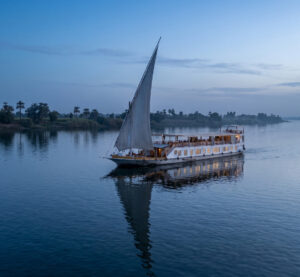
When the water route was used, the sacred image was transported along the Nile in a ceremonial vessel known as the Userhat-Amun, meaning roughly “mighty of prow is Amun.” It is discovered during the research that the Userhat-Amun was a richly decorated ceremonial boat that was historically made from cedar from Lebanon and covered with gold, and its front and back were decorated with ram’s heads associated with Amun.
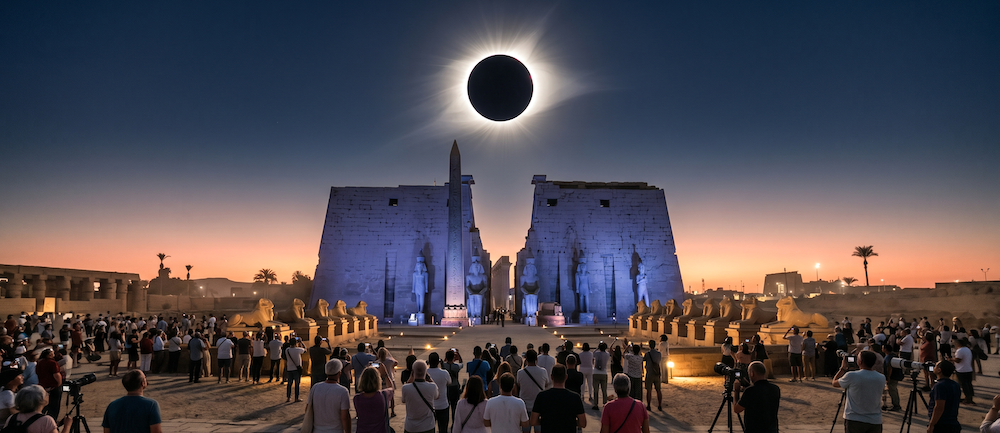
Evidence connected with Nectanebo I also provide information about the land route used for Amun’s journey between Karnak and Luxor, as that time land route was used. The procession time travels along the Avenue of Sphinxes, the ceremonial road linking Karnak and Luxor. The avenue was lined with statues of sphinxes and other mythical figures.
How long did the Opet Festival last?
The duration of the Scared Opet Festival has changed over time under different pharaohs; like during the time of Thutmose III (1458–1426 BC), the festival lasted 11 days. When the period of Ramesses III’s reign was around 1187 BC, the festival extended for 24 days, and by the end of his reign, around 1156 BC, it had reached 27 days. Therefore, there was no fixed duration of the Opet Festival throughout Egyptian history.
The Opet Festival’s Legacy in Modern Luxor
In modern-day Luxor, the traditions of the Opet festival are connected with the modern celebration of Sheikh Yūsuf al-Haggāg, who was an Islamic holy man associated with Luxor. During the Mawlid, a ceremonial boat is carried through the streets of Luxor as part of the celebrations, and this has been compared with the ancient tradition of carrying the sacred barque during the Opet Festival.
Modern revival of the Opet-style procession
On 25 November 2021, Egypt officially reopened the restored Avenue of Sphinxes, the ancient ceremonial route connecting Karnak and Luxor temples. Here, the reopening ceremony featured a large-scale procession inspired by the ancient Opet Festival, which has helped in bringing the historic route back into public attention. During that time, the event recreated the atmosphere of an ancient religious procession, with a ceremonial journey along the restored avenue connecting Karnak Temple and Luxor Temple. Locally, still by some organization, the Opet festival is celebrated to demonstrate Luxor’s cultural heritage, allowing visitors to experience the historic connection between Karnak, the Avenue of Sphinxes, and Luxor Temple.
Conclusion
The Opet festival was far more than an annual religious celebration; it was an important event that connected religion, kingship, fertility, and the prosperity of ancient Egypt. It remains relevant to the modern visitors because its history is closely connected with Karnak Temple, Luxor Temple, and the Avenue of Sphinxes. The reopening of the Avenue of Sphinxes in 2021 gives visitors a deeper appreciation of Luxor’s temples and the Avenue of Sphinxes because these monuments were once part of a living religious landscape rather than isolated archaeological sites.

Mo Kamal
Mohamed "Mo" Kamal is one of the leading Egyptologists in Luxor and Aswan. With a strong academic background and a deep passion for ancient Egyptian history, he brings every site to life with engaging stories and expert knowledge. Mo joined the Nile Cruisen team in 2017 and has been creating unforgettable experiences for our guests ever since. He is also a writer and researcher, specializing in the history and architecture of ancient Egyptian temples, tombs, and monuments.
- Mo Kamal

- Mo Kamal
- Mo Kamal
- Mo Kamal