 Nile Cruisen Team
 Mut is an ancient Egyptian Mother Goddess. The meaning of Mut is “Mother”. During the New Kingdom of Ancient Egypt, she became one of the most important goddesses. She was the wife of the state god Amun and had received religious and political influence. She formed the Theban Triad with Amun and their son Khonsu. They were one of the most important divine families. People saw her as the divine mother and queen. According to people, she protected the pharaohs and supported their right to rule. When it comes to her depiction, she used to wear the double crown of Egypt, which was the symbol of protection, motherhood, and royal power. People used to worship her at the Temple of Mut located in Karnak. It’s believed that the temple was associated with the fierce lioness goddess Sekhmet. When the importance of the city of Thebes grew, Mut also became more important and respected, and she earned the title Queen of the Gods.
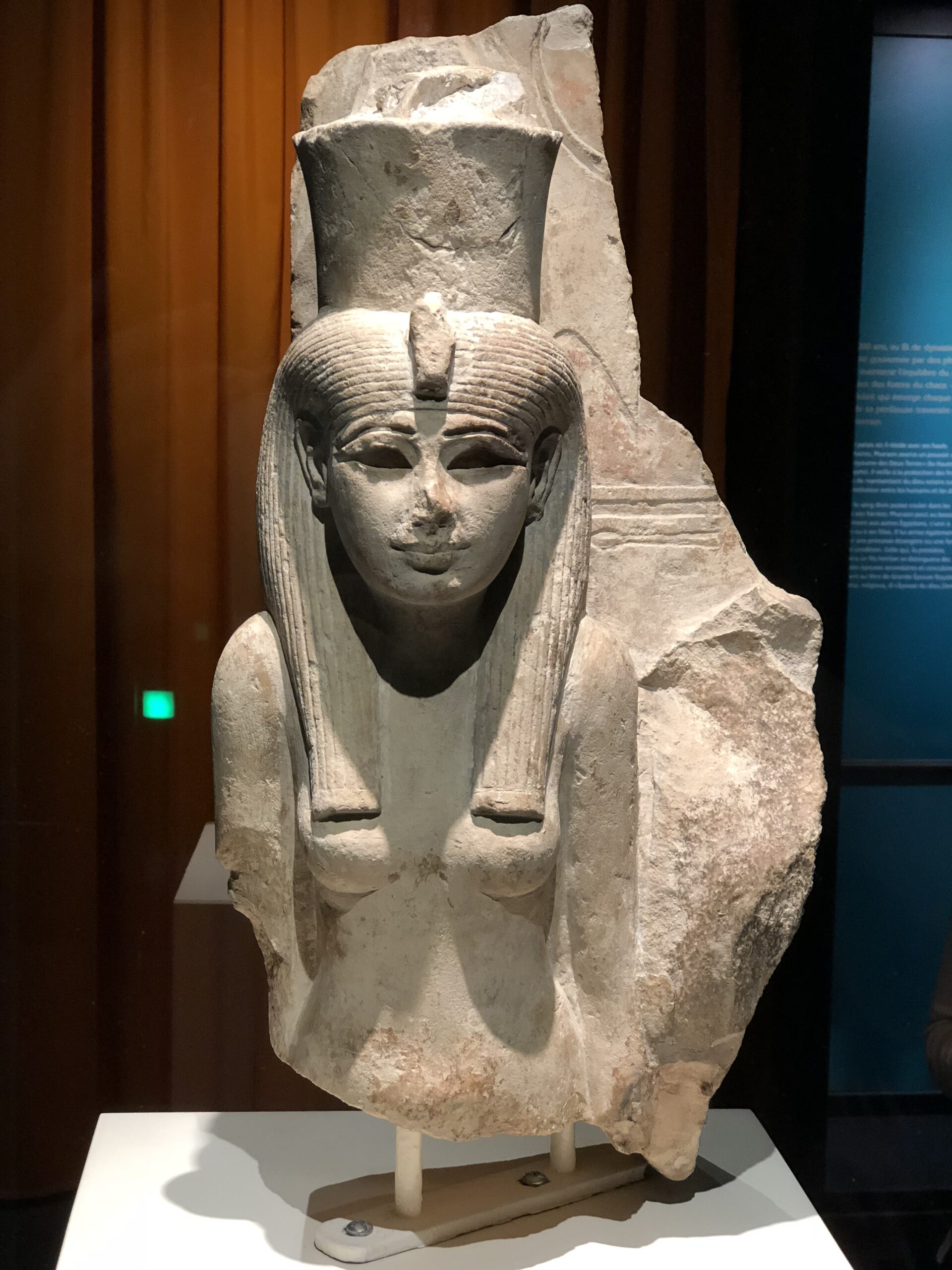
Table of Content
-
Origin of the Mut Goddess
-
What is Mut the Goddess of?
-
What are the Powers of Mut, Egyptian Mother Goddess?
-
Symbols Associated with Mut
-
What is the Legacy of Goddess Mut?
-
How Long Was Mut Worshipped?
-
How Did Mut Influence Ancient Egypt?
-
Why Is Mut Remembered Today?
-
Festivals associated with Mut
Origin of the Mut Goddess
It was the political ascendancy of the city of Thebes which directly led to Mut being elevated to one of the primary roles within the Egyptian divine scheme. Initially, an obscure local goddess, she was given cosmic significance because of the power achieved by the cult of her own consort.
-
Early Status and Theban Power
Mut began as a relatively minor, archaic goddess in the region of Thebes. In the New Kingdom (c. 1550-1070 B.C.E.), her profile began to climb.
When Thebes took prominence in the political and religious life of the realm, its traditional god, Amun, established himself as the “King of the Gods,” or Amun-Ra.
As the consort and mother-goddess tied to Amun, his ascent reflected the rise to status of Mut to that of chief consort and “Queen of the Gods”-the ultimate title of a goddess.
-
The Significance of Her Name
Her very name of Mut is the word for ‘Mother,’ and therefore she carried with her the power to divine authority that was vital for creation as well as the ensuring of the future and succession. It was through Mut that life came forth and kingly succession was made viable. There was great power in that name as the theology had an enduring cycle of birth-death-renewal. She was the god through whom pharaohs gave assurance to their subjects of their divine generation and their rightful right to the throne.
What is Mut the Goddess of?
Mut was the Egyptian goddess of motherhood, divine power, and queenship. She was given the title of the Queen of the Gods and Divine Mother during the New Kingdom of Ancient Egypt. She was the wife of Amun and the mother of Khonsu in the Theban Triad. She was known for her caring nature while also symbolizing royal authority. According to ancient Egyptians, she protected the pharaohs, blessed the royal family, and helped keep peace in the world and maintain order in the Kingdom. It’s believed that she was related to:
- Protection and care
- Motherhood and family
- Maintaining harmony in the world
- Queenship and royal authority
In various artifacts, you can see her wearing the double crown of Egypt or as a vulture, both symbols of royal power and maternal protection.
What are the Powers of Mut, Egyptian Mother Goddess?
It’s believed that she has many powers in Ancient Egyptian religion. She was the Queen of the Gods and the Divine Mother; that’s why it’s believed that she always protected both the gods and the people of Egypt.
- Always provided protection to the pharaohs: According to ancient Egyptians, it’s believed that she protected the pharaohs and gave them the right to rule Egypt.
- Mother of the gods: As her name itself means ‘Mother’, she cared for the gods and took care of her people.
- Provided royal power: According to Egyptians, Mut helped pharaohs to rule Egypt and make them accepted by the gods.
- Protected Egypt: Mut was believed to protect Egypt, keeping it peaceful, safe, and stable.
- Symbol of motherly care: As for her symbolism, she symbolized protection, love, care and the strong bond between mother and children.
- Kept balance and order: She was part of the Theban Triad with Amun and their son Khonsu; she helped maintain balance and order in the world.
- Blessed the royal family: When any religious festival was celebrated, she used to bless the pharaoh and the royal family, reconnecting them with the gods.
- Gave strength: Her symbol, the vulture, represented that she could protect people from danger and take care of them with motherly care.
Symbols Associated with Mut
There are various symbols associated with the goddess Mut. According to those symbols, you can understand her supreme position as Queen of the Gods, her immense power, and her motherly qualities.
The vulture
The primary symbol of Mut was the Vulture. This symbol represented the nurturing and protective nature of Mut, as they were considered to protect their offspring ferociously.
The Double Crown of Egypt
The double crown symbol indicated that she had ruled over both Upper and Lower Egypt. Queen of all Gods and Goddesses that rule in Egypt.
The White Crown of Upper Egypt
At times it represented her singular command of Upper Egypt through the usage of the White Crown (Deshret).
Ankh (symbol of life)
Mut can be depicted with an ankh to signify eternal life. These symbols represented health and divine life.
Was-sceptre
This is a sceptre which held symbolic significance to many gods – symbolizing power and authority within the pantheon and through the land. In this instance, Mut held it as she herself has power.
The Lioness (Sekhmet)
Through her transformation into, and relationship with, the lioness goddess Sekhmet, the lioness was a very strongly held symbol associated with Mut. This animal denoted fiercer, more forceful strength, courage, and protection from harm and threats.
The Sacred Lake (Isheru)
At Mut’s temple in Karnak, there exists the Sacred Lake or Isheru. This can be symbolically a crescent, and this has been particularly associated with Mut and her worship within the temple system.
What is the Legacy of Goddess Mut?
Mut has earned respect and is represented as one of the most important goddesses in Ancient Egypt for hundreds of years. She had a great role in royal life and religion. You can see her influence in various temples and monuments that remain today. If you are interested in visiting Karnak Temple Complex, where you can see multiple temples dedicated to different gods and goddesses, including Mut, you can book a Nile cruise from Luxor to Aswan.
How Long Was Mut Worshipped?
Mut gained a lot of importance during the New Kingdom and it was the time, when Egypt was at its peak. Even after that, people continued to worship her. Over time, when the city of Thebes became less known and other gods became more popular, her influence gradually reduced. Even after that, many people continued to worship her in different parts of Egypt.
How Did Mut Influence Ancient Egypt?
Mut was thought to be protective of the Pharaoh, as well as his wife and children, and to maintain the peace of the land. She was the first woman among the so-called Theban Triad (Amun, Mut, Khonsu) as mother of Khonsu. Her affinity to fierce Sekhmet demonstrated her protective capabilities. Her temple in Karnak still stands as her monument to this day.
Why Is Mut Remembered Today?
Mut was known as the Mother of all Gods and the Queen of all Gods. She symbolized motherhood, protection, power, and royal authority. The life story of Mut illustrated how a minor goddess became one of the foremost goddesses of Ancient Egypt. Today, Mut is an important figure in Egyptian mythology, and many continue to be interested in her history.
Festivals associated with Mut
Theban Triad’s public celebrations were important to strengthen the pharaoh’s authority. These festivals were large state events that showed how powerful the gods were, especially Mut.
- The Opet Festival: The Opet festival was one of the most important festivals celebrated in ancient Egypt. It was celebrated for several weeks and involved various individuals.
- The Sacred Procession: At the time of the event, statues of Mut, Amun, and Khonsu were carried in sacred ships from Karnak Temple Complex to Luxor Temple, along the Avenue of Sphinxes.
- Strengthening the Pharaoh’s Power: The festivals were celebrated to show the connection between the pharaoh and the gods. The role of Mut was to confirm the pharaoh’s right to rule and protect the royal family.
Conclusion
The blog shares information on the power, symbols, and festivals associated with Mut, the Egyptian Mother Goddess. Keep learning about Egypt’s gods and goddesses from our blogs on the Nile Cruisen website. If you want to explore ancient temples and complexes in Egypt, you can explore Nile Cruise Packages at Nile Cruisen.

This article was created by the team at Nile Cruisen, one of the best tour operators in Egypt for Nile cruises and tailor-made Egypt tours.
With years of experience sailing between Luxor and Aswan, our team knows the Nile better than anyone.
We share trusted travel advice, from the best time to visit and what to pack to simple tips for avoiding crowds.
Our goal is to help you enjoy the timeless beauty of Egypt with comfort, confidence, and an unforgettable travel experience.
- Nile Cruisen Team

- Nile Cruisen Team
- Nile Cruisen Team
- Nile Cruisen Team