
Upper and Lower Egypt were two major regions of ancient Egypt. Before unification, they had separate rulers, political centers, and traditions. One of the interesting things about these areas is their position. Upper Egypt is in the south, and Lower Egypt is in the north. This may sound confusing, but their names come from the direction of the Nile River.
Let’s understand why Egypt was divided, how the two regions were united, and what makes them different.
Table of Contents:
-
What were Upper and Lower Egypt?
-
Why Was Egypt Split Into Upper and Lower Egypt?
-
Why are Upper and Lower Egypt Flipped?
-
Who Unified Upper and Lower Egypt?
-
The Narmer Palette: Evidence of Egypt’s Unification
-
When Were Upper and Lower Egypt United?
-
The Double Crown of Upper and Lower Egypt
-
Difference Between Upper and Lower Egypt
-
What Part of Egypt Is Considered Upper Egypt?
-
What connects Upper and Lower Egypt?
-
What Direction Is Upper Egypt From Lower Egypt?
-
Final Thoughts
-
Frequently Asked Questions About Upper and Lower Egypt
What were Upper and Lower Egypt?
Upper and Lower Egypt were two geographical and political regions of ancient Egypt. Upper Egypt occupied the southern Nile Valley, extending towards Aswan. It had a narrow strip of fertile land surrounded by desert. Lower Egypt covered the northern part of the country, encompassing the fertile Nile Delta, where the river splits into a number of branches before reaching the Mediterranean Sea. Together, these regions were traditionally known as “The Two Lands.”
Why Was Egypt Split Into Upper and Lower Egypt?
Before unification, the communities along the Nile gradually developed into two distinct political areas. Upper Egypt had a fairly narrow river valley; Lower Egypt had the wider valley with the better agricultural land and access to the Mediterranean trade routes. The different geographical conditions influenced the economies, communities, and political development of both regions. Over time, each area developed its own kings and traditions. That’s why ancient Egypt was split into two kingdoms before it became one kingdom.
Why are Upper and Lower Egypt Flipped?
Upper and Lower Egypt might appear flipped when looking at a modern map, but the names are derived from the elevation and flow of the Nile. The Nile flows from south to north. Upper Egypt is the upstream bit (in the south), and Lower Egypt is the downstream bit (in the north).
In simple terms, Upper Egypt is called Upper because it’s at the upper end of the river, not because it’s at the top of the map.
Who Unified Upper and Lower Egypt?
King Narmer is traditionally credited with the unification of Upper and Lower Egypt around 3150-3000 BCE. He is frequently linked with Menes, the traditional first king of united Egypt, although historians debate whether they were the same person.
The Narmer Palette, an ancient Egyptian ceremonial artifact, shows the king wearing the crowns associated with both regions. It is an important symbol of his authority over the Two Lands.
The Narmer Palette: Evidence of Egypt’s Unification
The Narmer Palette is one of the most important objects from early Egyptian history. This carved ceremonial stone shows King Narmer wearing different royal crowns. On one side of the stone, he is wearing the White Crown associated with Upper Egypt. On the other side, he wears the Red Crown associated with Lower Egypt. It also contains military and royal imagery scenes, which many scholars interpret as a representation of Narmer’s authority over both regions. Today, the Narmer Palette is part of the Egyptian Museum’s collection in Cairo.
When Were Upper and Lower Egypt United?
The unification of Upper and Lower Egypt is traditionally dated to the reign of Narmer. Upper and Lower Egypt were united around 3150-3000 BCE, and this is the start of the Early Dynastic Period. The unification is traditionally attributed to King Narmer, who is credited with being the first pharaoh to rule both Upper and Lower Egypt.
The unification didn’t necessarily happen all at once. Several developments helped bring the two lands together:
- Political and military expansion: The rulers of Upper Egypt were gradually extending their control to the north. The Narmer Palette provides important evidence of royal power and military victories during this period.
- Growing trade and cultural links: People living along the Nile were exchanging food and goods as well as ideas. This in turn led to a much stronger link between the two regions.
- One royal government: As the two regions came under a single ruler, there was the development of a centralized government. Memphis, situated at the junction of the Nile Valley and the Delta, became a major center of royal administration.
This unification formed the basis of a kingdom that would go on to become one of the most impressive civilizations of the ancient world.
The Double Crown of Upper and Lower Egypt
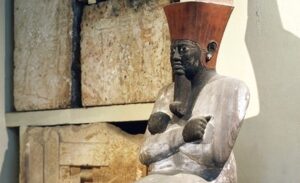
One of the most obvious symbols of Egyptian unification was the Double Crown. The pharaoh wore different crowns to signify his authority over the two regions.
White Crown (Hedjet): Upper Egypt.
Red Crown (Deshret): Lower Egypt.
Double Crown (Pschent): The combination of both crowns and a symbol of the king’s authority over Upper and Lower Egypt.
By wearing the Double Crown, the pharaoh displayed his authority over both lands as one kingdom.
Difference Between Upper and Lower Egypt
The main difference between Upper and Lower Egypt was their position, landscape, and physical geography.
| Feature | Upper Egypt | Lower Egypt |
|---|---|---|
| Location | Southern Egypt | Northern Egypt |
| Landscape | Narrow Nile Valley | Wide Nile Delta |
| Nile position | Upstream | Downstream |
| Agriculture | Fertile land along the Nile | Extensive fertile delta plains |
| Important places | Luxor, Aswan, and Abydos | Memphis and Nile Delta settlements |
| Traditional crown | White Crown (Hedjet) | Red Crown (Deshret) |
Upper Egypt was mainly a long, narrow river valley with desert on either side. On the other hand, Lower Egypt had much wider farmland, wetlands, and waterways.
What Part of Egypt Is Considered Upper Egypt?
Upper Egypt is the southern part of Egypt, stretching along the Nile Valley towards Aswan.
Some of the important historical destinations in Upper Egypt include Luxor, Aswan, Edfu, and Abydos. These places are known for their ancient temples, archaeological sites, and monuments. Luxor is particularly famous for Karnak Temple, Luxor Temple, and the Valley of the Kings.
What connects Upper and Lower Egypt?
The Nile was the vital link between Upper and Lower Egypt. It provided water for agriculture, and it meant that people could move around, transport goods, and be in contact with the various communities along the river.
In olden days, boats were used to carry food and building materials from one area to another. That enabled people to trade goods and to maintain links with other people even if they were living in different parts of Egypt.
Even after the two regions were united, the Nile remained a very important feature of the kingdom. It was the means by which the pharaohs could communicate across the kingdom, supplies could be moved, and the pharaohs could maintain control over both Upper and Lower Egypt. In many respects, the Nile was the reason that the two regions stayed together.
What Direction Is Upper Egypt From Lower Egypt?
Upper Egypt is to the south of Lower Egypt along the Nile Valley and comprises places such as Luxor, Edfu, and Aswan. If you’re traveling from the Nile Delta down towards those cities, you’re heading into Upper Egypt.
The reason for the names is the direction of the Nile. It flows from south to north, so Upper Egypt is the upstream and Lower Egypt is the downstream (towards the Mediterranean Sea). That’s why the names seem so very counterintuitive if you’re looking at a modern-day map.
Final Thoughts
Upper and Lower Egypt began as two distinct regions, each with its own geography, traditions, and political leadership. Their most important connection was the Nile, which supported agriculture, encouraged trade, and helped hold the two regions together.
Their eventual unification around 3150-3000 BCE saw them brought together under one ruler, and that in turn formed the basis of ancient Egyptian civilization. Luxor and Aswan are two places today that give you a good indication of the history of Upper Egypt and the civilization that developed along the Nile.
For travelers interested in exploring these historic places, a Nile cruise between Luxor and Aswan is a wonderful way to experience Egypt and get in touch with Nile Cruisen.
Nile Cruisen is a tour operator specializing in Nile cruise experiences in Egypt. We can help you by arranging Nile cruise stays and independently organizing all tours, sightseeing, activities, and excursions, helping travelers explore Egypt’s historical attractions and destinations along the Nile.
Frequently Asked Questions About Upper and Lower Egypt
When were Upper and Lower Egypt united?
Upper and Lower Egypt were united around 3150-3000 BCE to begin the Early Dynastic period. That’s the traditional date for the unification, with Narmer as the king.
Why were Upper and Lower Egypt flipped?
They weren’t actually flipped. Their names are based on the direction of the Nile’s flow rather than on modern map directions. Upper Egypt is upstream in the south, and Lower Egypt is downstream in the north.
Was Menes the same person as Narmer?
Many historians will identify Menes with Narmer, though that identification is by no means certain. Menes is the name traditionally ascribed to the first king of Egypt, Narmer being the name that comes to us from the archaeological evidence of the early dynastic period.
Did Upper and Lower Egypt have different crowns?
Yes, Upper Egypt was the Hedjet (White Crown) and Lower Egypt the Deshret (Red Crown). After the unification of the two regions, the Double Crown was the symbol of the pharaoh’s power over both.
Did Upper and Lower Egypt have different rulers?
Prior to unification, they had separate political centers and separate rulers. Following unification, they were both under the rule of one king.
How were Upper and Lower Egypt united?
King Narmer is traditionally credited with the unification of Upper and Lower Egypt around 3150-3000 BCE. The Narmer Palette provides important evidence of his authority over both regions, while political expansion, military activity, growing trade, and cultural connections contributed to the formation of the unified Egyptian Kingdom.

This article was created by the team at Nile Cruisen, one of the best tour operators in Egypt for Nile cruises and tailor-made Egypt tours.
With years of experience sailing between Luxor and Aswan, our team knows the Nile better than anyone.
We share trusted travel advice, from the best time to visit and what to pack to simple tips for avoiding crowds.
Our goal is to help you enjoy the timeless beauty of Egypt with comfort, confidence, and an unforgettable travel experience.
- Nile Cruisen Team

- Nile Cruisen Team
- Nile Cruisen Team

- Nile Cruisen Team