Is Egypt an Arab or African country?
In fact, Egypt is an African country geographically and an Arab country culturally and nationally. Egypt has a unique double identity; It is located in the northeastern corner of the continent of Africa, and the main gateway from Aisa continental, but its people (known as Egyptians) speak the Arabic language and belong culturally, historically, and politically to the Arab nation.
If you are planning to travel to Egypt, you should know this dual identity is key to absorbing the amazing cultural diversity you will experience during your trip in the mother of the world. Here, we will detail for you how Arabism merged with African roots to create one of the best tourist destinations in the world and the oldest civilization.
Egypt is not just an area on the map; it has an untradtionalaly location; it is situated in two of the oldest continents (Africa and Asia). Its territory extends mainly on the continent of Africa, while the Sinai Peninsula represents a bridge linking it to the continent of Asia. This location makes it the eastern gateway to Africa and a beating heart in the middle of the Arab world.
Why is Egypt an Arab country?
When you start exploring and reading about Egypt, you will immediately notice the predominantly Arab character of the Egyptian street, squares, and even the official name, which is the Arab Republic of Egypt. This Arab affiliation is due to several profound historical and societal reasons:
- Migrations and mixing: Since the Islamic conquest in 641 AD, Arab tribes have invaded Egypt, and widespread merging and intermarriage occurred between Arabs and Egyptians (Coptics) over the course of centuries.
- Language and Culture: The Arabic language became the mother/official tongue, and Egyptians embraced authentic Arab customs and traditions such as generosity, honoring the guest, and family cohesion, etc.
- National identity: Politically and intellectually, Egypt led the Arab liberation movements, and it is a founding member of the League of Arab States in Cairo, which established its Arabism beyond doubt.
How did Egypt become an Arab country?
If geography places Egypt in the east of Africa, then history and culture place it in the heart of the Arab world. The shift towards Arabism did not happen overnight, but was the product of centuries of demographic and social interactions:
- Since the Islamic conquest of Egypt in 641 AD (20 AH) under the leadership of Amr ibn al-Aas, waves of Arab tribes began to arrive in Egypt. This influx was not just for military control, but rather for societal stability. Extensive intermarriage and mingling occurred between Arab immigrants and indigenous Egyptians (Copts), leading to gradual assimilation and a more homogeneous fabric.
- Gradually, Arabic replaced Coptic (an extension of ancient Egyptian) as the language of daily communication and administration. With the spread of Islam, Arab and Islamic culture took root in customs, traditions, arts, and literature, so that Arab identity became an integral part of the psychological component of Egyptians.
- In the modern era, Egypt led the Arab liberation movements and was and still is the permanent headquarters of the Arab League. Egyptian soft power (cinema, literature, music, and Al-Azhar) played a pivotal role in shaping the entire Arab conscience, making Egypt the undisputed “big sister” of the Arab countries.
Read also:
- Culture and Traditions in Egypt.
- Food & Dining in Egypt (Useful Guide).
- What is the best food in Egypt?
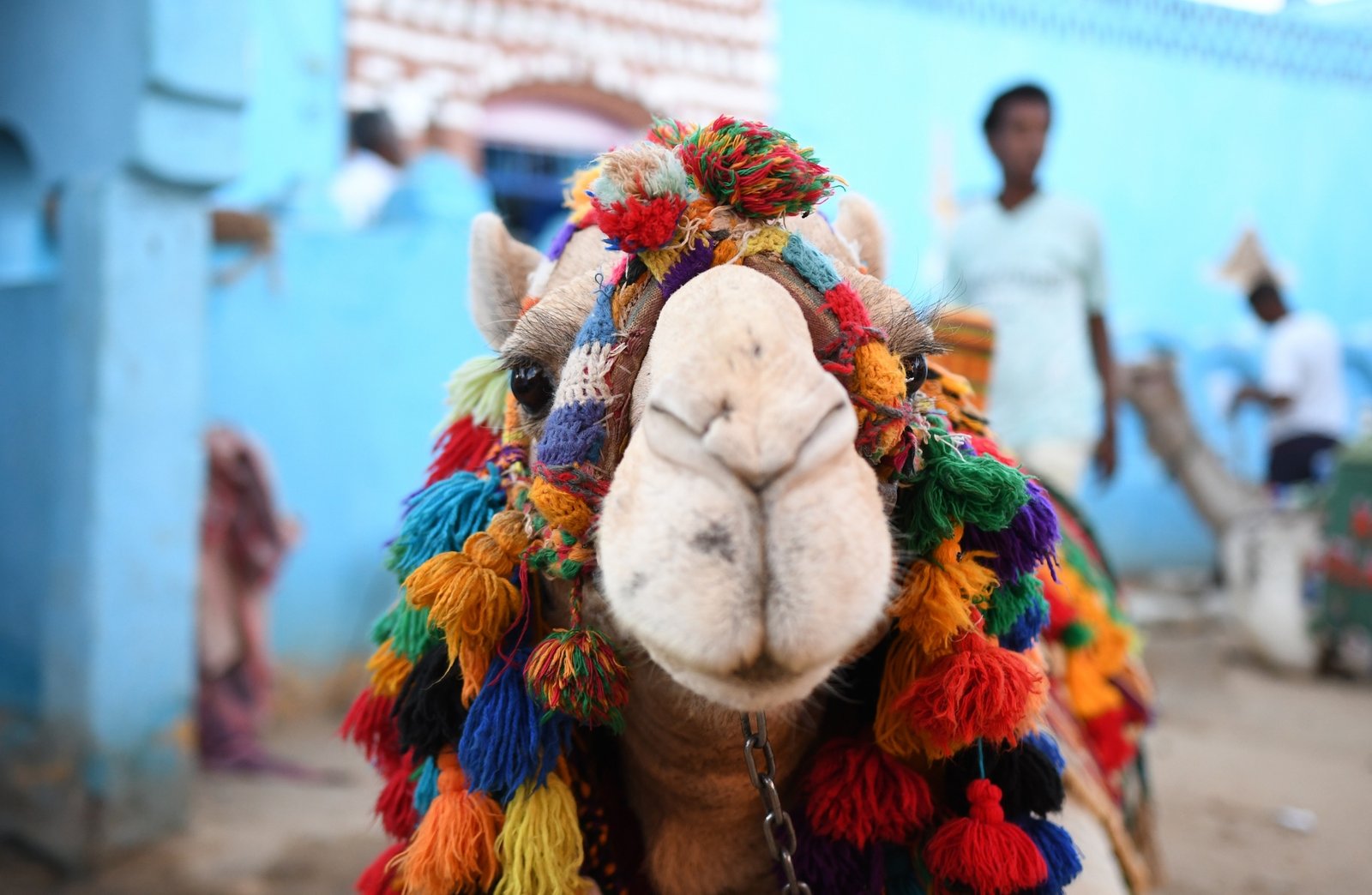
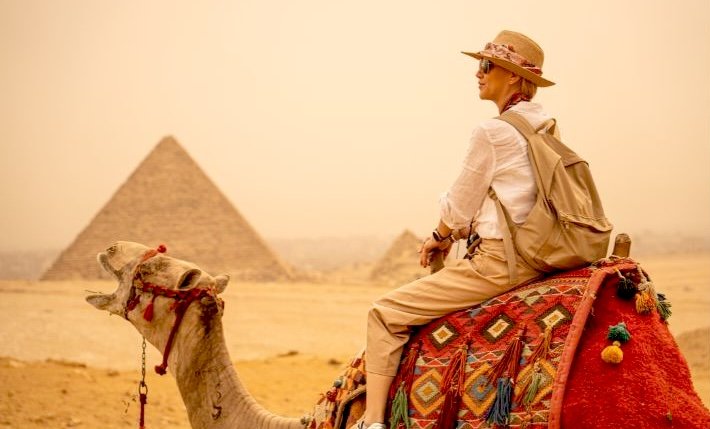
Camels are believed to have been brought to Egypt by the Arabs.
Return to the African depths
Despite its deep-rooted Arab identity, Egypt realized that its national security and economic stability were closely linked to its mother continent. In recent years, Egyptian policy has witnessed a noticeable strategic shift towards restoring its leadership role in Africa.
With the challenges related to the Nile waters, Egyptian diplomacy has begun to attach utmost importance to rapprochement with the Nile Basin countries and African countries in general.
Egypt seeks to build strong economic partnerships within the continent, through infrastructure projects, such as the “Cairo-Cape Town” road project, electrical connectivity, and support for the African Continental Free Trade Agreement.
This rapprochement culminated in Egypt assuming the presidency of the African Union in 2019, and the intensification of presidential and diplomatic visits to the capitals of the African continent, which confirms that Egypt is proud of its African roots and considers it a vital circle for its security and future.
Comparison: Circles of belonging in the Egyptian personality between Arab and African:
Language and identity
The Arab dimension in this aspect is represented by the fact that the Arabic language is the official language of the country, and the reliance on the Arab national identity mainly. While the African dimension is evident in the original geographical affiliation to the continent of Africa and the clear influence on the cultures of the southern countries.
Cultural influence
The Arab dimension in Egypt depends on a huge wealth of literature, art, poetry, and social customs shared with its Arab surroundings. On the other hand, the African dimension is strongly highlighted through the Nubian extension in southern Egypt and the enchanting rhythmic arts and music it carries.
Regional institutions
From the perspective of the Arab dimension, Egypt is a founding state of the League of Arab States and hosts its permanent headquarters in its capital. From the perspective of the African dimension, it is proud to be a founding country of the Organization of African Unity (which is known today as the African Union) and has a historical role in supporting its liberation movements.
Strategic interests
Egyptian policy moves within the Arab dimension to protect vital interests that include Gulf security, defending the Palestinian cause, and securing the Red Sea. While the African dimension is based on existential issues such as securing water sources, maintaining the stability of the Nile Basin countries, and the security of the Horn of Africa region.
Result:
Egypt cannot be placed in one solid mold; It is not just an Arab country located in Africa, and it is not just an African country that speaks Arabic. Egypt is a unique civilizational case. A crucible in which the harsh and fertile geography of Africa melted with the culture, language, and history of the Arabs.
This genius fusion between Arabism and Africanism is what gave Egypt its geopolitical weight and made it, throughout history, a bridge where continents meet and civilizations interact, so that Egypt will always remain the heart of the ancient and modern world.

Omnia Elsayed
Omnia El Sayed is a travel advisor and Senior Tour Operator at Nile Cruisen, where she has been helping travelers since 2021. She graduated from the Faculty of Archaeology at Cairo University and has visited Egypt’s most famous historical sites many times. With her deep knowledge of Egypt and passion for travel, Omnia creates personalized itineraries that help guests enjoy authentic and unforgettable experiences.
- Omnia Elsayed
- Omnia Elsayed
- Omnia Elsayed

- Omnia Elsayed

Discover the secrets of the past by booking one of our deep Egyptian history travel packages
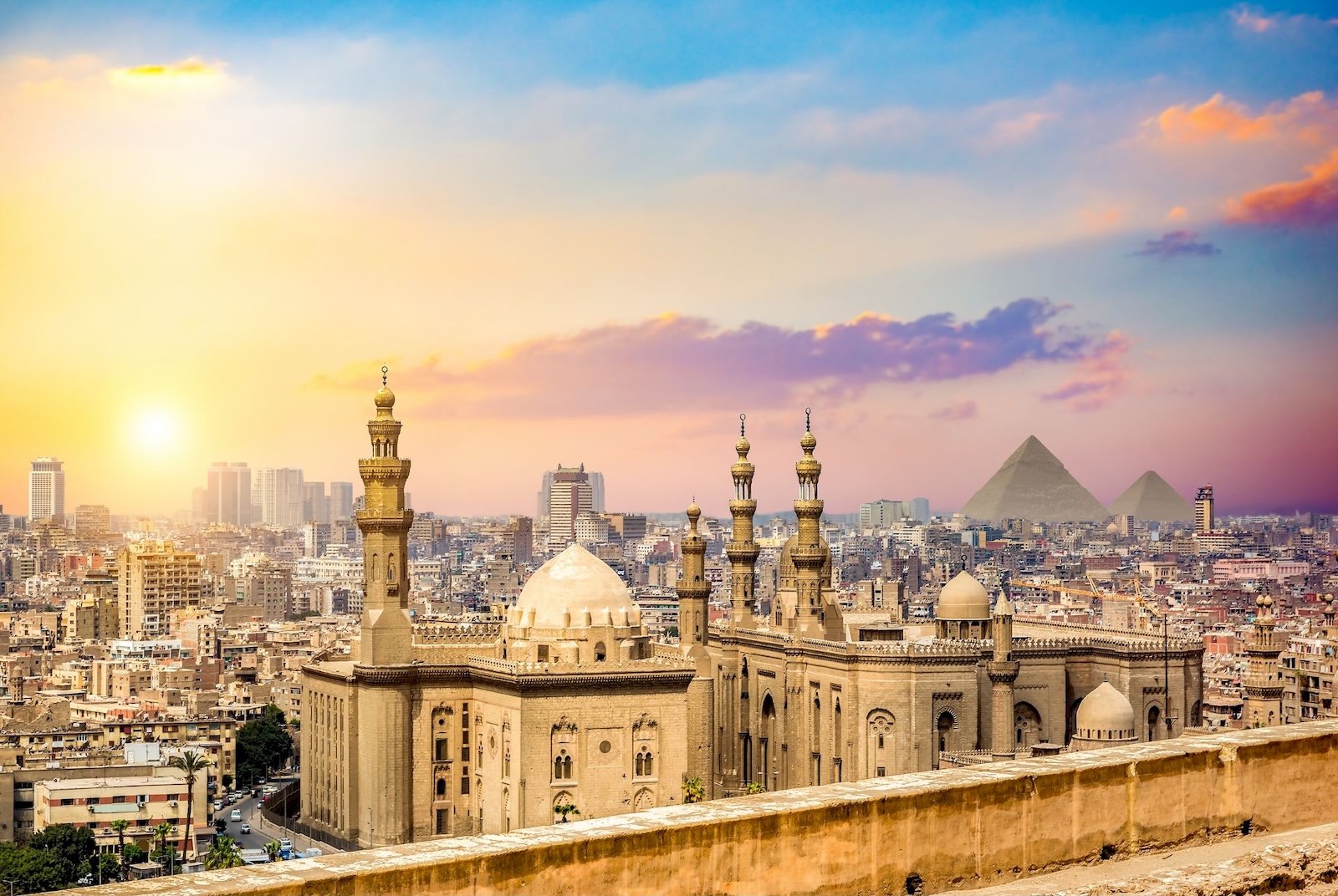
10-Day Egypt Itinerary: Cairo & Nile Cruise
Start from
$1209 / U$D
8-Day Journey Through Time: Cairo, Nile Cruise and Abu Simbel
Start from
$1399 / U$D

An 8-Day Cairo & Boutique Nile Cruise Trip
Start from
$1499 / U$D
Trusted Partners
Nile Cruisen: Chosen by Leading Brands as Egypt's Top Cruise Operator