 Nile Cruisen Team
 You may have come across various Egyptian deities, and among them, the god Amon Ra was considered the king of the gods. He was known for his life and fertility characteristics. Many of you who are interested in learning interesting facts and myths about each god may be aware that many gods were born with many qualities, and at different points in their lives they floated in and out of popularity. However, among them, Amon Ra remained popular throughout his life and even after. He played an important role in the mythology and culture of the Egyptian people from the very beginning of this complex and mysterious nation.
You will be amazed to know that he had many names associated with him, and various roles were linked to him in Egyptian mythology. Amun and his family were worshipped by the Egyptian people. You may find various depictions of Amun. In this guide, we’ll shed light on the role, origins, powers, and qualities of Amon Ra.
Table of content
-
What were the names and titles associated with Amon Ra in Egypt?
-
Who was Amon Ra God and the story behind Amun-Ra?
-
What were the roles of Amun-Ra?
-
Who was Amun’s family?
-
The rise of Amun-Ra’s worship
-
What are the temples linked to Amun?
-
What are the symbols associated with Amun?
-
How is Amun depicted?
-
What are the important facts about Amon?
-
Was Amun-Ra evil or good?
-
Conclusion
What were the names and titles associated with Amon Ra in Egypt?
Amun was honored with the title of “King of the Gods” of Upper Egypt. According to different scholars, there are different spellings of the name Amun present in Egyptian literature. Let’s have a closer look at the different spellings of Amun:
- Am
- Amen
- Amon
- Amoun
- Ammon
- Hammon.
Additionally, you’ll be surprised to know that in other nations, they equate Amun with their own deities, such as:
- Egyptian people equate him with the god Min.
- The Greek people equate Amun with Zeus.
- The Roman people equate him with Jupiter.
Who was Amon Ra God and the story behind Amun-Ra?
There were two Egyptian gods, named Amun and Ra, and around 2040 BCE, they were combined together to form one god, known as Amun-Ra. Amun was the god of Thebes, and the meaning of his name was ‘hidden god’. This is because he symbolized things that people cannot see, for instance, air. According to people, he was present everywhere without being visible. Despite this, he was also known as the god of fertility. However, at first, he was not very popular, and there were not many findings about him.
On the other hand, Ra was a very popular and important god. He was linked to the sun, life, and the cycle of rebirth. People used to worship him, and he was the main god even when the capital of Egypt was in Memphis. They merged when the capital of Egypt shifted to Thebes, and Ra combined with Thebes’ main god, Amun. This is the story behind the creation of Amun-Ra, who later became the most important god during Egypt’s greatest period.
What were the roles of Amun-Ra?
If you are learning about any Egyptian deities, make sure to always read their roles to know what they were responsible for. Similarly, here we’ll discuss the roles of Amun-Ra:
- Initially, Amun was the patron saint of the ancient Egyptian city of Thebes. This is where the ruling pharaoh and his royal family lived. This is where he combined with the sun god Ra, and later, they were called the Amun-Ra god in Egypt.
- Amun-Ra was honored with the title ‘King of the gods’ of Upper Egypt.
- People believe that he was responsible for all life on earth, in heaven, and in the Tuat.
- Amun was also the father of the pharaoh.
- Amun-Ra also played an important role in many ancient Egyptian beliefs, including the Egyptian zodiac signs and their spiritual symbolism.
Who was Amun’s family?
The name of Amun was linked to the Theban triad along with Mut and Khonsu (a triad was a group of three gods that includes a mother, a father, and a child).
- Wife (as Amun): Amunet, a mother-goddess.
- Wife (as Amun-Ra): Mut, goddess of Thebes, female counterpart of Amun-Ra.
- Son: Khonsu, moon god of regeneration and healing
The Rise of Amun-Ra’s Worship
The history of Amun’s worship is quite interesting. In the very beginning, people worshipped Amun only in a place called the city of Thebes. Then the pharaohs decided to make Thebes the capital of the 18th Dynasty; Amun was combined with the sun god Ra, and together they became Amun-Ra. After this, Amun became more important and widely worshiped.
Many pharaohs of the 18th Dynasty had themselves painted or carved on the walls, showing Amun-Ra as their father. This helped them prove their right to be king on the land and proved right those who didn’t really have a proper claim to the throne. Hatshepsut, who took power in the name of her son, had murals made showing that Amun-Ra was her father. She had walls illustrated showing Amun-Ra in fatherly form towards her. As the 18th Dynasty continued, the followers and priests of Amun-Ra became more powerful and richer. They had so much wealth during the rule of 18th Dynasty pharaohs that it almost matched the pharaoh in power and respect. That’s pretty much the very reason Pharaoh Akhenaten declared Aten to be the only god in Egypt. He also changed the location of the capital to a new city. However, after Akhenaten died, the priests of Amun-Ra were once again powerful, and the capital moved back to the city of Thebes.
What are the temples linked to Amun?
There are many temples built to honor Amun. Here are three of these temples:
- Deir el-Medina: Its location is on the western bank of the Nile River across from Thebes and close to the Valley of the Kings. Ramses II established this temple and two honored to the other members of the Theban Triad.
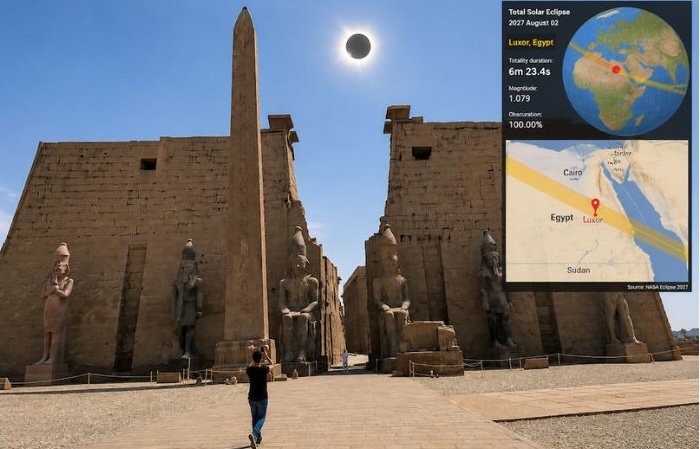
- The Temple of Amun in Luxor was first constructed around 1500 BC, and it has served as an active religious site up to the present day. There is a unique form of Amun, called Amenemope, who is worshipped by people. There are two names used for the Luxor Temple, called “Place of Seclusion” or “the Southern Opet”. This temple was built in the heart of ancient Thebes.
- People built the temple complex at Karnak, and the Great Temple of Amun is its crown jewel. Many generations of pharaohs rebuilt various sections, and some of them also added new sections to this temple. Various obelisks, courts, and pylons, carved with hieroglyphics, are part of this temple. There are many temples associated with this complex, including one which is dedicated to Aten.
What are the symbols associated with Amun?
Various symbols are associated with Amun, including:
- The ram
- The goose
- Amun’s frescoes demonstrate him as a lion or an ape.
How is Amun depicted?
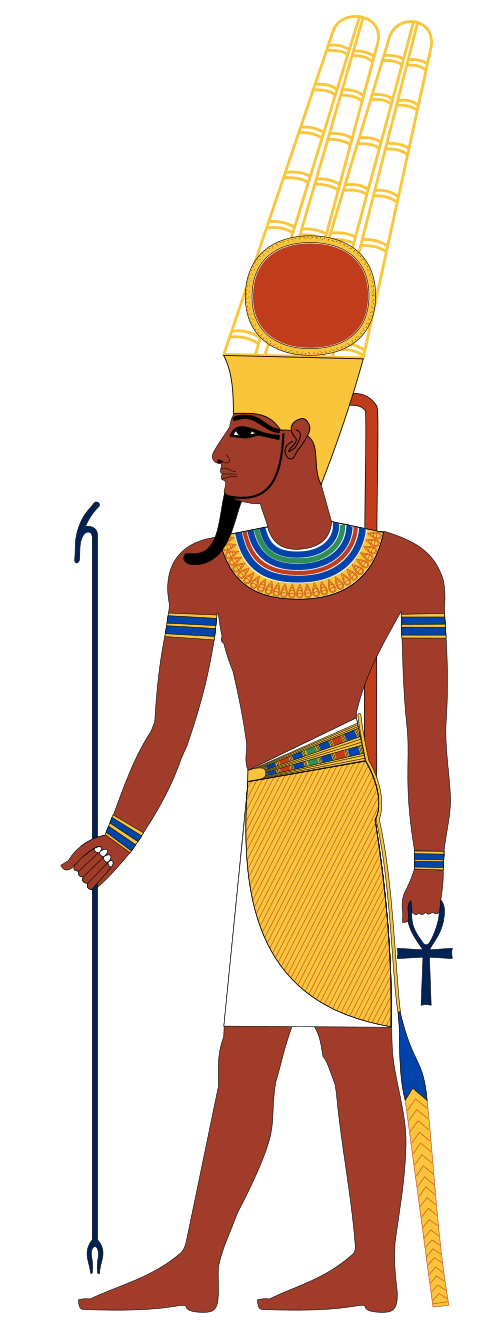
Amon was depicted as a man with black or blue skin.
- You can see a double-plumed headdress, and the plumes have different colors of either red and blue or red and green.
- He used to wear various jewelry pieces, including necklaces, armlets, and bracelets.
- His costume is a kilt, or a tunic with decorated shoulder straps.
- Amun has an ankh in his right hand, and a sceptre in his left hand, and sometimes a bull’s tail hangs from his tunic.
Amun is also shown with the heads of different animals. Sometimes he has a hawk’s head with a sun disc on top with a serpent around it. In other pictures, Amun has the head of a ram.
What are the important facts about Amon?
- Amun was a god of creation worshipped throughout Egypt.
- Pharaohs were the ‘son of Amun’.
- His cult became so powerful and wealthy that it threatened the pharaoh.
- The cult had important places for the women who were the ‘god’s wife of Amun’.
- Some pharaohs used Amun to legitimise their reign.
- Thebes was the seat of his worship.
- Some of the greatest temples of Amun were at Thebes.
Was Amun-Ra evil or good?
In ancient Egyptian religion, Amun-Ra was mostly viewed as good and a protecting deity. He was not depicted as evil. Rather, he was considered a creation god, the sun god, and king of the gods, ensuring order and security of both Egypt and its people.
Although Amun-Ra could not always be a gentle god. As with most Egyptian deities, if the people dishonoured him or disobeyed laws from the gods, he would get angry, and in some myths he punished anyone who rebelled against the gods or brought disorder. It was not depicted as an act of malice, but rather an act of restoring order.
Therefore, Amun-Ra was neither good nor evil by modern terms. He was a god who punished or rewarded depending on whether man was just or unjust. The ancient Egyptians themselves believed him to be one of the gods who controlled our world and therefore benevolent.
Conclusion
The blog sheds light on Amun, how he was connected to Ra, and how Amun-Ra became one god, and so many other factors. If you are someone interested in exploring interesting ancient places in Egypt while sailing between Luxor and Aswan, you can book a Nile cruise from Luxor to Aswan with Nile Cruisen.

This article was created by the team at Nile Cruisen, one of the best tour operators in Egypt for Nile cruises and tailor-made Egypt tours.
With years of experience sailing between Luxor and Aswan, our team knows the Nile better than anyone.
We share trusted travel advice, from the best time to visit and what to pack to simple tips for avoiding crowds.
Our goal is to help you enjoy the timeless beauty of Egypt with comfort, confidence, and an unforgettable travel experience.
- Nile Cruisen Team

- Nile Cruisen Team

- Nile Cruisen Team

- Nile Cruisen Team