 Nile Cruisen Team

Table of Contents
-
Introduction
-
What are the 4 mythical creatures?
-
The Sphinx
-
Ammit
-
Bennu Bird
-
Serpopard
-
- More Mythical Creatures in Egyptian Mythology
Apep (Apophis)
Taweret
The Griffin
Uraeus
Medjed
Criosphinx
Hieracosphinx
Scarab and Khepri -
What animals are in Egyptian mythology?
-
Conclusion
Introduction
Egypt is not just a land of the pharaohs or pyramids, but the early civilization in Egypt is deeply connected with nature and mythology. The ancient scriptures and walls of the temples with hieroglyphics and paintings tell us a lot about the religious beliefs and mythical creatures that have existed once, and Egyptians followed it for a long period.
The beliefs of the Egyptians say that powerful forces shaped their world, and many of these forces were represented as fascinating creatures. Some were protectors, some were destroyers, and others symbolized balance between life and death. So below are the mythical Egyptian creatures mentioned in detail.
We are an experienced travel agency based in Egypt and have come across many questions by tourists about the history and mythology of the early Egyptian civilization. So, through this piece of content you will know about Sphinx, Ammit, the Bennu Bird, and the Serpopard.
What are the 4 mythical creatures?
Egypt has many creatures, but significantly, the four are the Sphinx, Ammit, Bennu Bird, and Serpopard, considered as major mythical creatures.
The Sphinx
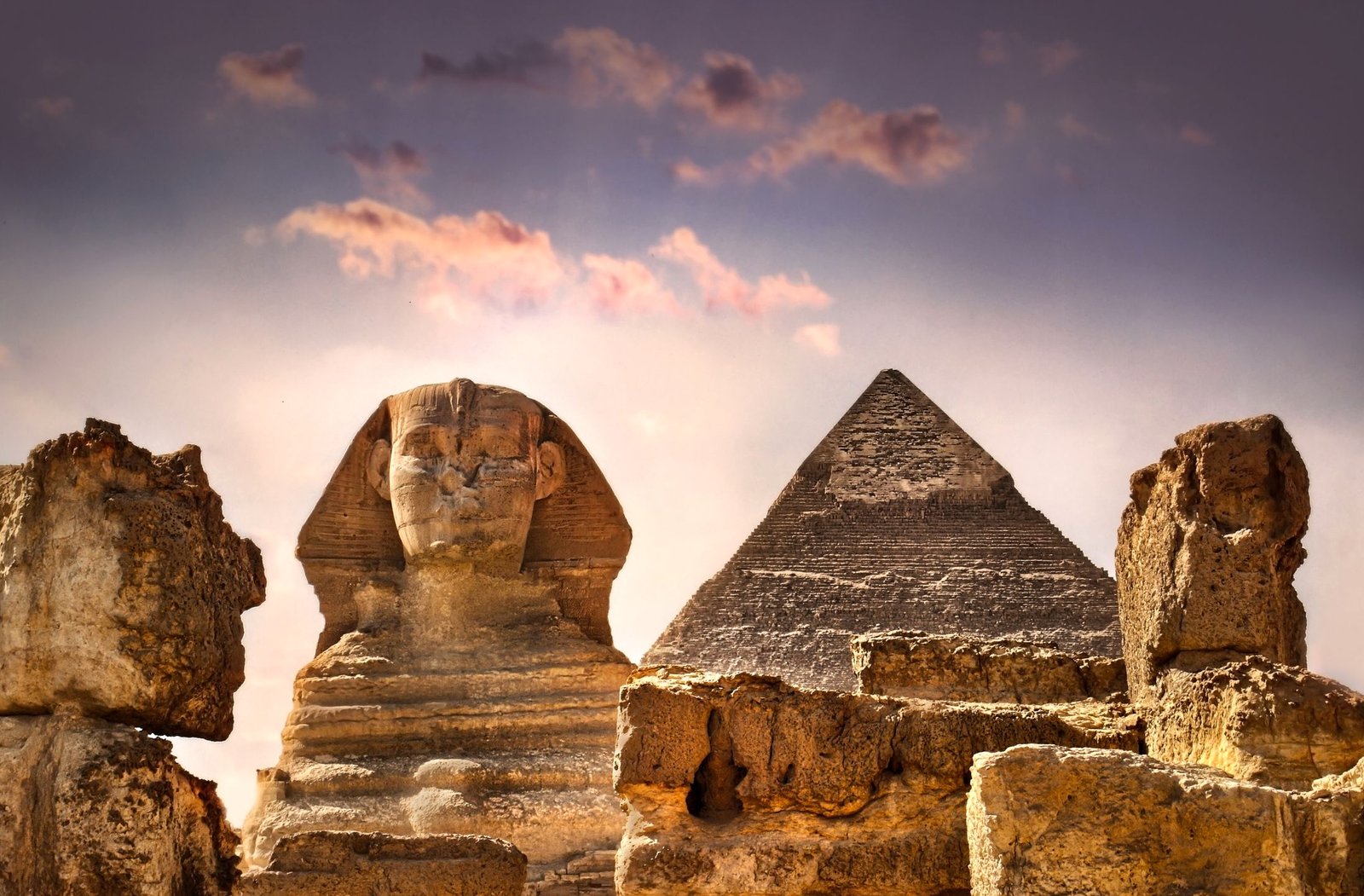
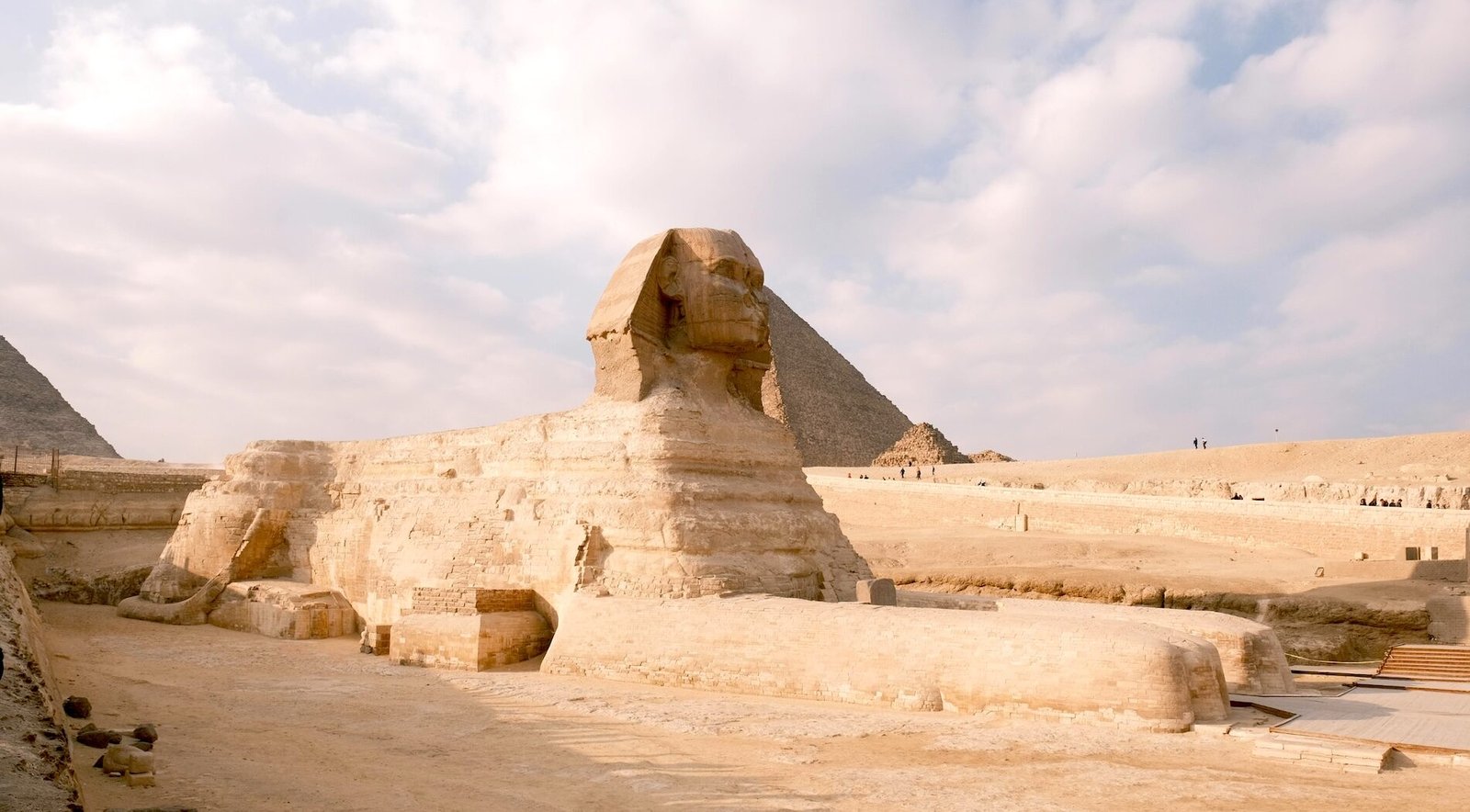
It’s one of the most famous and widely known mythical creatures in Egypt, as it also has its statue at the Giza Plateau with the three pyramids as their protector. The Sphinx is a majestic creature with the body of a lion and the head of a human, often believed to represent a ruling pharaoh in which the lion’s body symbolized strength, dominance, and physical power, as lions were considered rulers of the desert.
Whereas the human head represented wisdom, intelligence, and divine authority. Egyptians believed it was a spiritual guardian, watching over the horizon where the sun rose and set. This represented the idea that a king must combine both mental wisdom and physical strength to rule effectively. Unlike monsters meant to frighten, the Sphinx symbolized stability, protection, and royal legitimacy. Smaller sphinx statues are also carved at the entry of the temple to ensure protection against the evil forces.
Ammit
The Ammit is one of the most terrifying figures in Egyptian belief. Her body combined the three most dangerous animals known in Ancient Egypt:
- Crocodile (head)—symbol of deadly power and unpredictability.
- Lion (front body)—symbol of strength and dominance.
- Hippopotamus (hind body)—one of the most aggressive animals along the Nile.
Egyptians believe that she lived in the Hall of Ma’at (Hall of Judgment) in the afterlife. After the death at the “Weighing of the Heart” ceremony, a dead person’s heart was weighed against the feather of truth. If the heart was heavier, then it meant it was full of sins, and Ammit would immediately devour it. This did not mean torture; it just meant complete spiritual destruction, erasing the soul forever. Ammit was not worshipped, but she was deeply feared as the final punishment for a dishonest life.
Bennu Bird
In Egypt this sacred bird is known as the symbol of the rebirth, closely associated with the sun god Ra and the ancient buried city of Heliopolis. It is depicted like a large heron with elegant feathers, which is believed to have emerged from the primeval waters at the beginning of creation. Strongly stands as the moment when life first began, like a spark of existence.
Associated with the rising sun, symbolizing daily renewal and resurrection, it is also linked to the concept of cyclical time, where life, death, and rebirth are continuous processes. Seen as a hopeful symbol, representing new beginnings after destruction or hardship. At the museum in Egypt, while on your Nile cruise in Egypt, you can see these creatures painted and in images to know more about the fascinating creatures of Egypt.
Serpopard
It is a fascinating early mythological creature with a leopard’s body and an unusually long snake-like neck. Mostly found or seen in some of the earliest Egyptian artworks, including ceremonial paintings on the tombs. The leopard symbolized power, speed, and wild strength. Its snake-like neck symbolized danger, unpredictability, and chaos. Scholars believe it may have represented foreign lands or territories beyond Egypt’s borders.
It could also symbolize the constant struggle between order (Ma’at) and chaos. Unlike the Sphinx, the Serpopard appears more mysterious and less clearly defined in mythology. In simple words, the Serpopard reflects early Egyptian attempts to visualize forces that were powerful but not fully controlled.
More Mythical Creatures in Egyptian Mythology
Apep (Apophis)
Apep, also called Apophis, was imagined as a huge serpent and one of the greatest enemies of the sun god Ra. Also, the Apep represented chaos, darkness, and forces that threatened the order of the universe. According to Egyptian beliefs, Apep attacked Ra during his nightly journey through the underworld, and the gods had to defeat the serpent so the sun could rise again the next morning. His main goal was to swallow the boat carrying the sun god Ra during the night, and Egyptians believed that this would cause the world to become dark forever, and they thought solar eclipses happened when Apep briefly managed to swallow the sun boat; this is called the Arch-Nemesis of Ra.
Taweret
Taweret was usually shown as a pregnant hippopotamus with human breasts, lion’s paws, and a crocodile’s tail, and the Taweret was a protective goddess associated with pregnancy, childbirth, and the safety of mothers and children. Her frightening appearance was believed to help drive away dangerous forces.
The Griffin
The griffin was a hybrid creature combining the body of a lion with the head and wings of a bird of prey. Egyptian examples include lion-griffin forms, particularly in later Egyptian art. The griffin represented a powerful combination of animal strength and the abilities of a bird of prey, and Griffin imagery appeared in Egyptian art and jewelry, especially during the later periods of Egyptian history.
Uraeus
The Uraeus was a raised cobra with its hood spread open, and it was commonly shown on the forehead of royal and divine figures. The Uraeus was a symbol of protection and royal authority. It was associated particularly with the goddess Wadjet and was believed to protect the king from enemies.
Medjed
The Medjed is a small, unusual figure appearing in an ancient Egyptian Book of the Dead papyrus, and it is shown as a simple covered or shrouded figure, with only its eyes and feet clearly visible. Also, the Medjed is one of the more mysterious figures in Egyptian funerary imagery at the tombs, and its exact role and meaning are not completely clear, which has made the figure especially interesting to modern audiences.
Criosphinx
A criosphinx has the body of a lion with the head of a ram, and the ram was closely connected with the god Amun. The criosphinx combined the strength of the lion with the religious symbolism of the ram. You can see rows of ram-headed sphinxes were used along important ceremonial routes, including the area connecting Karnak and Luxor.
Hieracosphinx
The hieracosphinx combines the body of a lion with the head of a falcon, and this form brought together the strength of the lion and the symbolism of the falcon, which was strongly associated with Horus and Egyptian kingship.
Scarab and Khepri
The scarab beetle was based on the dung beetle, while Khepri was often represented as a scarab or as a human figure with a scarab head. The scarab became a powerful symbol of creation, renewal, and rebirth, as the Ancient Egyptians connected the beetle’s movement of a ball of dung with the daily movement of the sun. Khepri was particularly associated with the rising sun and the idea of transformation and rebirth. Ancient Egyptians used scarab charms and heart scarabs made from stone or gold, and they placed them with mummies to help the dead safely enter the afterlife and be reborn.
Where can you see Egyptian mythical creatures in Egypt?
| Mythical Creature | Where to See It | What You Can See |
| Sobek, the Crocodile God | Kom Ombo Temple | Crocodile carvings, temple imagery, and a nearby museum with mummified crocodiles. |
| Horus, the Falcon God | Edfu Temple | Representations of Horus and ancient temple carvings dedicated to the falcon-headed god. |
| The Sphinx | Giza Plateau | The Great Sphinx, with a lion’s body and a human head, near the pyramids. |
| Criosphinx | Karnak Temple and Avenue of Sphinxes | Ram-headed sphinxes connected with the god Amun along the ancient temple route. |
| Ammit and the Weighing of the Heart | Valley of the Kings | Ancient funerary paintings and scenes showing Egyptian beliefs about the judgment of the dead. |
| Bennu Bird | Egyptian Museum Collections | Ancient Egyptian objects and religious artwork linked with creation, the sun, renewal, and rebirth. |
What animals are in Egyptian mythology?
Animals played a huge role in Egyptian mythology. Egyptians believed animals carried divine qualities, and many gods had animal heads or forms. From the falcon-headed god to Kom Ombo’s crocodile god, animals are closely related to the lives of the Egyptian people. Listing the major animals that have existed during the early civilization.
Cat: Associated with the goddess Bastet and seen as the symbol of protection, fertility, and home life. Cats were sacred and even mummified in Ancient Egypt and even today Killing a cat was a serious crime.
Crocodile: closely linked to the god Sobek, who represented strength, fertility, and military power. Crocodiles were both feared and worshipped in the Egyptian scriptures.
Falcon: who represented the god Horus and symbolized kingship and sky power.
Jackal: It is associated with Anubis, the god of mummification, and is a symbol of death and the afterlife.
Cows: They are linked to Hathor, goddess of love and motherhood. Represented nurturing and joy, and cow horns were a sacred symbol.
Cobra: It is a symbol of royalty and protection; even the “Uraeus” cobra appeared on pharaoh crowns that represented divine authority.
Conclusion
Egyptian creatures remain mysterious to some extent but are closely associated with the beginning of human existence. From Sphinx to Ammit, these are mythical characters that have shaped Egyptian history and many stories. Even today, these creatures inspire books, movies, art, and travel curiosity about Egypt’s ancient civilization.
So, on your visit to Egypt, feel free to ask about the history of Egypt from Nile Cruisen’s tour guides, and on your vacation to Egypt, do not just capture monuments, but also learn a lot about the fascinating Egyptian history.
FAQs
What is the most famous mythical creature in Egypt?
The Sphinx in Giza is probably the most widely recognized mythical creature associated with ancient Egypt.
Is the Sphinx a real creature?
No. A sphinx is a mythical hybrid creature, and in Egyptian art, it is commonly shown with the body of a lion and a human head. The Great Sphinx at Giza is a real ancient monument, but the creature it represents is mythological.
What is Ammit in Egyptian mythology?
Ammit is a mythical creature connected with the judgment of the dead.
What is the difference between the Bennu Bird and the Phoenix?
The Bennu Bird is an ancient Egyptian sacred bird associated with creation, the sun, renewal, and rebirth. While the Greek phoenix is a later legendary bird associated with cycles of death and rebirth, and these two are often compared, they come from different cultural traditions.
Which Egyptian temples show mythical creatures?
In Egypt the Edfu Temple shows Horus, while the Kom Ombo Temple features Sobek and Horus. The Karnak Temple and the Avenue of Sphinxes are known for their ram-headed sphinxes.
Why did Egyptians worship animals?
Ancient Egyptians did not simply worship animals as ordinary creatures. Animals could represent qualities or powers associated with particular gods, like crocodiles, falcons, cats, and other animals, which are also connected with different religious beliefs and divine figures.

This article was created by the team at Nile Cruisen, one of the best tour operators in Egypt for Nile cruises and tailor-made Egypt tours.
With years of experience sailing between Luxor and Aswan, our team knows the Nile better than anyone.
We share trusted travel advice, from the best time to visit and what to pack to simple tips for avoiding crowds.
Our goal is to help you enjoy the timeless beauty of Egypt with comfort, confidence, and an unforgettable travel experience.
- Nile Cruisen Team
- Nile Cruisen Team

- Nile Cruisen Team

- Nile Cruisen Team