
The proof of pharaohs’ existence, Egypt’s only monument listed as a world wonder, a unique architectural marvel: the pyramids. As a traveler and history lover, when you say or think about Egypt, it’s impossible that the pyramids do not come to your mind.
The ancient pyramids in Giza are like an introduction to Egypt.
Have you ever thought?
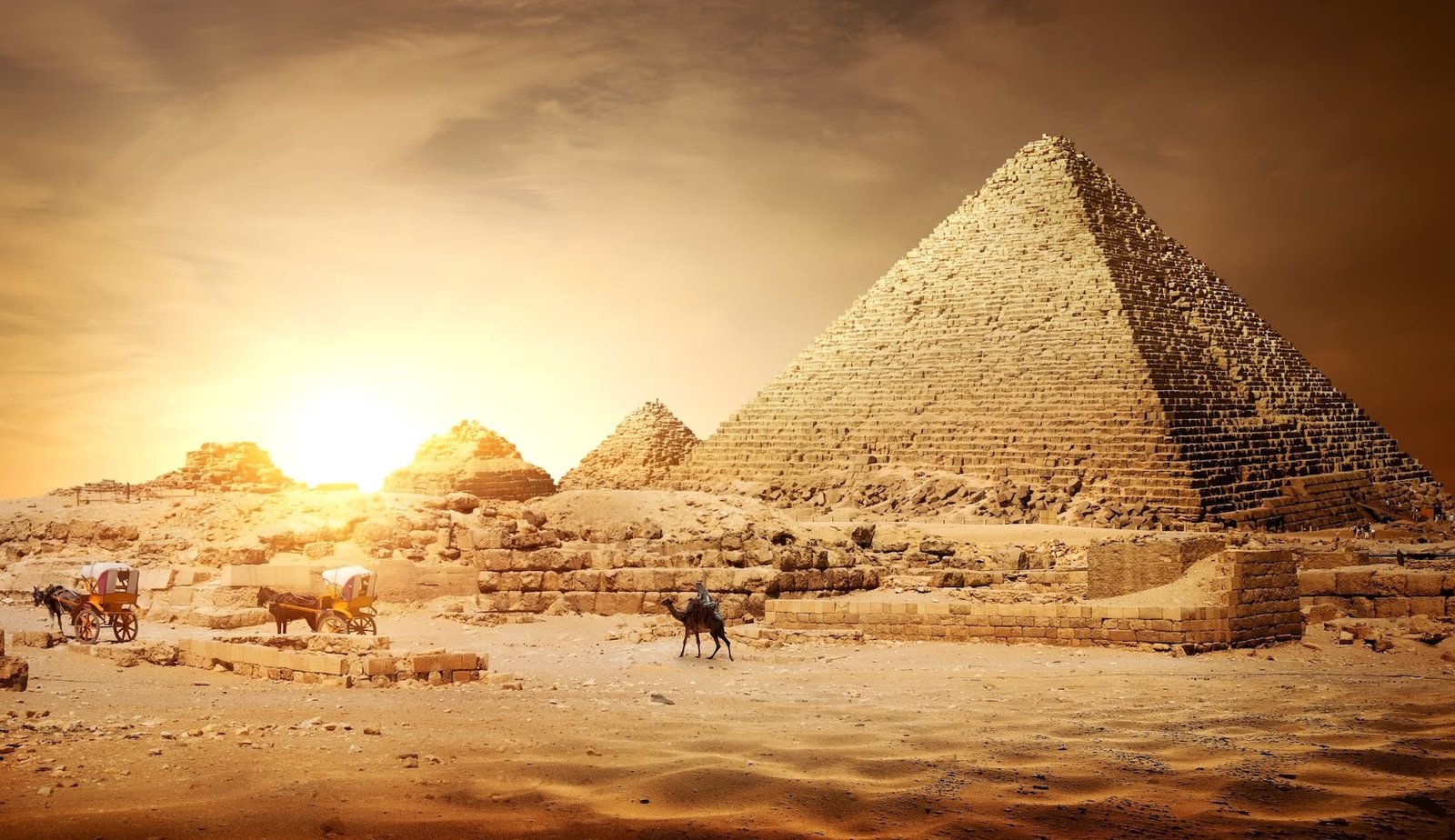
What makes pyramids a world wonder?
Their size, cultural aspects, and still standing after 4,500 years make them fascinating wonders of the Egyptian world. Their colossal architecture and incredible precision, representing the greatness of the pharaohs and history around them, make them one of the living wonders in the world. Another factor is the mathematics and engineering of the pyramids; logistics and complex strategies make them the unparalleled testaments of human achievement.
They are symbols of Egyptian brilliance, beliefs, political powers, and advanced scientific knowledge. One thing that fascinates is the rising of the large structures in the desert sands; still today, their presence, structure, and engineering are the subject of debate among great archaeologists.
How many pyramids are there in Egypt?
During the discovery, around 138 pyramids were discovered, from which today 118 pyramids are found and seen in Egypt. These Egyptian pyramids are dedicated to different dynasties of the Old and Middle Kingdoms. Tombs of the Pharaohs and pyramids carry the legacy and cultural values of the Egyptian people.
Origin of Ancient Egyptian Pyramids
The culture of pyramids came into existence around 2500-1700 BCE during the Old Kingdom in ancient Egypt. Earlier, the flat tombs called mastabas were made to bury the bodies of the pharaohs. Then, as time passed, these tomb styles evolved, and the Great Pyramid of Giza came into existence.
The earliest ancient stone giants are located at Saqqara, west of Memphis, dedicated to Anedjib, and the Step Pyramid of Djoser was built during the 3rd dynasty of the Old Kingdom. These pyramids were designed by the ancient priest Imhotep during 2600 BCE. It introduced the revolution in the structural foundation of the tombs.
Religious Purpose and Significance
According to the scriptures and documented history, it is stated that the Egyptian people strongly believed in the afterlife. Their belief says that preserving the bodies of pharaohs and serving them with goods at intervals would ensure eternal life. The masterpieces of the afterlife are designed in a way to protect the bodies of pharaohs and their possessions.
While burying them, these pyramids included jewelry, food, furniture, statues, and sacred texts. The symbolism of the pyramid is held by its shape. In ancient Egypt, it is strongly believed that offering a Benben Stone, a rare object associated with the sun god in Egyptian culture, helps the souls of pharaohs travel to the heavens.
What is the difference between the Pyramids of Giza and other pyramids?
In Egypt and present-day Sudan, there are a number of pyramids, but the Giza pyramids are famous for their size, scale, architecture, and religious values. The Great Pyramid of Giza is polished with white limestone, making it look smoother and more polished. Whereas the other pyramids are smaller in size and, over time, have lost their shine and value.
Below, you can learn in-depth about the Giza Complex and Tombs. With 12 facts about Egyptian pyramids.
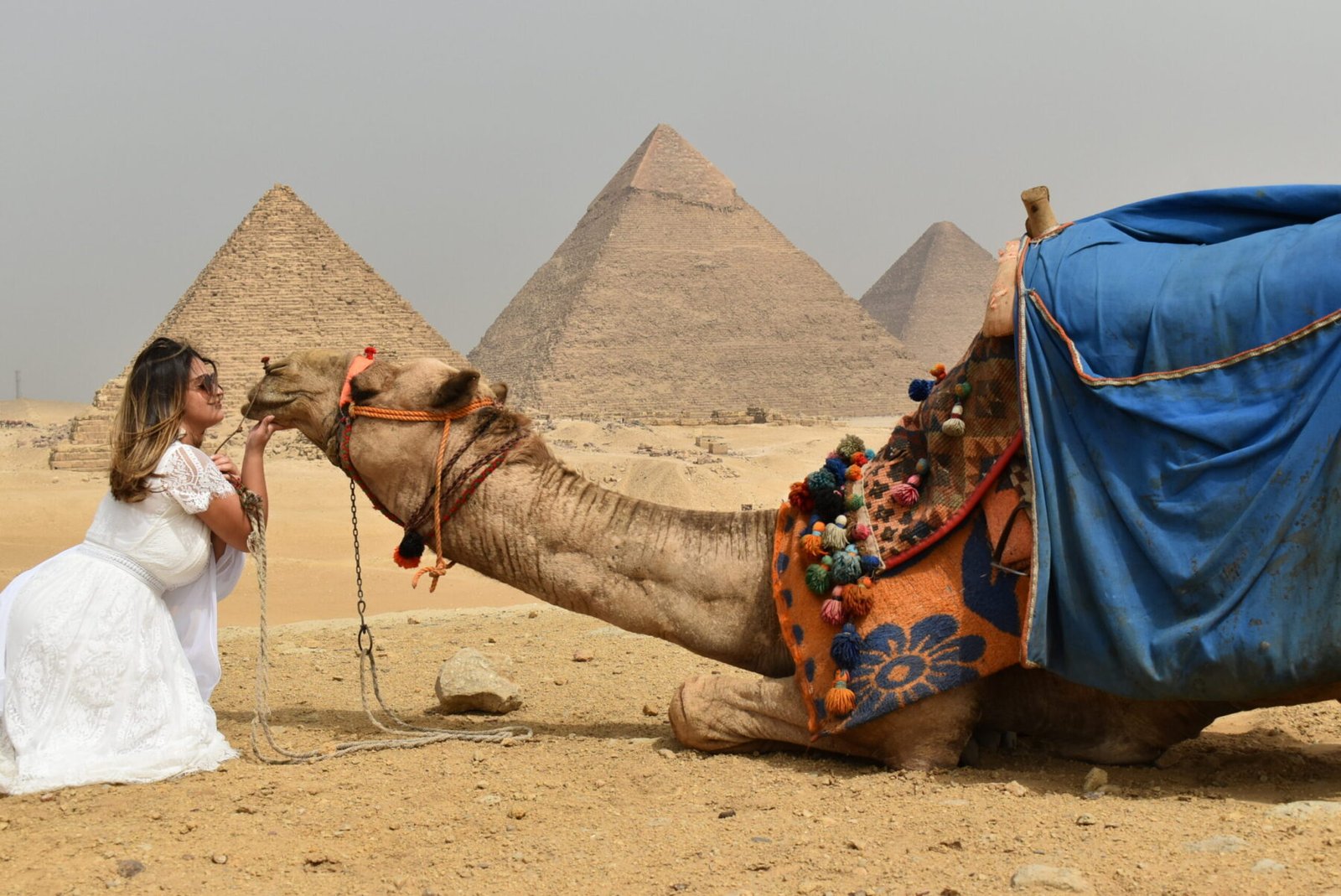
The pyramids of Giza are located near Cairo, the present-day capital of Egypt. The site has a set of 3 pyramids, which were built as the tombs of pharaohs during the 4th dynasty of the Old Kingdom in ancient Egypt.
One of them is the great and large pyramid, which is dedicated to Khufu, and the other two smaller pyramids are of Khafre and Menkaure. The complex has three pyramids, which are among the world’s most archaeologically fascinating sites. It is also recognized as a UNESCO World Heritage Site. These pyramids are arranged according to their size, representing their divine power and status during their rule. All the pyramids in the Giza complex are built using limestone and granite, making them unique and still maintaining their shine.
The Great Pyramid of Khufu
This is the largest pyramid among the three; it is dedicated to Khufu, also known as Cheops, one of the dominant ancient Egyptian pharaohs of the fourth dynasty. It is estimated to have been built during 2560 BCE, serving as the resting place of the pharaoh in the afterlife.

Some important features make it a world wonder.
- The materials used in construction are primarily limestone and granite for creating the tombs.
- The size of the pyramid is around 481 ft (147 m); the base is over 750 ft (230 m) per side, making it square but not a perfect square.
- It is made using stone blocks, each weighing around 2 tonnes, and around 2.3 billion blocks are used in construction.
- Khufu’s royal burial monument consists of the King’s chamber, the Queen’s chambers, resting chambers, and a gallery above the burial room of the pharaoh Khufu.
- It is one of the oldest wonders of the world, which is still intact, and a large number of tourists visit here every year.
The whole structure and construction show an excellent knowledge of Egyptian architects, making it a mathematical and astronomical wonder due to its large size and scale.
The Pyramid of Khafre
This is the second-largest pyramid in the Giza complex, directly linked to the Sphinx, believed to be a statue of Khafre. The king Khafre, or Chephren, is the son of the great ruler Khufu, believed to be a remarkable ancient Egyptian monarch. The throne was ascended from Khafre in 2558 BCE.
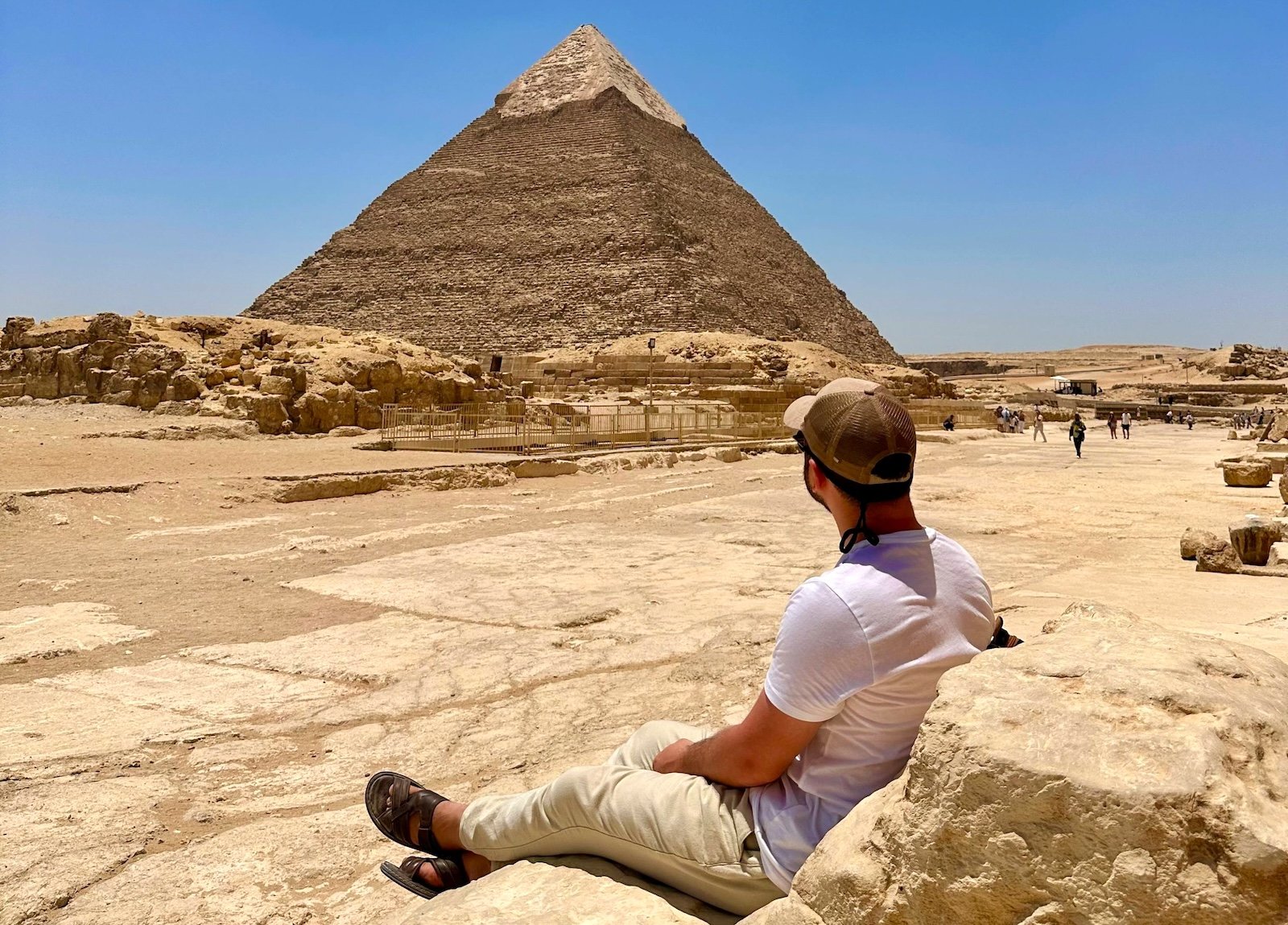
Facts and Features of the Pyramid of Khafre
- The pyramid appears taller than Khufu’s pyramids because it was built on higher ground, though it’s just slightly smaller than Khufu’s tomb.
- This testament of the ancient Egyptian craftsmanship was heightened to around 143.5 meters originally.
- The outer part is primarily made with limestone, and internal chambers are built using granite stones.
- This ancient monument structure consists of a mortuary temple and a causeway.
The Pyramid of Menkaure
This pyramid is the third and smallest among the three pyramids, built by the grandson of Khufu. It was built during the Old Kingdom of ancient Egypt, which is also known as the Age of Pyramids. He is remembered as a pious ruler who left behind the treasures of art and exceptional Egyptian architecture. Some triads, having statues of him with the goddess Hathor, and other monuments are built during his regime, making its period proof of the engineering achievements of the Old Kingdom.
Features of the smallest Pyramid of Menkaure
- The tomb is built in memory of Mykerinos, widely known as Menkaure.
- A unique feature of this pyramid is the use of red granite on the lower courses of the pyramid, while the rest is built with limestone.
- The smallest pyramid is standing about 66 meters (216 ft) tall.
- This pyramid shows the highest detailing and is also surrounded by three queen pyramids of Menkaure, consisting of a mortuary temple and gallery.
The Great Sphinx of Giza
This is the largest monolithic sculpture, built on the Giza plateau rock bed. The statues show Khafre, who is seen as the protector of the three cardinal pyramids behind. It represents the royalty and power of the pharaohs, with the statue as a lion’s body and a human head, built with the second pyramid of Khafre in 2500 BCE.
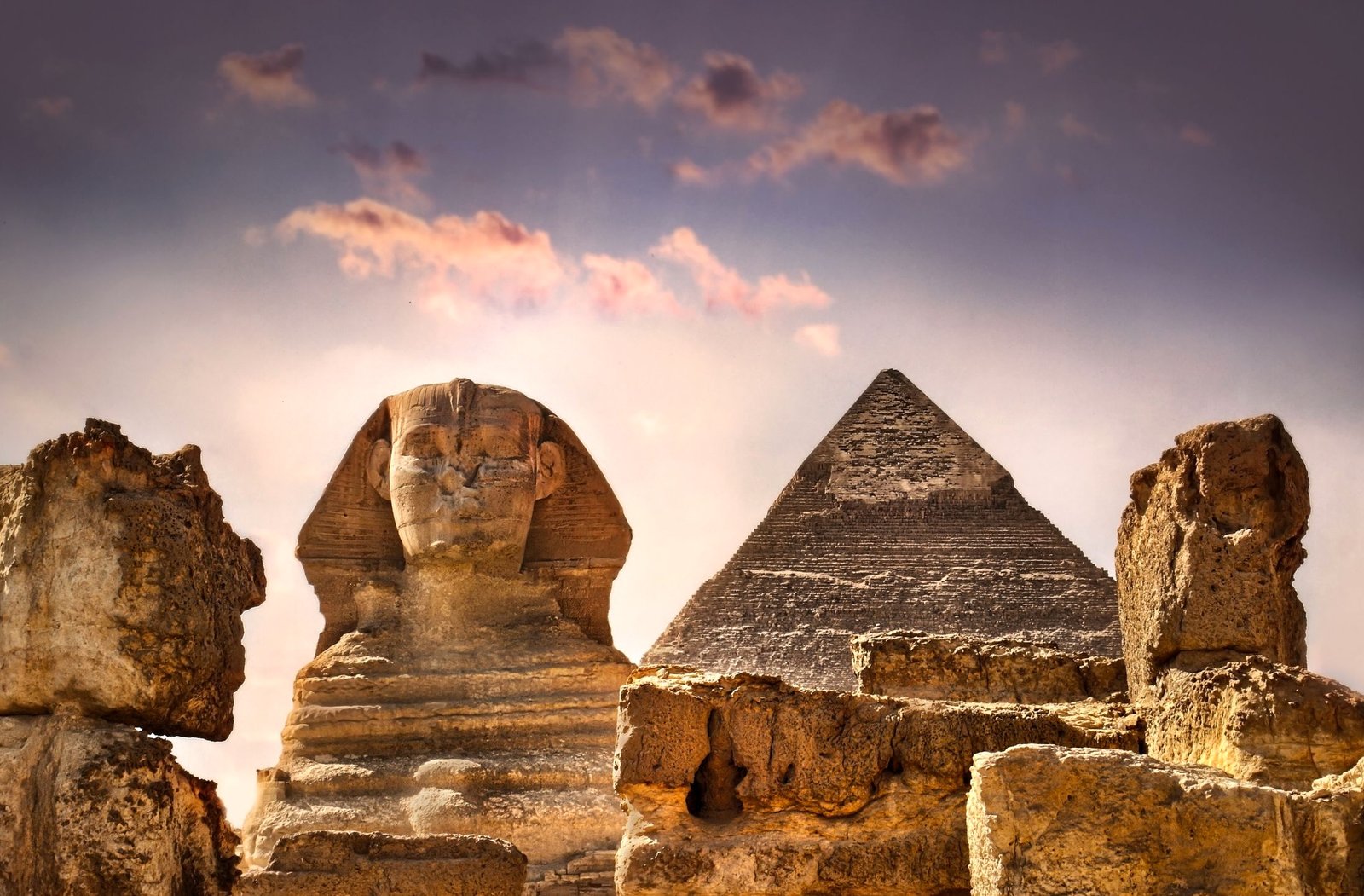
Features of the Great Sphinx
- The statue has a large lion body and a human head wearing a head cover, nemes, facing east on the Giza plateau.
- It is carved from a single bedrock of limestone and is one of the best standing statues among ancient Egyptian sculptures.
- As an estimate, it is 240 feet long and 66 feet high, making it one of the world’s largest and most historical monolithic sculptures of humankind.
Impact on the World architectural
These cultures of pyramids are one of the iconic wonders of ancient Egypt. Back in time, these were the inspirations for the rest of the dynasties on the importance of burial monuments built in memory of great rulers. The construction has been studied to understand the ancient mathematical and astronomical influences around the world. They stand as the greatest achievements of human craftsmanship, making them the last living wonders and a major tourist attraction for today’s generation.
Faqs
When were pyramids discovered in Egypt?
The archaeological studies were started in the early 1800s. The Great Pyramid of Khufu was completely discovered in the 1830s. The identification and discovery of the total 138 Egyptian pyramids took hundreds of years.
What is the distance of the Giza complex from Cairo?
From the capital of Cairo, it’s 18.5 km. The Giza complex is located on the outskirts of the Cairo city center. With the local transportation, tourists can easily explore the Giza plateau in a day.
How to include the Giza complex exploration in the Egypt tour?
Tourists can include exploration of the Giza pyramids just after landing in Cairo, by keeping a day in between before starting the Egypt river cruise journey. Cairo has an international airport, which means all the major flights land in Cairo.
Are pyramids perfectly aligned?
Yes, all the pyramids are perfectly aligned with north, south, east, and west. It shows the advanced and precise knowledge of astronomy of the ancient Egyptian architects.
Can tourists go inside the pyramids?
Yes, in the pyramid of Khufu, people can go inside Egyptian pyramids, but now it’s limited to save and preserve the pyramids internally. The inside of the pyramids consists of burial chambers, passages, and corridors.
Why did Egyptians stop building pyramids?
With the decline of the Old and Middle Kingdoms in Egypt, the culture of building burial monuments also declined. Due to robbery and extensive costs on the building of monuments, instead of this, pharaohs started choosing hidden and regular burials for their afterlife journeys.
Book Pyramids Tours With Nile Cruisen!
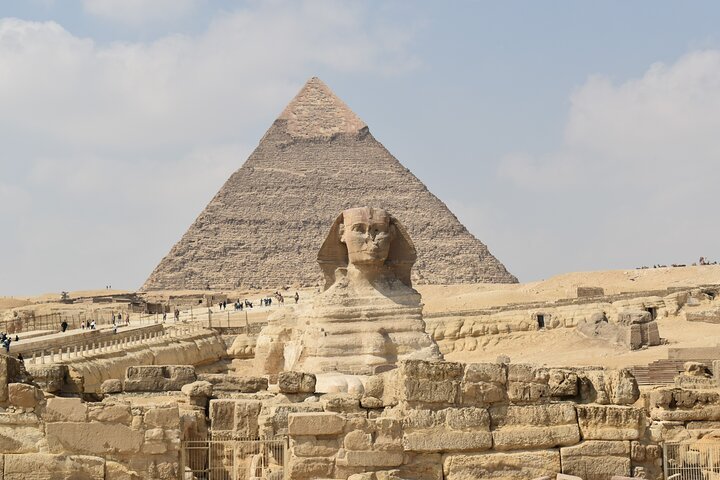
Luxury Nile Cruise and Pyramids
Start from
$1329 / U$D
Nile Cruise and Pyramids Package
Start from
$799 / U$D
Trusted Partners
Nile Cruisen: Chosen by Leading Brands as Egypt's Top Cruise Operator