
 Nile Cruisen Team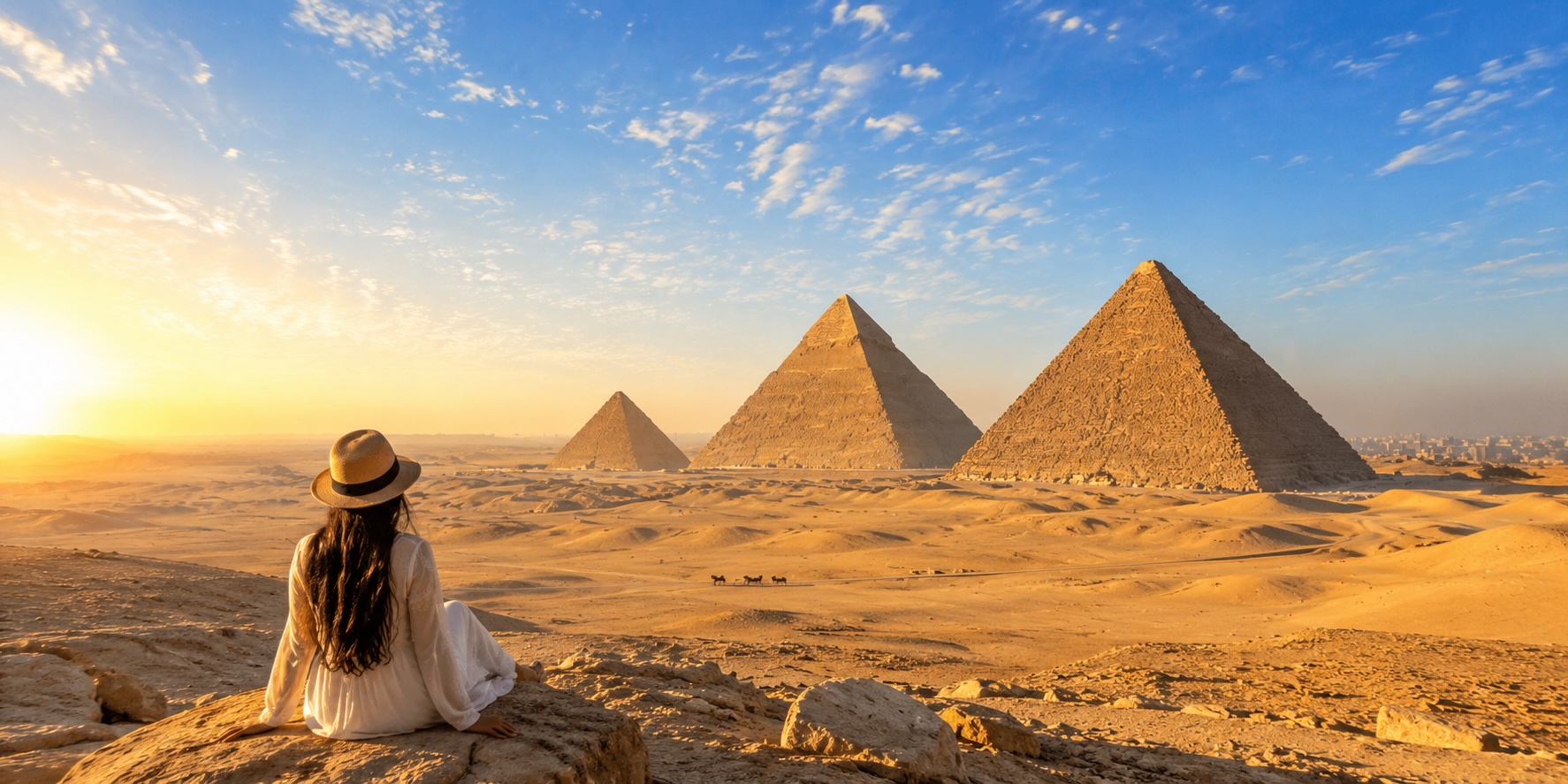
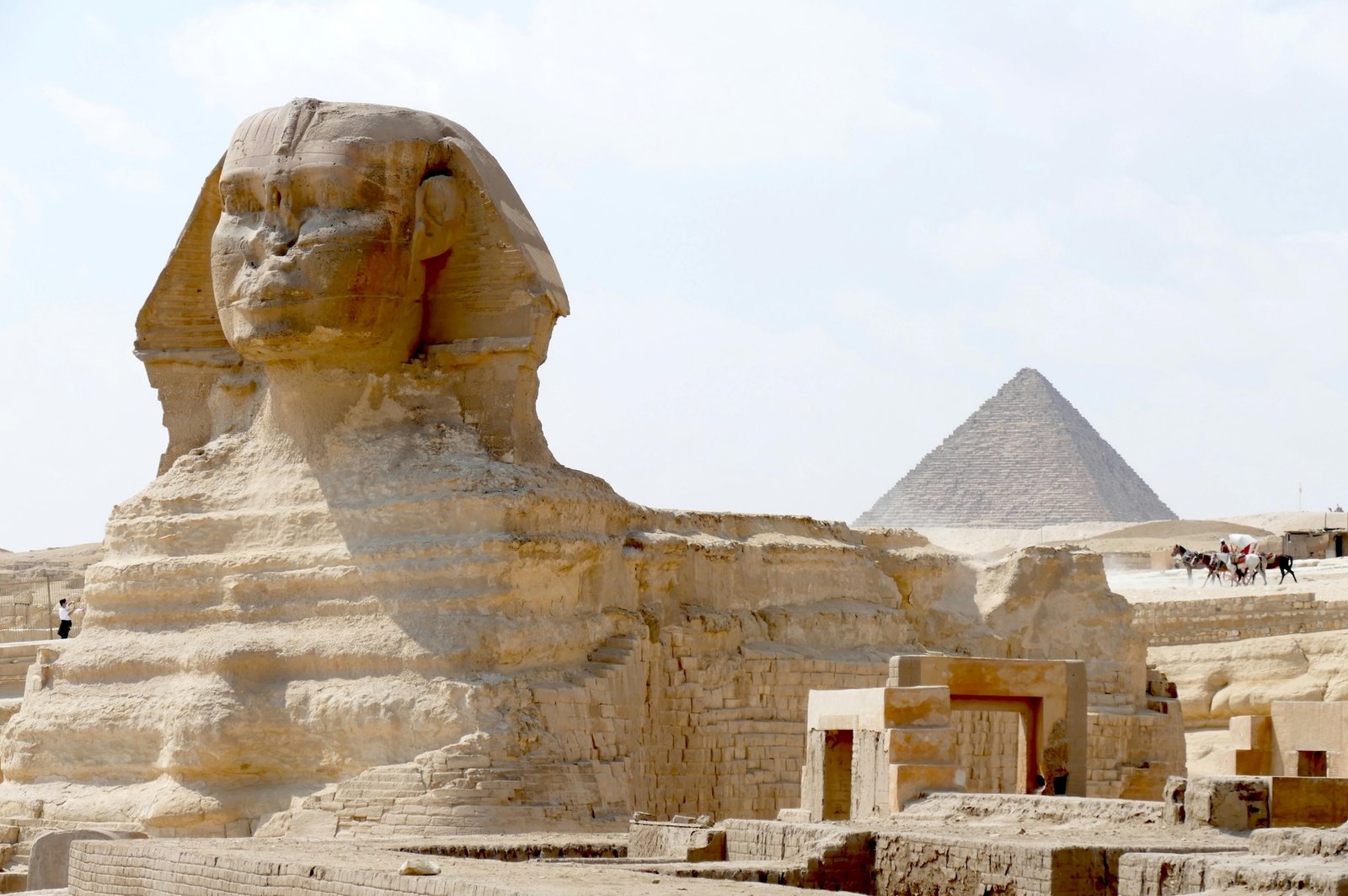
When a visitor stands in front of the Great Pyramid of King Khufu, or contemplates the majesty of the Sphinx in Giza, the first feeling that dominates the conscience is absolute awe. This mighty edifice, which has defied time and held the title of the tallest man-made structure for many centuries, always raises a fundamental question in the mind of everyone who contemplates it: How were humans at the dawn of history able to accomplish this extraordinary feat? With the complexity and magnitude of the construction, “alternative” theories have emerged over the past decades, promoting the idea that the ancient Egyptians were not alone, but rather sought help from other beings – whether lost advanced civilizations such as Atlantis, or even aliens who descended from the sky to provide advanced technologies. However, do these theories stand up to the scalpel of scientific research and physical archaeological evidence?

First: Why did the “theory of other beings” appear and expand?
These myths did not arise out of nowhere, but rather were born out of astonishment at what seemed impossible by the standards of ancient times. The motives that made some people tend to believe in the intervention of external forces can be summarized in the following points:
- Shocking measurements and weights: The Great Pyramid consists of about 2.3 million stone blocks. The matter is not limited to numbers, but to weights; The average mass weight ranges between 2.5 and 15 tons. The biggest problem is represented by the huge pink granite blocks located in the “King’s Chamber” inside the pyramid, some of which weigh up to 80 tons and were brought from Aswan quarries hundreds of kilometers away.
- Extreme precision (cutting and installation): The stone blocks, especially in the outer shell and internal corridors, were cut and stacked with amazing mechanical precision without the use of any adhesives (cement). The joints between some stones are so fine that a thin razor blade cannot be inserted between them.
- Timeline and Logistics: Historical estimates indicate that it took about 20 years to build the Great Pyramid during the reign of King Khufu. By simple mathematics, this means that workers had to cut, move, and place one stone block every few minutes throughout the daily working hours, a production rate that seems astronomical.
- Precise astronomical orientation: The pyramids were oriented with amazing accuracy towards the four geographical directions (north, south, east, west). In addition to the astronomical correlation theory, which indicates that the locations of the three pyramids of Giza coincide with the locations of the stars of “Orion’s Belt” (Orion). This deep knowledge of astronomy and engineering made some believe that this knowledge exceeded the capabilities of humans in the third millennium BC
Second: Architectural development…the strongest evidence against the “sudden appearance”
One of the most important mistakes made by promoters of the “aliens” theory is to extract the Pyramid of Khufu from its historical context and to treat it as if it suddenly appeared in the desert. Archaeological history proves that the construction of the pyramids was the result of a long series of human experiments, successes, and even failures:
- The beginning with the mastaba: Royal burials in ancient Egypt began in underground rooms topped by a rectangular structure known as the “mastaba.”
- The Step Pyramid of Djoser (the first leap): The genius engineer Imhotep was the first to place stepped terraces on top of each other to create the Step Pyramid at Saqqara.
- The experiments of King Sneferu (Khufu’s father): During the reign of Sneferu, we see clear human experimental attempts. He began building the “Pyramid of Meidum”, part of which collapsed. Then he moved on to build the “Tilted Pyramid” in Dahshur, where the engineers realized in the middle of construction that the angle of the slope was severe, so they adjusted it to avoid the collapse of the structure (conclusive evidence of human trial and error). Finally, he succeeded in building the “Red Pyramid”, the first true complete pyramid.
The bottom line here: If there were aliens who possessed superior technology, they would have built the Great Pyramid all at once and perfectly from the first attempt, and we would not have needed to see this gradual engineering development full of attempts and corrections.
Third: The Voice of the Earth (conclusive physical archaeological evidence)
Egyptology does not respond to emotional theories with emotion, but rather responds with tangible material evidence extracted from the ground. Recent discoveries have provided decisive answers to all questions:
- “Marar” diaries (Wadi Al-Jarf papyri)
In 2013, the world witnessed a discovery that changed the course of archaeological history. The oldest written papyrus in the world was found in the port of Wadi Al-Jarf on the Red Sea coast. These papyri were not religious texts or magic spells, but rather were more like “spreadsheets” and attendance books! The papyrus is the work diary of a government inspector named Marar, who was in charge of a squad of 200 workers. The diary describes with great detail how workers transported blocks of high-quality white limestone (used in the external cladding of the pyramid) from the Tora quarries through a network of water canals connected to the Nile River, all the way to the Giza area. This documentary evidence represents direct administrative documentation of the construction process by Egyptian hands.
- Discover the “City of Pyramid Builders”
For a long time, the world wondered: Where did this huge army of workers live? The answer appeared in the late 1980s, when archaeological missions discovered an integrated city for workers and their cemeteries near the Giza Plateau.
- Denying the myth of slaves: The tombs were built next to the pyramid and were carefully prepared, an honor that could not be granted to slaves. They were skilled workers and craftsmen working within a national project.
- Extreme care: Excavations revealed the presence of huge bakeries, kitchens, and huge quantities of livestock and fish bones. It is estimated that thousands of kilograms of meat were slaughtered daily to provide the protein needed for the workers to perform this grueling effort.
- High medical care: Examination of the workers’ skeletons revealed that many of them had suffered work-related injuries and severe fractures, but the surprise was that these fractures were splinted and treated accurately. Some of the skeletons even showed successful surgical amputations, and their owners lived for years afterward. This proves that the state has provided an advanced medical system to care for its workforce.
- Solve the puzzle of lifting and transporting (ramp system)
How were the giant stones lifted? Discoveries in the Hatnoub quarries in Minya provided the answer. Archaeologists found an elaborate system of steep ramps, equipped with stairs on either side and the remains of holes for massive wooden poles. This system demonstrates the mechanism of using heavy ropes and wooden pulleys to pull stone blocks on giant wooden sleds. To facilitate movement and reduce friction, workers would pour water on the sand or clay in front of the sled, which was actually documented in a famous mural in the tomb of Thotihotep, which shows workers dragging a huge statue while one of them pours water in front of the sled.
Fourth: The real miracle… management, not magic
Promoting the idea that other beings built the pyramids is, in essence, an underestimation of the genius of the human mind and its unlimited capacity for creativity and organization.
The real miracle of the Giza Plateau does not lie in supernatural forces, but in “administrative and logistical genius.” Ancient Egypt, as a powerful central state, was able to mobilize and direct the energies of an entire nation toward a single goal. They succeeded in managing a project that took decades, including providing daily food for tens of thousands of workers, organizing stone extraction operations from quarries, managing a huge fleet of Nile boats for transportation, in addition to the engineering leadership that drew up the plans and implemented them with amazing astronomical and mathematical precision.
Conclusion:
When excursions are organized, or exclusive entry permits are obtained to visit the Pyramid of Khufu or stand in the hands of the Sphinx, everyone must realize that they are not standing in front of a trace left by an unknown alien civilization, but rather they are standing in front of the greatest testimony to what human will and collective organization can achieve. The Pyramids are a human success story, written with the sweat, effort, science, and management of the ancient Egyptians, and their message will remain eternal, inspiring all who search for the greatness of human achievement on earth.