 Nile Cruisen Team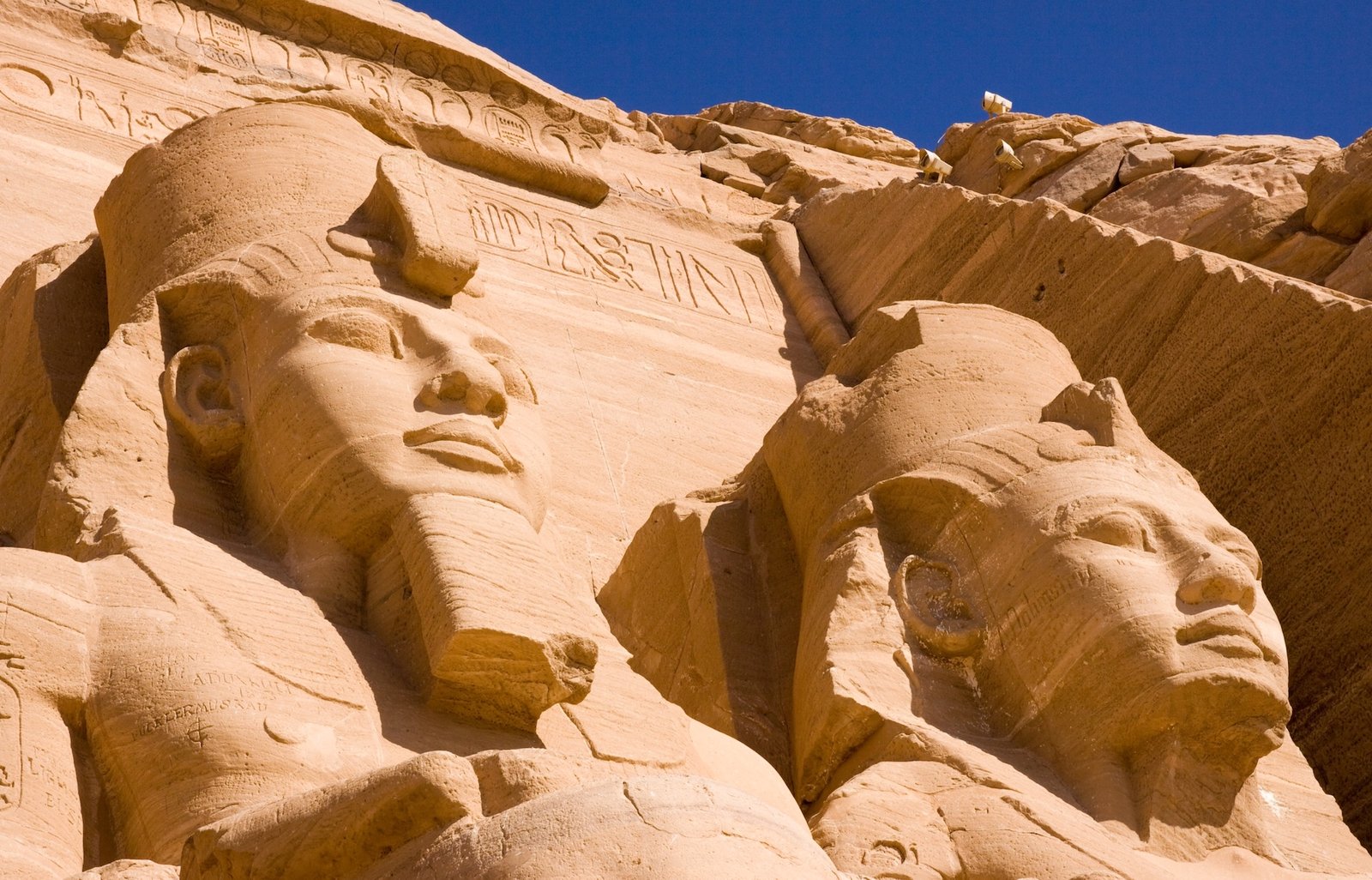
A recent archeological mission has unearthed a massive statue of the king Ramesses II at Tell El-Faraoun, a major historical site in El-Husseiniya that comes under the Sharqiya Governorate in Egypt. The new discovery is shedding light on the religious and royal life of the eastern Nile Delta.
In the discovery, the statue that was found is believed to be King Ramesses II, as when the statue was discovered, the lower part was missing, which includes the legs and base on which the statue was constructed. Even if the statue is found incomplete, the remaining part clearly points out that it was depicting the long-ruling pharaoh of the New Kingdom in Egypt, the great Ramesses II; details on the statue are speaking volumes of the iconography associated with the king Ramesses II in the ancient Egyptian pharaonic age.
The secretary general of the SCA (Supreme Council of Antiquities), Hisham El-Leithy, says that the discovery is not just notable because of its scale and massive size, but this excavation also reveals a lot about the historical movement and reuse of the royal monuments in the New Kingdom in ancient Egypt. Also, he added that the discovery also states the fact that statues were relocated and repurposed during the pharaohs’ age, especially at the religious centers that were connected to the major royal capitals.
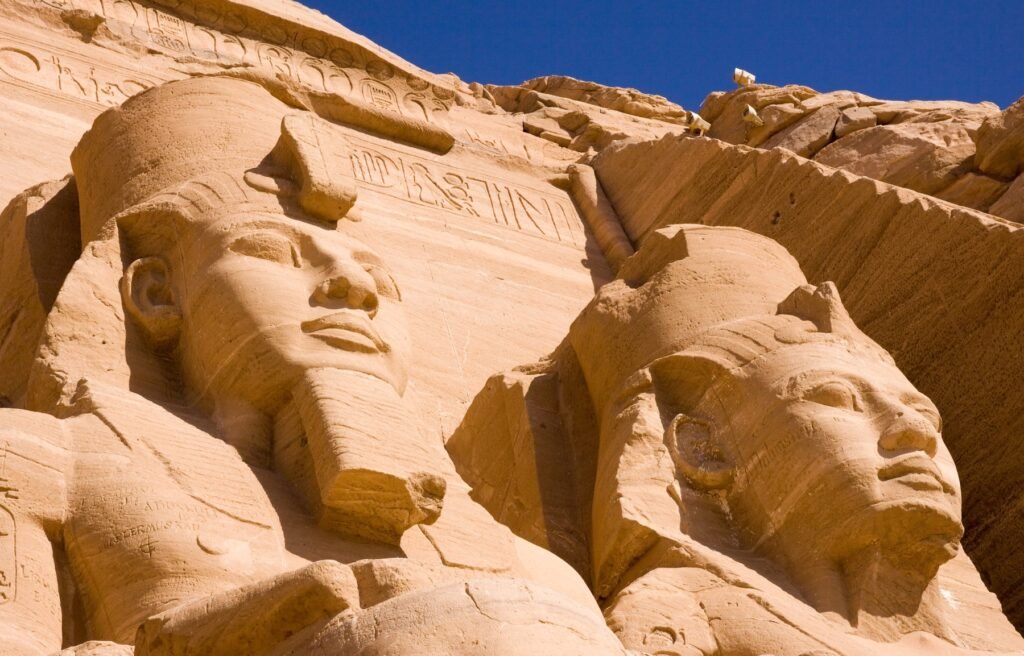
The specifications of the statue discovered at eastern Nile Delta
- The estimated weight of the statue is around 5-6 tons.
- The height of the damaged Ramesses II statue is 2.20 meters tall.
It is among the notable finds in the region in recent years at Tell El-Faraoun, a major excavation site in the eastern delta region. When the statue is found, it is not in good condition, but the parts that have survived centuries are clearly depicting the deep artistic and stylistic figures, which are evidence that this statue must be a part of a triad that was worshipped in Egypt. A triad means a group of three deities that was commonly found in the ancient temples of Egypt.
The initial studies of the discovery clearly state that the statue was not originally constructed at Tell El-Faraoun. It is believed that the massive statue of Ramesses II was transported as an antiquity from the royal capital city of Per-Ramesses, which was the center region during the rule of the great pharaoh Ramesses II. The recent site where now the colossal statue was found is known as Imet, a place that is reused for the religious complex. This recent discovery has stated the religious importance of the area across the several historical periods, which has been underscored for a long time.
As mentioned above, the statue was found in poor conditions, so for its utmost preservation, it was immediately transported from the excavation site at the temple to a secure facility in San El-Hagar, which is also an archeological site located in the northeastern Nile Delta. comes under the Sharqia Governorate in Egypt. Here the specialized restoration work will be carried out shortly. The trained archaeologists and conservators have plans to undertake careful and urgent interventions, which are being established by the scientific standard of preservation.
The recent discovery is also made to the list of archeological finds in the Sharqiya region, at the eastern Nile Delta in Egypt. Just a few months earlier here, only the researcher had found a stone stela, which has a copy of the Canopus Decree. The decree was originally issued by Ptolemy III in 283 BC, which was meant to be displayed in temples across ancient Egypt to honor the king and his royal family that also reinforced the royal authority through the religious places in Egypt.
According to the secretary general of the SCA, Hisham El-Leithy also said that together these discoveries would work as core components that will reshape and help in understanding the eastern Nile Delta region not only as a peripheral region but also as a dynamic religious and political center. Also, archaeologists can get clues of more cultural activities throughout ancient Egyptian history.
Conclusion
Ramesses II was a great pharaoh in the New Kingdom. His massive statues, which were earlier also found at different locations, signify that he had several religious and political centers all over Egypt, with its capital at the center. This discovery may have unearthed a damaged statue, but despite minimal surviving elements, it is clearly seen by archaeologists that it belongs to the pharaoh Ramesses II. Also, the eastern Nile Delta region has also regained its importance in the archeological research areas. For more such updates about the travel and archaeological finds in Egypt, follow us.
If you need any assistance for a Nile cruise, feel free to contact our team regarding booking and queries for the packages.
Continue reading our other newly published articles about Egypt travel and archaeological updates.