 Nile Cruisen Team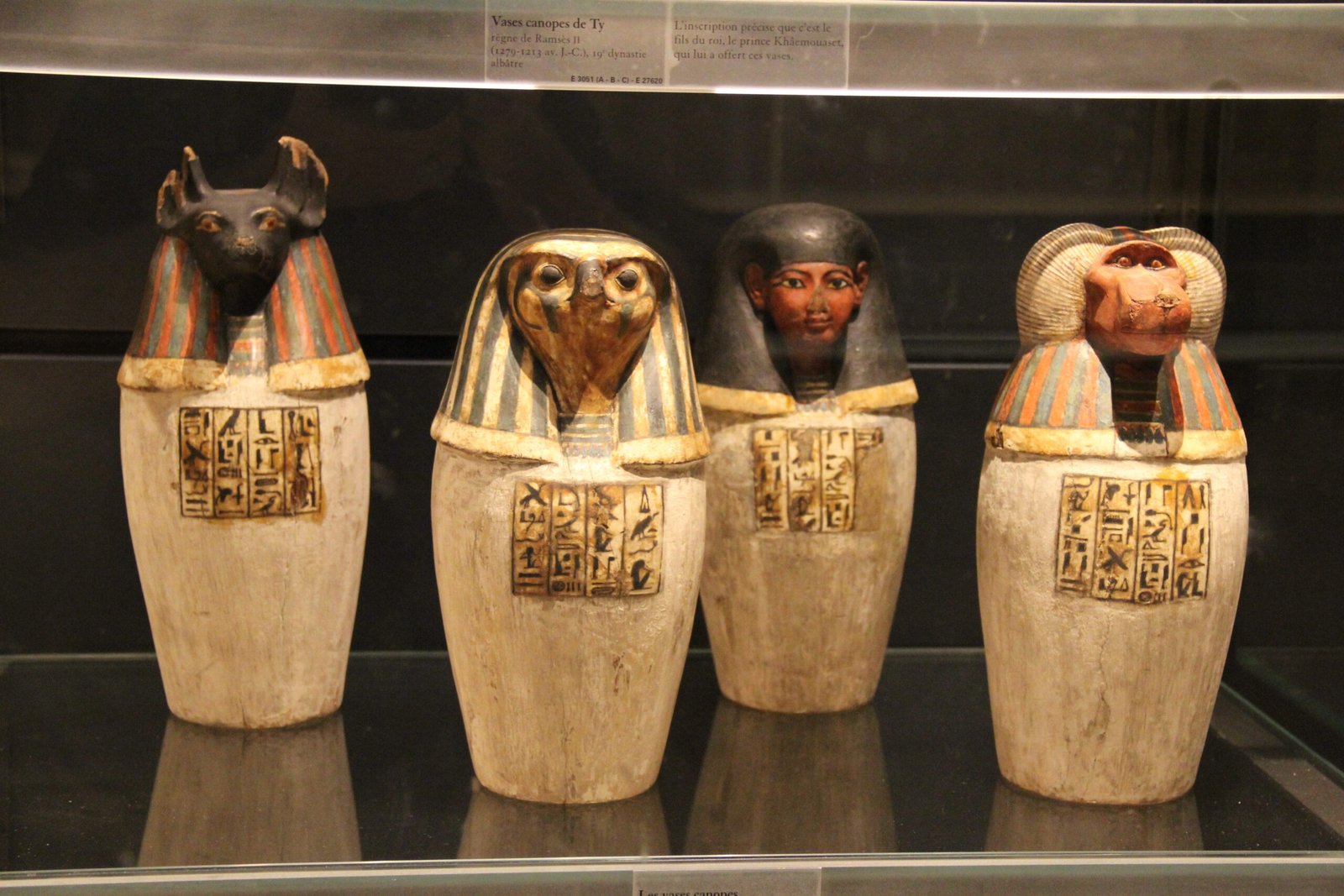
Key Takeaway:
- In ancient Egypt, canopic jars were used to safeguard the organs after they were taken out of the body during the mummification process. Four canopic jars held a certain organ and were guarded by one of the Four Sons of Horus: Hapi (lungs), Duamutef (stomach), Qebehsenuef (intestines), and Imsety (liver).
- The origin of canopic jars was in the Old Kingdom and emerged in design through the Ptolemaic Period. Early jars had flat lids, but later, the lids were shaped to demonstrate the Four Sons of Horus, each jar symbolizing a cardinal compass point.
- Different materials were used to make canopic jars, including limestone, pottery, glazed porcelain, and alabaster.
- There were Egyptian beliefs linked to each jar and the importance of safeguarding the organs for eternal life. The heart was left in the body because it was believed to hold the soul.
- Many canopic jars have been found in tombs and are showcased in museums worldwide, demonstrating the artistic and religious practices of ancient Egypt. They symbolize the ancient Egyptian faith and provide insights into their burial rituals.
What were canopic jars used for in ancient Egypt?
The four Canopic jars were used to keep organs safe after they were taken out of the body and wrapped in linen. These organs included the stomach, intestines, lungs, and liver. They left the heart where it was because they thought it held the soul. The Egyptians thought that life never really ends. They believed that death was not something to be afraid of or think of as the end of life. Instead, it was just a change to another world, which is often called the afterlife. In simple terms, death was like going through a door from one way of living to another, where people thought the soul would live on.
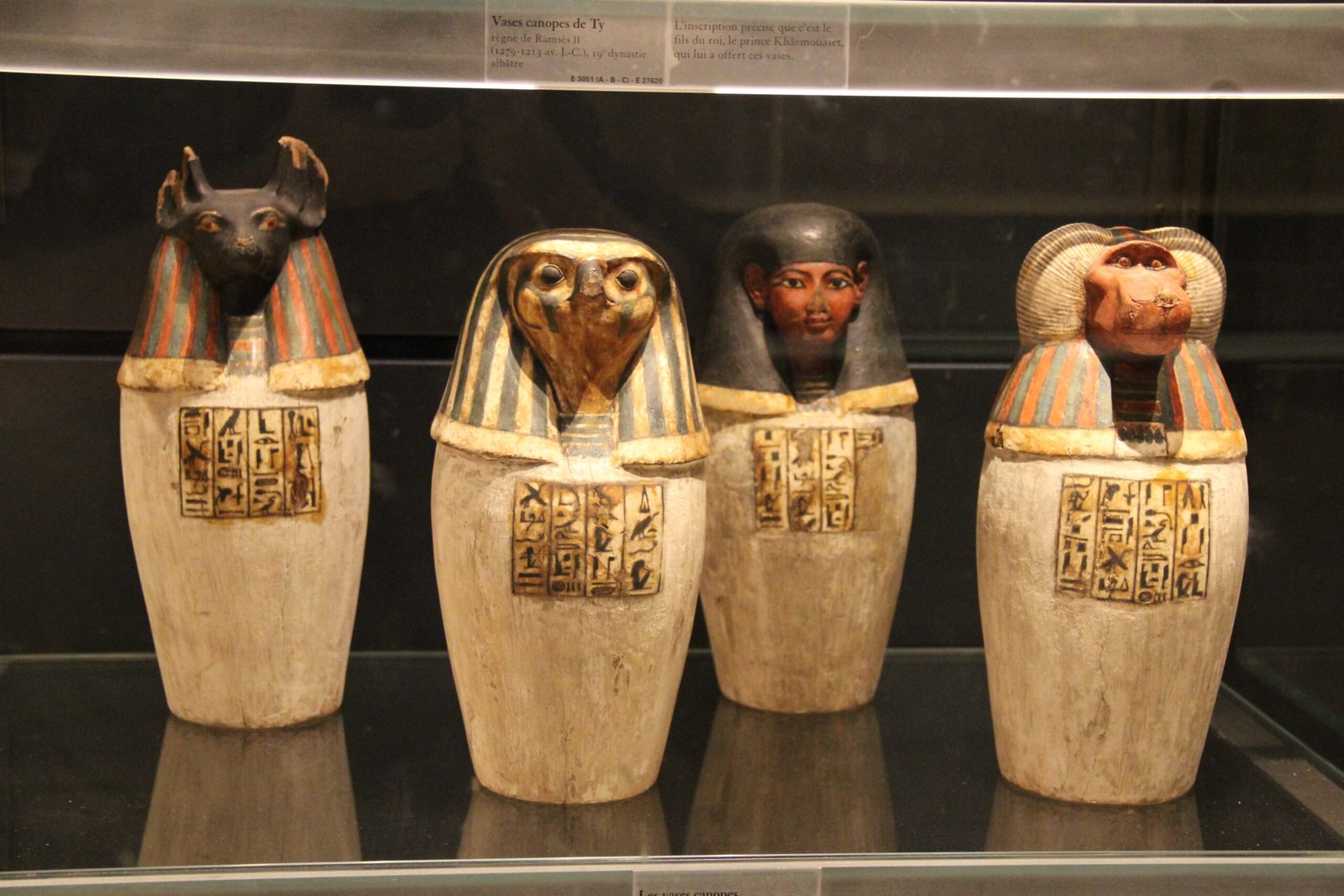
According to ancient Egyptian beliefs, the four Sons of Horus have a special role in protecting the body after death. During the mummification process, essential body organs were removed from the body and placed in canopic jars. Each son of Horus was associated with a specific direction, organ, and a protective goddess:
- Hapi (baboon-headed) guarded the north and was responsible for protecting the lungs, with help from the goddess Nephthys.
- Duamutef (jackal-headed) represented the east and protected the stomach, with help from Neith.
- Imsety (human-headed) represented the south and protected the liver, with help from Isis.
- Qebehsenuef (falcon-headed) represented the west and protected the intestines, with help from Serqet.
Basically, this reflects how ancient Egyptians were used to believe in gods and goddesses who worked together to keep the body organs safe and help the dead person reach the afterlife.
The jars were put in the tomb with the dead person’s coffin.
What was the significance of canopic jars in ancient Egypt? In short, the answer to your question is that they were used to store body parts that were taken out of the body to make mummies.
When were canopic jars made?
Ancient Egyptians used canopic jars from the Old Kingdom (2575–2130 BCE) until the late period, which is also known as the Ptolemaic Period (332–30 BCE).
Interesting Facts About Canopic Jars
- Throughout ancient Egyptian history, canopic jars were designed and used in different ways to reflect the religious and cultural beliefs of each time period.
- Each canopic jar was linked to a specific direction, organ, and guardian deity, such as the lungs, which were protected by Hapi, and the liver, which was protected by Imsety, demonstrating the complex Egyptian understanding of bodily preservation and the afterlife.
- Various materials were used to make these jars, such as wood, stone, alabaster, and glazed porcelain, demonstrating the artistic and technical skills of ancient Egyptian artisans.
- Many canopic jars were linked to royalty, such as those related to Queen Hetepheres and Queen Meresankh III, showing their significance in royal burials.
- The jars were important during the mummification process, ensuring the deceased’s organs were stored for the afterlife as per religious beliefs.
- They were decorated with symbolic carvings, elaborate inscriptions, or painted decorations, highlighting the rich symbolism and artistic traditions of ancient Egyptian culture.
- The term “Canopic” has been associated with several myths, which adds a complex layer of mystery to their history, such as a link to the Greek legend of Canopus.
- They have been found in various archaeological excavations, offering insights into ancient Egyptian burial practices, society, and beliefs.
- Examples of Canopic jars can be discovered in museums worldwide, showing that their importance is not limited to ancient Egypt; they are still admired today for their historical and cultural value.
Final Thoughts
Canopic jars represent the Egyptians’ beliefs and their faith. Egypt has many amazing artifacts like these, which can be found in Luxor, Aswan, and Cairo. Don’t miss the chance to see them all with our Egypt tours on the Nile Cruise by contacting Nile Cruisen that is one of the best Nile Cruise Companies.

This article was created by the team at Nile Cruisen, one of the best tour operators in Egypt for Nile cruises and tailor-made Egypt tours.
With years of experience sailing between Luxor and Aswan, our team knows the Nile better than anyone.
We share trusted travel advice, from the best time to visit and what to pack to simple tips for avoiding crowds.
Our goal is to help you enjoy the timeless beauty of Egypt with comfort, confidence, and an unforgettable travel experience.
- Nile Cruisen Team

- Nile Cruisen Team

- Nile Cruisen Team

- Nile Cruisen Team