 Nile Cruisen Team
 Table of Contents
-
Introduction
-
What Was the Egyptian God Geb Believed to Be?
-
What is the meaning of Geb?
-
What is Geb’s power?
-
What Does Geb Look Like?
-
Geb, the Egyptian god symbol
-
What animal represents Geb?
-
Conclusion
Introduction
Geb is the Egyptian earth god among the Ennead of Heliopolis. He represented Earth, and the most common belief says that his laughter can cause earthquakes, and lands where he does not give his blessing are dry and barren. Geb is one of the oldest deities in Egyptian mythology, also known as the father of snakes. He is the one responsible for making lands fertile and allowing them to grow crops.
The Egyptian mythology is very fascinating, as it not only worships a single god but also a group of gods that are believed to be responsible for maintaining the cosmic balance. So, from the Ennead of Heliopolis, Geb is a prominent god, as he represents earth and nature. Also associated with crops, so worshipped as a major deity responsible for sustaining life near the Nile, according to the Egyptian inscriptions. In this blog, you will know about the god Geb.
What Was the Egyptian God Geb Believed to Be?
Geb was believed to be the earth god, and it is highly believed that ancient Egyptians had seen his laughter as earthquakes. In the Ennead of Heliopolis, Geb is mentioned as the son of father Shu (god of air) and mother Tefnut (god of moisture). He is also referred to as the grandson of Atum, the primeval god in Egyptian mythology.
The god Geb is also seen as the source of fresh water, like his blessings turned the lands near the Nile fertile and crops grew. Closely associated with nature, fertility, and abundance. So beliefs and scriptures also say that his body is made of soil itself, and he is also considered the father of major gods in the Egyptian Ennead.
What is the meaning of Geb?
Geb is the name of the Egyptian god of earth; his identity reflects the soil, land, and physical existence. He closely represents the stability and foundational strength, which symbolically embodies nourishment and renewal. According to some mythological Egyptian scriptures, the god Geb is seen as a bridge between life and death because of burial practices on earth. So, in the ancient world, Geb was respected and worshipped widely.
What is Geb’s power?
The power of Geb is its control over land’s fertility and agricultural productivity. He was strongly popular for the belief of controlling earthquakes, as his laughter could cause earthquakes. One of the mythological factors also aligned with him: that he is the owner of tombs and burial grounds. Many believe that the body of the dead rests in God’s body. It is also believed that they also have control over serpents and creatures of the earth. Known as the father of snakes, because one of the tombs has the name “Snake” written as “Son of the earth,” it is also related to wildlife as well.
What Does Geb Look Like?
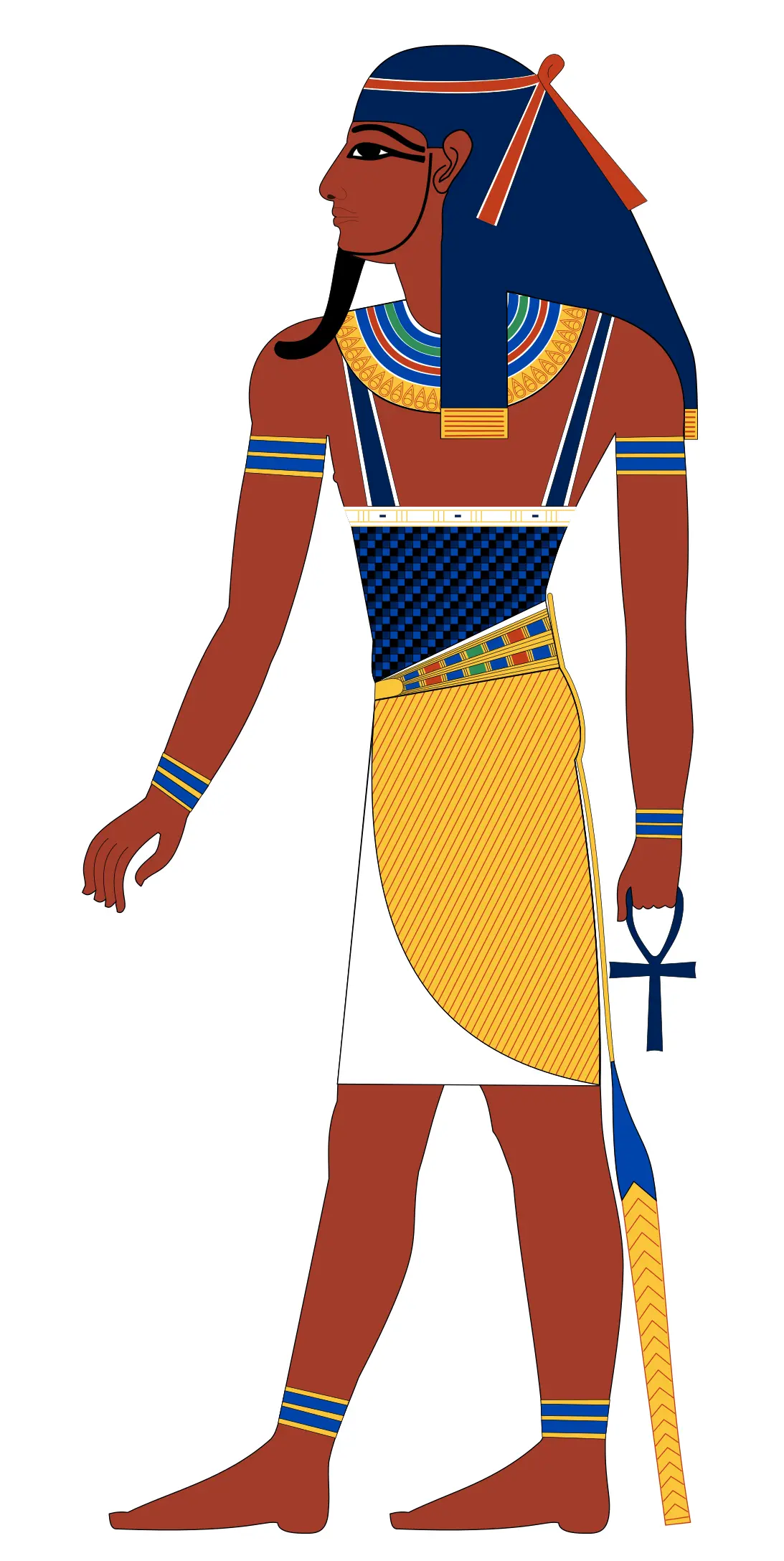
- Geb’s physical appearance is a man-like structure, seen as a lying man on his back, forming the landscape beneath the sky.
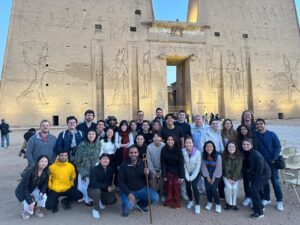
- He has a crown with a goose on the head, symbolizing connection with wildlife. On the walls of temples across the Nile that travelers explore on Egypt river cruises, he is generally represented with the goose symbol in the hieroglyphic language.
- In the Dendera Temple, where the cosmic ceiling represents Geb as a major figure who is separating the earth and sky. He is part of the cosmic diagram; tourists can see it while exploring Luxor temples.
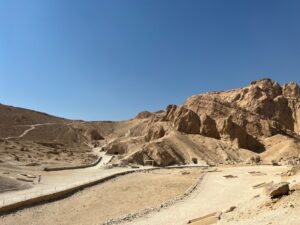
- At the Valley of the Kings, on the tombs of Queen Twosret and Setnakhte, two of the famous tombs. Geb drawings are found in colorful descriptions in which skin is colored green to represent land and agriculture. The figures on these tombs show trees growing from his body. The tourists can explore the Valley of the Kings while on the Nile cruise from Luxor to Aswan.
- In museums like the Grand Egyptian Museum, tourists can see Geb and other gods in the Ennead of Heliopolis with descriptions mentioning their importance and mythological significance.
- While exploring the Kom Ombo temple, tourists can see the wall carvings with scenes depicting a pharaoh getting crowned with a goose, known as the “Heir of Geb.” Usually the travelers explore the Kom Ombo temple on their all-inclusive Nile cruise journey while sailing between Aswan and Luxor.
Geb, the Egyptian god symbol
The symbol of the god Geb is the goose; in the hieroglyphics, the goose represents his name, which tourists can see on the walls of the temples. He is called the “Great Cackler” because he also owns the control of minerals in the soil. The goose symbolizes watchfulness and connection to the earth. Often seen as lying in the drawing to represent earth and land. Because of its connection with the ground, he is closely associated with snakes as well. Other symbols representing the god Geb are barley, a bull, and a viper.
What animal represents Geb?
The greater white-fronted goose is the prominent animal that represents the god Geb; the bird was placed as the crown on the head in the artistic expression. Also, some descriptions and tomb paintings closely associate the snakes with him. The goose, because of Geb, is seen as a divine bird and also a major reason why it’s found on many temple wall carvings.
Conclusion
Earth, land, fertility, agriculture, and earthquakes are related to the god Geb in Egyptian mythology. Represented as a man figure with the darkest skin and often depicted as lying in the drawings to depict the ground. Goose symbolized the name of the god Geb in the hieroglyphic language. Tourists can spot goose symbols easily on the wall carvings of the Kom Ombo and Karnak temple complexes while on the sailing journey over the Nile.
Other Useful Links
The comprehensive guide to travel costs in Egypt 2026: how to spend a royal week at the best prices

This article was created by the team at Nile Cruisen, one of the best tour operators in Egypt for Nile cruises and tailor-made Egypt tours.
With years of experience sailing between Luxor and Aswan, our team knows the Nile better than anyone.
We share trusted travel advice, from the best time to visit and what to pack to simple tips for avoiding crowds.
Our goal is to help you enjoy the timeless beauty of Egypt with comfort, confidence, and an unforgettable travel experience.
- Nile Cruisen Team

- Nile Cruisen Team

- Nile Cruisen Team

- Nile Cruisen Team