Which two tributaries feed the Nile River?
Table of Contents
-
Brief Summary
-
What are the names of two tributaries of the Nile River?
-
The White Nile
-
The Blue Nile
-
Why is the Nile essential for Egypt?
-
Can Egypt survive without the Nile?
-
Reasons why Nile is the lifeline for Egypt
-
Conclusion
Brief Summary
The longest river on the African continent, the Nile, has two tributaries that merge at the Sudan border and create the Nile, which flows entirely through Egypt and then dumps into the Mediterranean Sea on the borderline of Egypt. The White and Blue Niles are major tributaries that originated from different places and then unite to form the great Nile, a geographical phenomenon that made the existence of coastal areas in the arid, dry regions of the African continent possible.
Let’s learn in detail about the Nile tributaries and their role and the importance of the Nile for the people of Egypt in this piece of content.
What are the names of two tributaries of the Nile River?
The names of the Nile tributaries are the White Nile and the Blue Nile; both of them meet at Khartoum, Sudan, which forms the River Nile flowing towards Egypt. A detailed note on the tributaries is given below.
The White Nile
It is the longest tributary to the Nile, originating from Burundi, closely associated with Lake Victoria, which is the world’s largest tropical lake. This tributary travels through Uganda and South Sudan and finally meets in Sudan with the Blue Nile. The name of the White Nile is given because of its whitish-grey clay, which is opaque.
The White Nile is a steady and continuous supply of water and the source of the river, less affected by the rain. It acts as a major source that prevents the Nile from drying up even during the hottest summers. This tributary is also responsible for supporting wetlands and coastal areas on its riverbanks to maintain life and the ecosystem of a bigger part of the African continent.
The Blue Nile
The second tributary of the Nile is the Blue Nile, which begins its journey from the Ethiopian highlands, majorly from Lake Tana. It is shorter than the White Nile, but the flow becomes more powerful, especially during the rainy seasons. When the Blue Nile leaves from Lake Tana, it gets into Tis Abay, also known as the Great Smoke, and it creates Blue Nile Falls. The name of the Blue Nile is also given because Abay in Ethiopia means “blue Nile.”
It is darker in color than the White Nile, and it also carries heavy volcanic silt. A major reason for the annual flooding is also the Blue Nile, as due to the mountains of Ethiopia, the Blue Nile turns violent, especially during the months of June to September. This tributary is responsible for around 80 to 90 percent of the water source of the Nile, because of which it flows in Egypt today. Whereas, the distant White Nile only contributes 15-20 percent of the water in the river that flows in Egypt today. If the Blue Nile didn’t exist, maybe there would not be a Nile River in Egypt.
Why is the Nile essential for Egypt?
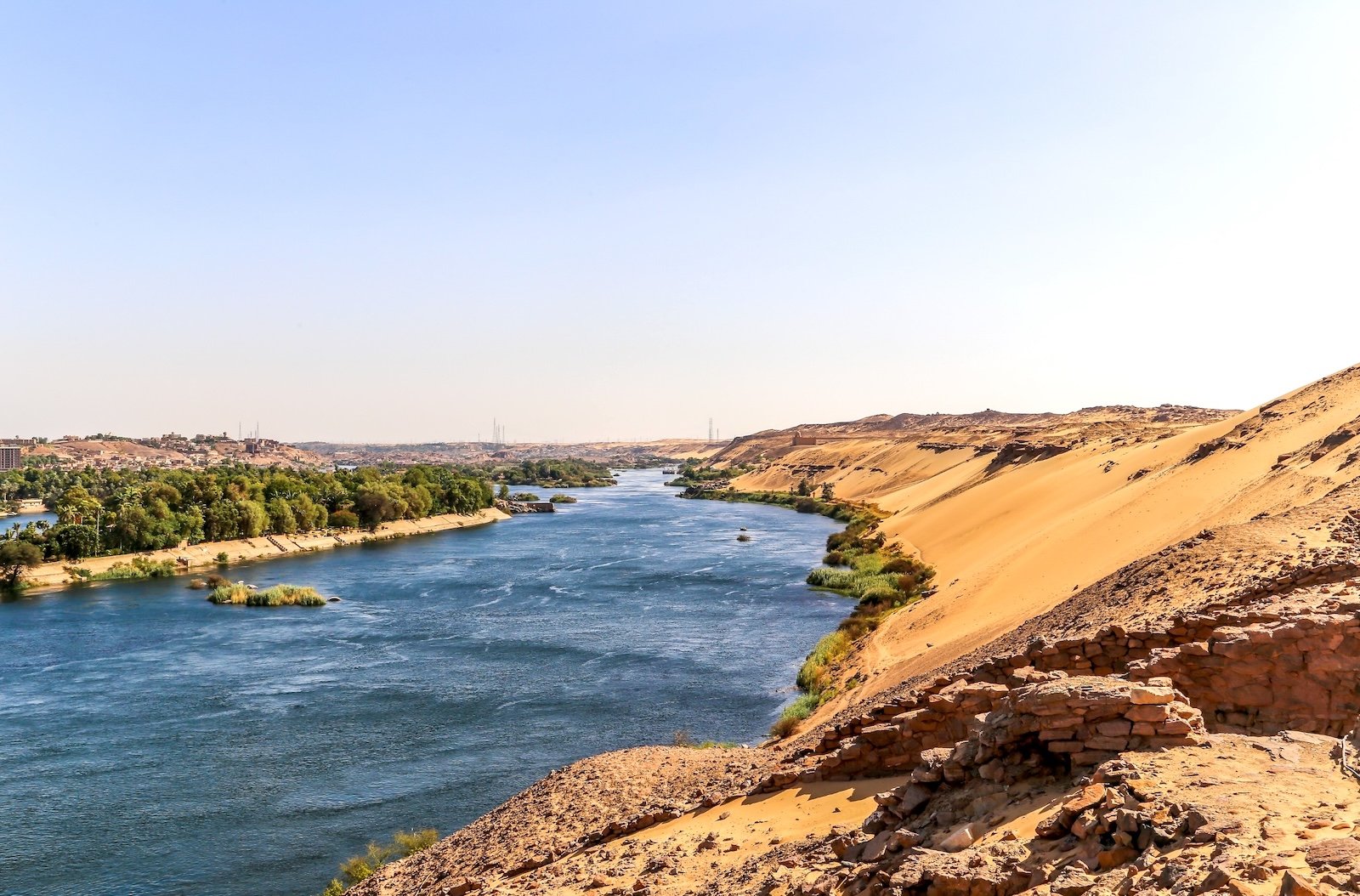
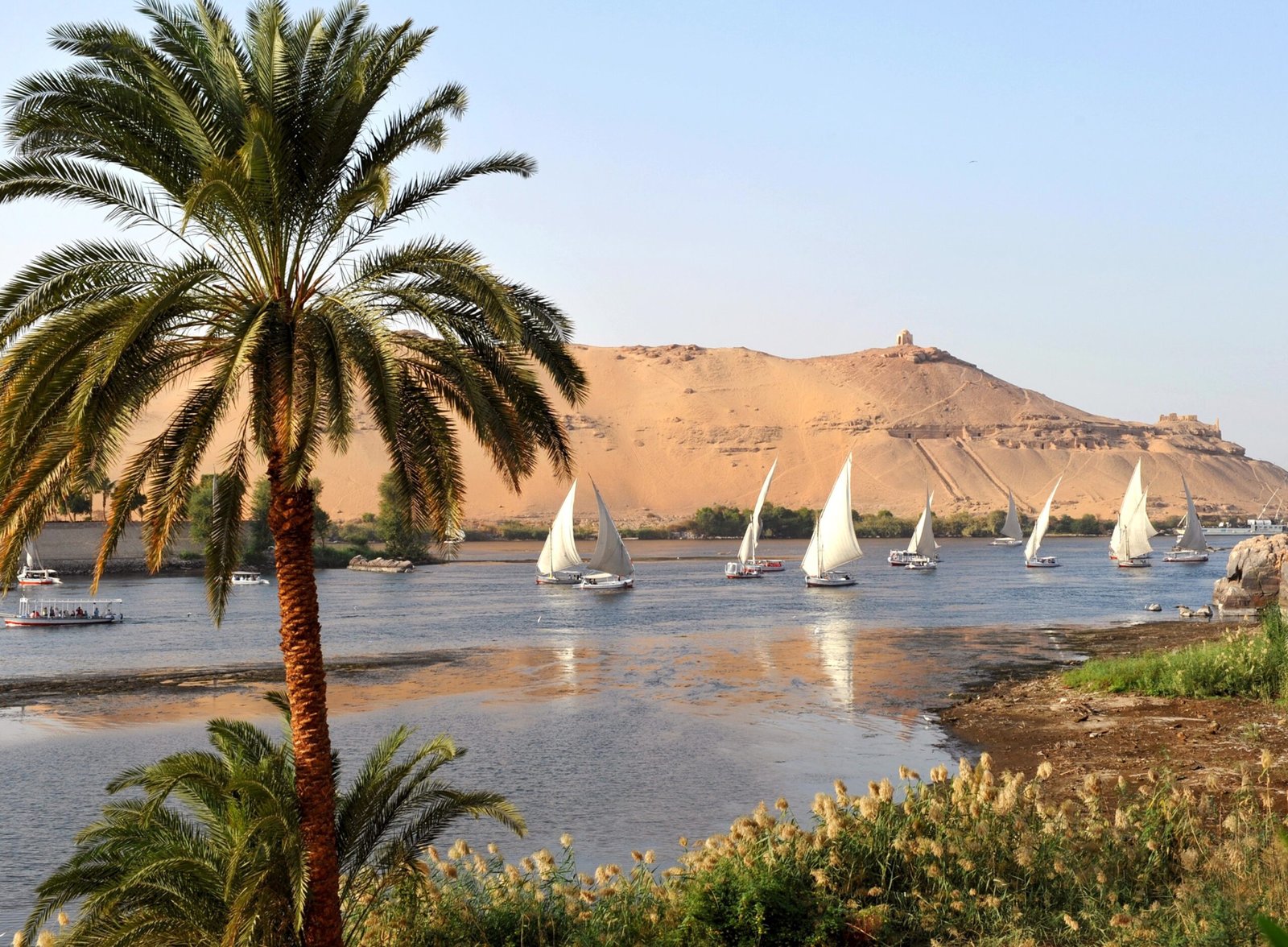
Egypt is covered with 90 percent dry desert sand, where a water body like the Nile, flowing through the desert for thousands of years, is itself a unique feature of the Nile. The Nile River is not just a lifeline but a reason why life is sustained in Egypt, and to date a large population in cities like Luxor and Aswan is situated along the riverbanks of the Nile. These are also major cities that are explored by tourists on Nile cruise packages.
The longest flowing river provides Egypt with fresh drinking water, irrigation purposes, hydropower, and also a significant water transportation route. From ancient and early civilizations, the Nile has been nurturing the agriculture in Egypt, and the cultivation of the crops is fully dependent on the irrigation from the Nile. The Nile Delta region is one of the most fertile regions of the whole African continent.
Can Egypt survive without the Nile?
No, the Nile is the only source of natural fresh water for the people of Egypt from ancient times to date. Life only becomes possible in Egypt due to the Nile’s existence; without it, Egypt would have just a desert of sand and nothing else. From the countries’ environment, economy, and population, they highly depend on the Nile for carrying out daily life activities.
Reasons why Nile is the lifeline for Egypt
- It helps in generating hydropower. For the people of Egypt, the major dam in Egypt is the Aswan High Dam, which is largely visited by passengers of Nile cruise in Egypt.
- This longest river is also responsible for carrying out the agricultural practices. Crops such as wheat, barley, rice, and several vegetables are grown on the fertile lands created by the Nile Delta.
- Nowadays, the Nile also generates income by generating tourism, as Egypt river cruise is one of the most loved experiences by tourists. As people explore history on Nile cruise itineraries, they find it perfectly blended with natural landscapes.
- Major cities are formed on Nile riverbanks, like Aswan and Luxor, which support them with water supply.
Conclusion
Without the Nile, Egypt would have faced an environmental and humanitarian crisis. Now the Nile is making Egypt strong enough for the livelihood of an individual living there. With Nile Cruisen, packages of multi-day cruises explore the lifeline of Egypt and riverbanks, narrating how history has shaped modern Egypt and the river that carries the history and writing of the modernity of Egyptian culture and heritage.
Trusted Partners
Nile Cruisen: Chosen by Leading Brands as Egypt's Top Cruise Operator