What is the Temple of Osiris at Abydos, Egypt: Flower of Life?
Table of Contents
-
Brief Summary
-
What is the Osiris Temple in Egypt?
-
Temple of Osiris, Egypt: Flower of Life
-
Where is the temple of Osiris in Egypt?
-
Overview—God Osiris
-
Is Osiris good or evil?
-
Where is Osiris buried?
-
Conclusion
Brief Summary
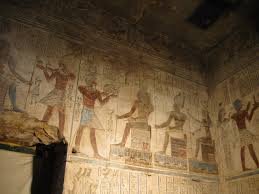
Abydos is an ancient city in Egypt, home to historical architectural sites like the temples of Osiris, Seti I, and the Royal Necropolis (Umm el-Qa’ab). It is usually visited by tourists who are keen to explore Egyptian history in detail, and one who knows about Lara Croft, a video game, also wants to see the Osireion and temples in Abydos.
In most cases, day trips from Luxor to Abydos are organized for travelers; the sites at the historical ancient city are quieter and have a more silent exploring environment than the ones in Luxor and Aswan, which are crowded. Egyptian god Osiris holds great significance to the city of Abydos; let’s explore that in depth below.
Abydos is a jewel of Egypt with a lot of secrets and mysterious elements about its history. A large collection of artifacts collected from sites like Abydos is placed at the museum in Cairo. Let’s understand its significance and why it is influenced by God Osiris.
What is the Osiris Temple in Egypt?
The temple of Osiris is a part of the temple complex of Seti I, which is dedicated to the god Osiris. It is located 12 kms from the Nile in Abydos, an ancient city with remains of burial sites of the major god Osiris. In the new kingdom of Egypt, the temple at Abydos was built by Pharaoh Seti I.
Some Egyptian beliefs also consider Abydos a major holy pilgrimage and wish to be buried near the location, as they believe that this place will help them connect to the afterlife easily. Behind the walls of the temple of Seti I, archaeologists have found a unique geometric design that is known as the Osireion, which is believed to symbolize the burial place of the god Osiris.
Temple of Osiris, Egypt: Flower of Life
The Osireion, a unique geometric structure made of the 19 intersecting circles, was found on the walls of the Osirion, which is a massive granite pillar that is part of the Temple of Seti I. It is complete with mysteries, as archaeologists are unable to conclude whether it belongs to the old Egyptian kingdom or to the new Catholic or Roman era.
Some believe it belongs to God Osiris, who represents the pattern of creation. One unique thing about it is that it’s not carved; most of the Egyptian patterns are carved into the walls of the temples. The Osireion, which is also considered the flower of life, is inscribed or made using a burnt technique. Its construction and shapes make it appear unique and mysterious to the early explorers. Many travelers who have a keen interest in the history of Egypt visit Abydos on a day trip from Luxor while on an all-inclusive Nile cruise trip to see the Osireion.
Where is the temple of Osiris in Egypt?
The temple of Osiris, also known as the Osirion, is situated in Abydos, around 12 kms from the Nile River. It is a historical site located in Egypt and offers mysterious underground architectural insights. Abydos has a long history and is believed to have the tomb of the great god Osiris and later the tomb of the early pharaoh King Narmer from the Old Kingdom in Egypt. The Temple of Osiris has a unique craving for narrating stories of early life and insights about how rulers are connected to the god Osiris. Flower-life craving also makes it a highlight for tourists to visit. Video games like Lara Croft and the Temple of Osiris (2014) are also inspired by the city of Abydos.
Overview—God Osiris
The Egyptian god Osiris is an important deity in the mythology and also a central member of the Ennead, a foundational group of nine Egyptian gods. He symbolizes the fertility of the Nile, the afterlife god, and resurrection. His wife is Isis, a prominent female god in the Egyptian scriptures who resurrected the god Osiris after being attracted by the evil god Set, which makes him the ruler of the afterlife. His son, Horus, later on defeated the god Set and then established peace by winning over evil.
Is Osiris good or evil?
- According to Egyptian mythology, God Osiris is considered the god of justice and moral balance.
- Unlike many other deities with some sort of destruction, the god Osiris is seen as a symbol for renewal and a protector of souls after death.
- Abydos, which is considered a cult center of the god Osiris, is later turned into a holy pilgrimage, where individuals come to take blessings for the afterlife.
- He was believed to guide the souls of the deceased to the path of the afterlife and was seen as an unbiased leader during the judgement of the dead after death.
The role of the god Osiris in the Egyptian scriptures is only seen as a protector and hope for new beginnings, so he is considered good and not an evil figure.
Where is Osiris buried?
Based on the research and hieroglyphics, it is believed that the physical form of the god Osiris is buried at Abydos, Egypt. It is believed that the underground structure is known as the Osireion, which symbolizes its tomb. The historians also believe that the Temple of Osiris is not just a burial place; it’s a ceremonial structure that represents the mythological significance of the tomb of the god Osiris.
The existence of the geometrical flower with intersecting 19 circles represents the connection and cycle of life and death. Well, the proof of links of the structure with the god Osiris is not evident, but it’s highly believed by historians.
Remains of a burial site and underworld structure are believed to have been destroyed during the construction of other temples in the New Kingdom.
Still, the Temple of Osiris attracts researchers and historians from around the world because of its underworld structures, connection of Abydos with the afterlife, and the unusual or unique existence of a flower-like structure on the wall. So, it’s overall a combination of mythology, history, monuments, and mysteries that gives exploration in Egypt a different dimension.
Conclusion
The thousands-year-old structure of the ancient temple stands as proof of how rich Egypt is in terms of history and spirituality. From Luxor and Aswan to Abydos, each city offers a different exploring experience. So, to tourists, we advise planning a day trip while on the Nile cruise from Luxor, with a day trip to Abydos to witness the history in its raw and unpolished version.
Trusted Partners
Nile Cruisen: Chosen by Leading Brands as Egypt's Top Cruise Operator