
Who was Ramesses the Great, and what is its role in Egypt?
Table of Content
-
Introduction
-
When was Ramses the Great born?
-
When did Ramesses the Great rule?
-
What is Ramses the Great famous for?
-
What god did Ramesses worship?
-
How did Ramesses the Great die?
-
Is Ramesses the Great mentioned in the Bible?
-
How were Moses and Ramses related?
-
Conclusion
Introduction
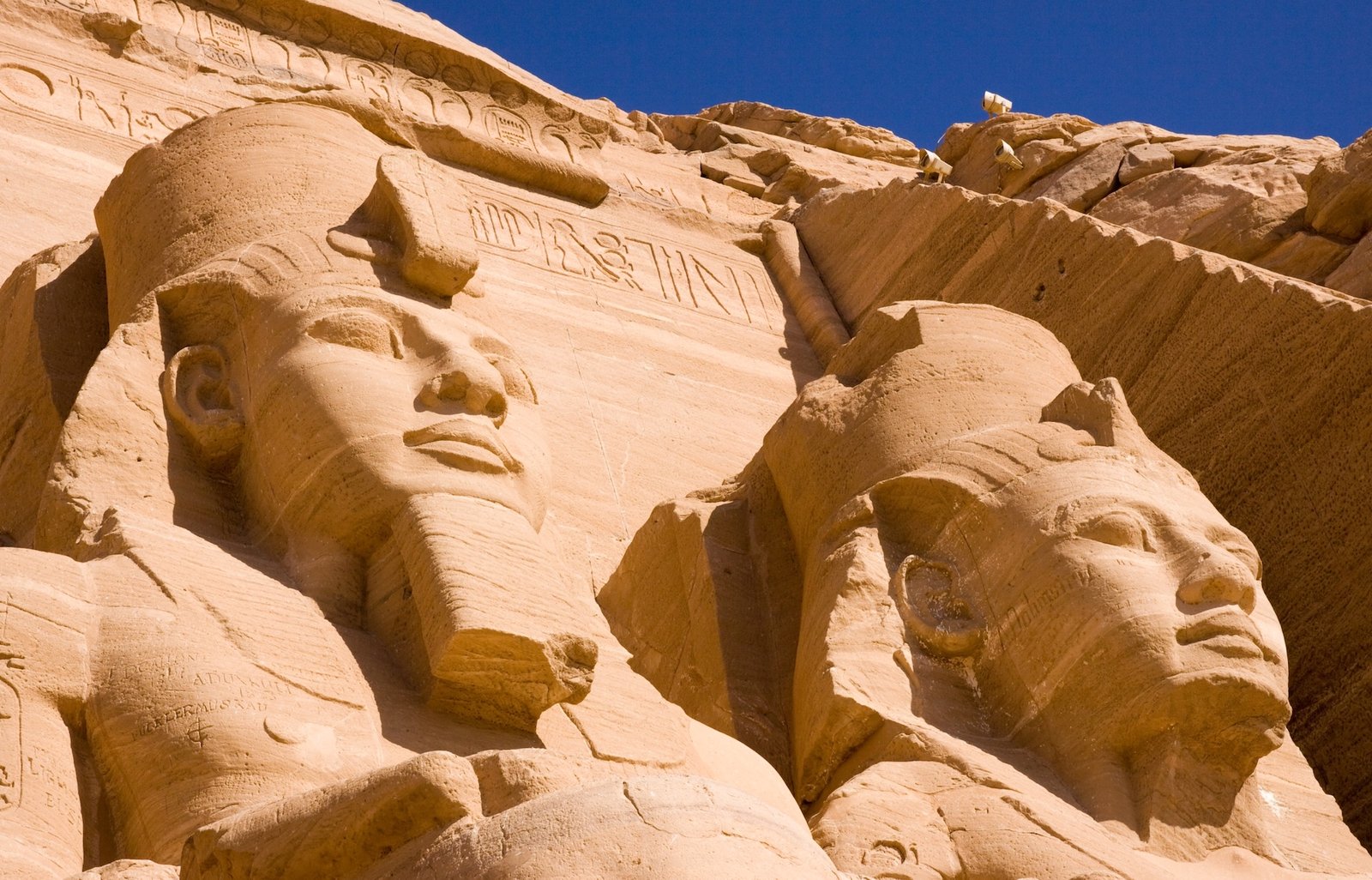
Ramesses II, the third pharaoh of the Nineteenth Dynasty during the New Kingdom of Egypt, is considered to have reigned as Ramesses II the Great, who is among the longest-ruling pharaohs in Egyptian history. He is one of the most famous and celebrated figures from Egypt’s history, known for his exceptional reign, and his contributions to the military and architecture were among the significant achievements.
His role symbolizes a true mentorship of a king, which brought stability and economic strength to the state. Many major events of Ramesses II make his ruling period different, and often he is considered the last true pharaoh of Egypt, who depicts power, authority, and sole connection with the ancient Egyptian deities. In this blog, mention Ramesses II and its significance in shaping Egyptian history.
When was Ramses the Great born?
According to the research, it was believed that Ramesses II was born in 1303 BC; he was not born as a prince in the royal family. During the rule of Horemheb, Ramesses I, the grandfather of Horemheb, was a vizier under his rule. After his rule, he ordered Ramesses I to be his successor to the throne, believing that Ramesses was 11 years old at the time.
When Ramesses I died, his son Seti I got the throne, and during his rule, he appointed Ramesses II as prince regent and his successor when he was at the age of 14. He got the throne at the age of 25, and because of his achievements and successful ruling period, he is often considered the “great ancestor” by the pharaohs who ruled after him.
When did Ramesses the Great rule?
The period of the rule of Ramesses the Great is 1279-1213 BC. Under his rule, he has conducted major military campaigns in nearby regions, which include Syria, Libya, and Nubia, where he also succeeded and set a benchmark of authority and military power. The only military campaign that does not result in victory is the first recorded battle of Kadesh, which ends with a peace treaty between Ramesses II and the Hittite Empire in the 13th century BC.
His reign has lasted 66 years, which is the longest ruling period in the New Kingdom of ancient Egypt. This extended period of rule allowed him to complete large-scale construction projects and secure Egypt’s borders through several military campaigns. Before him, only the rule of Pepi II, who was the king 1000 years ago, has a recorded reign of 90 years. He is among the strongest and most valued pharaohs in ancient Egyptian history. From the large statue to the royal tombs and hieroglyphics, they have narrated the brave story of the pharaoh Ramesses II beautifully.
What is Ramses the Great famous for?
- The great pharaoh Ramesses II was known for his diplomacy and architectural achievements, which resulted in making him the most loved pharaoh.
- One of the most talked about and researched battles was the Battle of Kadesh, which happened between the Hittite Empire and Ramesses II during his military campaigns and resulted in the signing of the first peace treaty in Egyptian recorded history.
- The ruling time of Ramesses II was considered the “Golden Age” in the pharaoh’s history because of his marvelous architectural achievements.
- He is well known for the construction of the Temple of Abu Simbel, which is widely explored by the Nile cruise passengers; he was commissioned to build the temple of Nefertari Meritmut, who was his most beloved wife. Also, the Karnak temple complex in Luxor.
- To reinforce his political authority in the region, it is believed that Ramesses II also constructed a whole new capital city near the Nile Delta, which is known as Pi-Ramesses.
- Ramesses II is one of those pharaohs who were worshipped as equal to a deity during his lifetime by the public, seen as their protector and sole giver.
What god did Ramesses worship?
Ramesses, the great Egyptian pharaoh, worshipped multiple gods, which is part of polytheistic belief, which was followed in ancient Egypt. Specifically, he worshipped the god Amun, the chief god of Thebes, and also he honored the god Ra to depict himself as the supreme god of the sun. On the temple walls of Abu Simbel, the carvings depict Ramesses II worshipping God Amun-Ra.
How did Ramesses the Great die?
Ramesses II, the Great, died in 1213 BC due to old age and causes related to natural death. He lived into his 80s and 90s and served a remarkable period as pharaoh in Egypt. He was originally buried in his royal tomb at the Valley of Kings, which is today named KV7. Later, the body of Ramesses II was moved to the Royal Cache, and then, in 1881, the mummy was discovered by the archaeologists. Today, the body of Ramesses II is exhibited at the National Museum of Egyptian Civilization in Cairo, the capital city of Egypt.
Is Ramesses the Great mentioned in the Bible?
Some scholars believe that Ramesses II, the Great, is somehow associated with the biblical story of Exodus, which is the movement of the Israelites from slavery to freedom. Well, there is no such solid proof that states Ramesses’ link with the Holy Bible. This topic, till now, has been part of debates, and there is no fact stated in the historical context.
How were Moses and Ramses related?
Moses is the Hebrew prophet who helped the Israelites in Egypt to get free from slavery, and he believed that he was raised in the palace of Ramesses II. A proper archaeological connection between biblical Moses and Ramesses II is not found, so it is not a fact. When Moses rises and frees the Israelites, the time period of the event and Ramesses II’s ruling period are the same; that is a reason some scholars relate them.
Conclusion
The most celebrated pharaoh has left a great legacy behind, which was unmatched by any pharaoh after him. He is seen as the identity of the rich cultural heritage of Egyptian society. Today, tourists in Egypt explore Abu Simbel and the Karnak temple complex during the Nile cruise from Luxor to Aswan. Ramesses II is one of the recognizable pharaohs who symbolizes the power and ambition of New Kingdom Egypt in ancient history.
Other Useful Links
A Complete Guide to the Old Kingdom of Egypt
Best Tour Packages for Europeans to Visit Egypt
10-Day Egypt Itinerary: Cairo & Nile Cruise
Start from
$1209 / U$D

12-Day Egypt Itinerary: Cairo, Nile Cruise & Marsa Alam
Start from
$1479 / U$D

An 8-Day Cairo & Boutique Nile Cruise Trip
Start from
$1499 / U$D
Trusted Partners
Nile Cruisen: Chosen by Leading Brands as Egypt's Top Cruise Operator