 Nile Cruisen Team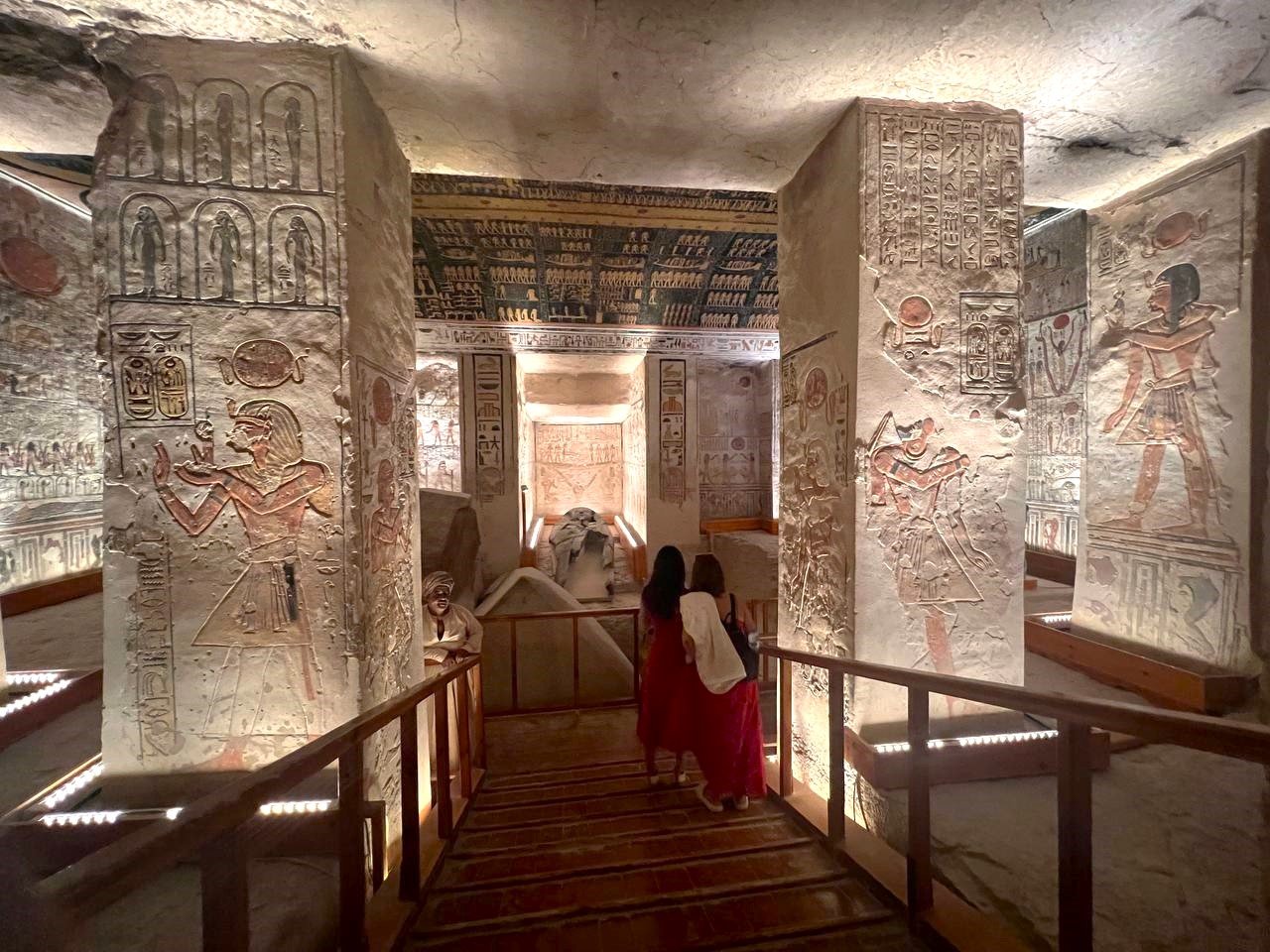
The tombs of Amenhotep-Rabuia and son Samut are opened for the public. For the first time since they have been rediscovered in 2015, located at the Al-Khokha archaeological area on the west banks, they are believed to be 3,000 years old. Tombs belong to the Rabuia, who served during the reign of King Thutmose III, and to son, Samut, who served during the period of King Thutmose IV.
Rubuia and son Samut were the doorkeepers of the Egyptian deity Amun during the 18th Dynasty in the New Kingdom period of ancient Egypt. Recently they were unveiled for the general public. Despite holding a low rank, their tombs are designed like royal tombs; the walls have traditional Egyptian art, and surprisingly, these tombs are T-shaped, which only nobles had during that period.
Location of the Newly Opened Tombs
Their tombs are located at the El-Khokha necropolis on the west banks of Luxor; it is situated around 2-3 kilometers away from the Valley of Kings. By a private taxi, it is a 5-10 minute journey. The tombs are neatly positioned between the El-Assasif necropolis and Sheikh Abd el-Qurna on the west of Luxor.
Why are the tombs of Amenhotep-Rabuia and his son Samut important?
The Amenhotep-Rabuia (TT416) tomb and son Samut’s (TT417) tomb date back to the reigns of pharaohs Thutmose III and Thutmose IV. The director of antiquities of the West Bank of Luxor, Bahaa Abd El Gaber, says that the 18th Dynasty in the New Kingdom was a period when civilization was at its peak and marked by military expansion, monumental temple building, international influence, and advanced art and craftsmanship.
Unlike the royal tombs in the Valley of Kings, these tombs belong to doorkeepers of god Amun, also known as guardians; their roles include overseeing the temple administration and protection duties. Still, the tombs are T-shaped; their design includes a transverse hall showing scenes from the earthly life of the owner and a long corridor dedicated to funerary and afterlife imagery with the presence of god Osiris and goddess Hathor.
About the Tombs TT416 & TT417
On the walls of the tomb is Egyptian art that depicts the richness of the era during the peak of civilization. The archeologists and historians have noticed that some parts of the tomb’s wall were damaged; also, these tombs were also vandalized, like many were in the Valley of the Kings. But the walls of the tomb contain paints, patterns, and scenes depicting daily life. The colorful scene on the burial-moment walls shows agriculture, bread-making, pottery production, wine-making, harvest activities, and funerary rituals of the New Kingdom era from ancient Egypt.
With this, the Egyptian officials have also unveiled a rare plaster seal of Tutankhamun’s tomb, which was placed at the Luxor Museum. Egypt is currently focused on modernizing Luxor. museum experiences that include interactive displays, advanced lighting systems, visitor-friendly walkways, and climate protection systems. In a wider strategy of Egypt’s tourism ministry, they have a vision to position Luxor as the world’s leading open-air archaeological destination to witness the Egyptian civilization and their culture in depth.
Why do the tombs matter archeologically?
With the opening of these tombs the archealogists understand about lives of elite officials and not just of the phraohs, as the paintings on these walls tells about ancient Labour, food production activities, religious customs and hierachy of social clasess. The historians are conmsidering the tombs avlkuable as it is relvealinbg aboutthe lives of workers during the 18th dynasty ogf new kingdom when civilization was at its peak.
Conclusion
In recent years, Luxor has become one of the most active archeological zones in the world with new tomb discoveries, restorations, and due to upgrades in the museum, and now with the opening of tombs Amenhotep-Rabuia (TT416) and his son Samut (TT417), tourism can be increased at the El-Khokha necropolis on the west banks of Luxor near the Valley of the Kings that you can explore while on Nile cruise packages between Aswan & Luxor as an additional historical monument.
For Nile Cruise bookings, you can contact us; our team will help you find and book the premium options to explore the beauty of Egypt in a different way by cruising over the longest river, the Nile.