 Nile Cruisen Team
 By Menna Hassan
Uncovering a residential city from the 18th century and a Coptic cemetery below it at the site of Sheikh Al-Arab Hammam in Qena.
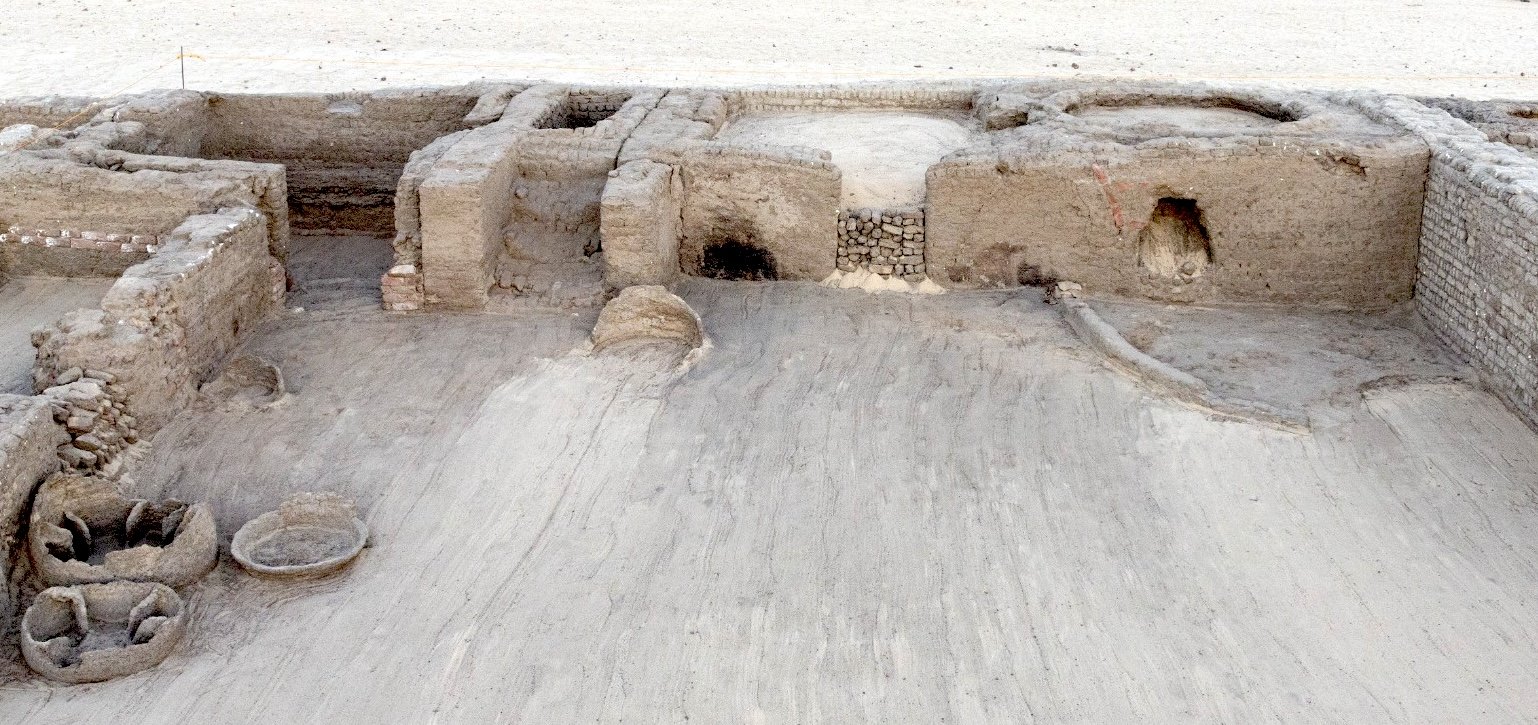
Within the framework of archaeological excavations at the site of Sheikh Al-Arab Hammam in the village of Al-Arki in Qena Governorate, the joint Egyptian-French archaeological mission uncovered parts of a residential city built of mud brick dating to the 18th century AD, during the reign of Sheikh Al-Arab Hammam. The excavations also revealed an extension of a Coptic cemetery from the Byzantine era located beneath the discovered city.
Official Declaration from the Egyptian Ministry of Antiquities
Sherif Fathi, Minister of Tourism and Antiquities in Egypt, praised this fruitful cooperation between the Egyptian and French sides, stressing that the project aims to reveal the nature of the site and its history and preserve it, in preparation for its rehabilitation and inclusion on the tourist map for the visit, especially since it is located in a strategic location halfway between Dendera and Abydos, which contributes to enhancing tourism movement in the region.
For his part, Dr. Hisham Al-Laithi, Secretary-General of the Supreme Council of Antiquities in Egypt, stressed the importance of this discovery in deepening the understanding of the nature of life and human activity in Upper Egypt in general, and the Arki region in particular, given the scarcity of information contained about it in historical sources.
Dr. Diaa Zahran, Head of the Islamic, Coptic, and Jewish Antiquities Sector at the Supreme Council of Antiquities, explained that the excavation work resulted in the discovery of six houses with attached service buildings and part of an adjacent industrial area. Preliminary studies indicate that some of these houses were covered with domes made of mud brick, while the roofs of other houses were covered with palm trunks. The mission also found traces of white lime paint in some rooms, while the rest of the city is still being explored.
He added that the discovered archaeological finds reflect the richness of the site and the diversity of its activities, as they included bronze coins, various pieces of pottery, children’s toys, jewelry, pieces of textile, and other evidence indicating the nature of daily life at the site.
What discoveries have been found in the Coptic complex?
Regarding the discovered Coptic cemetery, Dr. Ahmed Al-Shawki, head of the mission and expert in Islamic antiquities at the French Institute of Oriental Antiquities and dean of the Faculty of Archeology at Ain Shams University, explained that a limestone coffin lid dating back to the Byzantine era was found, and it was used as a floor in front of one of the entrances to the discovered city, which raised questions about the reasons for its presence in this location. Subsequently, cooperation was made with the Remote Sensing and Space Sciences Authority to conduct a geophysical survey of the site by a specialized team headed by Dr. Abdul Aziz Al-Fadali. The results of the survey led to directing excavation work during the current season to uncover part of a Coptic cemetery located beneath the residential city.
The cemetery contains many burials dating back to the Byzantine era, and is divided into two types: The first involves direct burial in the soil, while the second style is characterized by defining the burial area with mud brick courses. Several pottery pieces, linen scrolls, and parts of the “tunic” prepared for the deceased and woven in the Coptic manner were also found with these burials. Many of them were decorated with floral, geometric, and animal decorative bands, in addition to the shapes of the cross and some symbols and letters in the Coptic language. A copper stamp was also found that was used to decorate cakes.
Dr. Ahmed Al-Shawki stressed that these discoveries represent an important scientific addition to the study of settlement patterns, funerary practices, and industrial activities in Upper Egypt. They also contribute to providing new insights into the nature of population concentration and the geographical development of the region from the Byzantine era to the Islamic era.
Dr. Pierre Tallet, Director of the French Institute of Oriental Archaeology, indicated that bio-archaeological studies will be conducted on the discovered skeletons, to determine the diet, age, gender, and health status of the individuals buried at the site, who number about 23 individuals, males, females, children, adolescents, and adults, especially in light of the presence of traces of mummification on some of them.
Site restoration work.
Professor Dr. Abbas Zawash, Director of Studies at the Institute, also confirmed the keenness of the Institute and the Sheikh Al-Arab Hammam Mission to organize field training programs during each excavation season within the framework of exchanging experiences and transferring knowledge. The current season included training several inspectors and restorers from the Nag Hammadi region on excavation, documentation, and mud brick restoration work, in addition to the work of maintaining the finds, managing, and securing the site.
It is worth noting that Hammam bin Youssef bin Ahmed, nicknamed “Sheikh of the Arabs Hammam,” is considered one of the most prominent figures in Upper Egypt in the eighteenth century. He was born in 1709 AD in Farshout, Qena Governorate, and died in 1769 AD. He is the eldest son of Sheikh Youssef, the leader of the Hawara tribes. He assumed power after the death of his father and expanded the scope of his authority to include the regions of Upper Egypt from Minya in the north to Aswan in the south. The site is registered among the Islamic and Coptic antiquities of the Ministry of Tourism and Antiquities.