 Nile Cruisen Team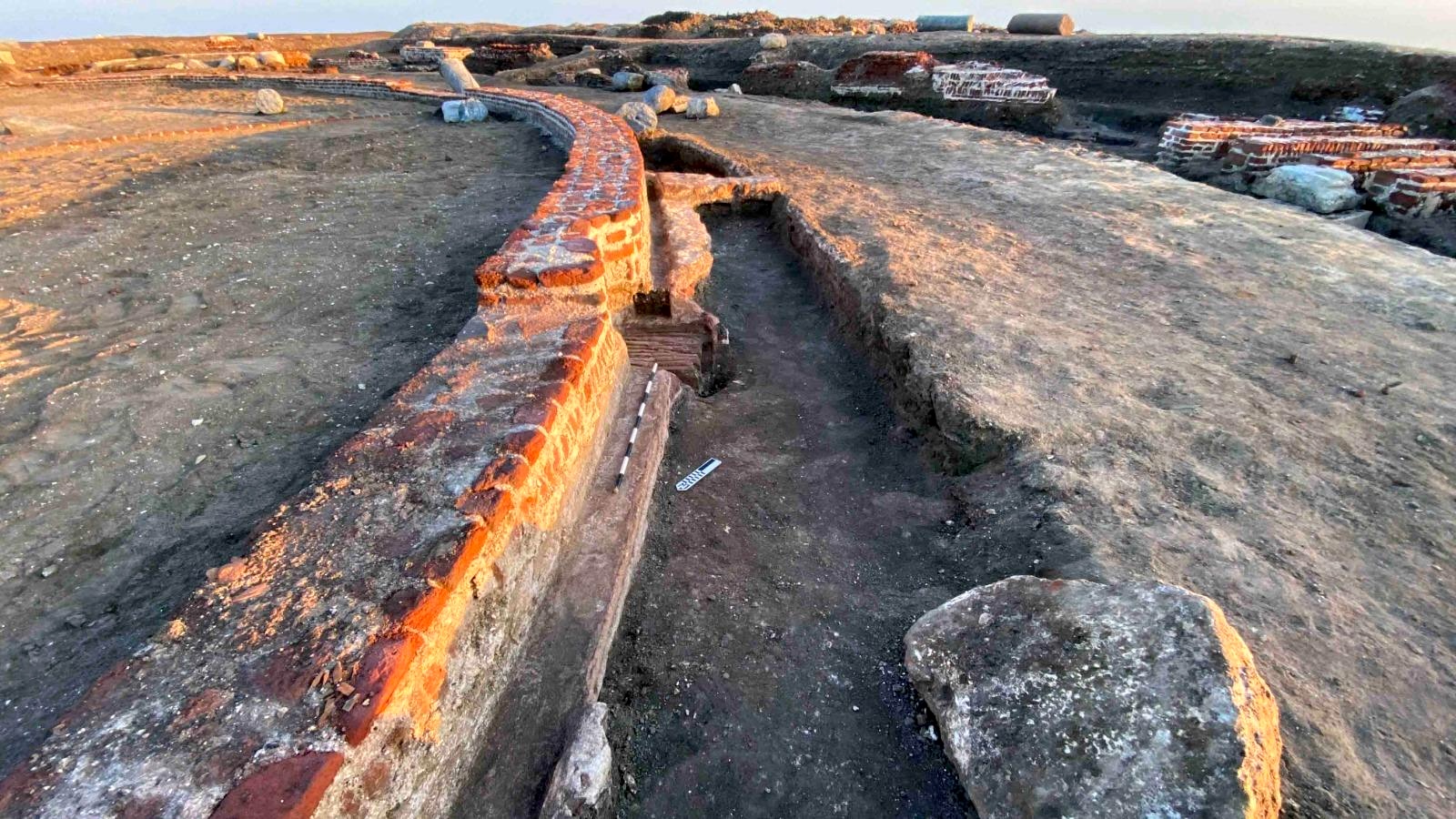
Tell El-Farama, a famous historical site located in the North Sinai Governorate of Egypt, came to the attention of archaeologists, as after dedicated excavation, they uncovered a water-centered complex where sacred rituals were performed, and it has a relation with the deity Pelusius. It is now reshaping the long-ago assumptions about the ancient city of Pelusium and its importance in history and antiquity.
This discovery is part of a mission under Egypt’s Supreme Council of Antiquities (SCA). So, archaeologists have discovered a religious structure that does not look like a usual temple structure with halls and sanctuaries. It is kind of a religious structure centered around the water-based rituals. The structure includes large basin systems and hydraulic arrangements that were used to conduct rituals like purification, fertility, or worshipping a local deity related to water. With the completion of excavation, earlier-made assumptions were corrected, which thought that it was an administrative building.
What have officials stated about the water temple found in North Sinai in Egypt?
The minister of tourism and antiquities, Mr. Sherif Fathy, has stated that the excavated temple in North Sinai now stands as a testament to its importance in historical archelogy. He also added that in the future, may the North Sinai area uncover many more objects. Also shed light on that continued excavation and research are necessary to learn more about the history.
Then Hisham El-Leithy, the secretary-general of the Supreme Council of Antiquities in Egypt, has said that recently unearthed Pelusium was a major cultural crossroads where different civilizations have interacted, like the Greeks, Egyptians, and Romans. Ideas, beliefs, and culture are shared and have spread through regions.
He also stated about the architecture of the structure that it is a combination of ancient Egyptian design, Hellenistic (Greek-influenced) elements, and some Roman features. It is not an isolated building but a blend of different techniques.
Points to be Noted about this archaeological discovery
At the center of the complex architecture, a large circular basin was found that is 35 meters wide. The pool is connected to a branch of the river Nile, so that means that basin must be filled with nutrient-rich muddy water. Also, some archaeologists state that the water must have a religious meaning, as it is linked to a local god named Pelusius. The name derives from the Greek word meaning “mud,” which shows this type of water was important for religious purposes.
The archeologists have also noted that a large base carefully encircles the water basin; this system is a thoughtfully designed water channel to control the flow of water and to drain it. In the centermost part of the structure, a raised square platform was also found, believed to be where the large statue of God once stood.
The archeological evidence also shows that this place was used for a long time, nearly about 8 centuries, estimatedly from the 2nd century BCE to the 6th century CE, that too with only minimal modification in this time.
Thoughts of the supervisor of the mission
Hisham Hussein is supervising this mission closely and has addressed the misconceptions that earlier experts had drawn towards the site. When the digging of the site started in 2019, a small part of the red brick was found at the structure, so many officials thought it was a senate building. As a large area gets uncovered, the archaeologists have found something more complex than expected.
He also has addressed the effort of the team that has worked behind the scenes in unearthing the water temple in North Sinai. Have stated that the team has done fieldwork with a detailed comparative analysis with the similar structures at other places from the Hellenistic and Roman periods, prompting its construction and timeline.
Further, he explains that some help from international scholars has also helped, where he mentioned Jean-Yves Carrez-Maratray of Sorbonne University, who states that the structure was not any usual civic building; it has a religious purpose that is tied to some water rituals of that time.
This discovery not only redefines the architectural identity, but the site also plays a significant role in restoring Pelusium’s status in the archaeological studies and makes it an important center for religious innovation, and also now it stands as a cultural exchange medium to understand about the ancient Mediterranean world.
Conclusion
With the discovery of a rare complex that was built to carry out water rituals in North Sinai, it is another great achievement for the SCA in Egypt. We will get the best and all important news to you that you must know as a tourist coming to Egypt. Follow us for more such updates. In case you need any assistance with the Nile cruise booking, feel free to contact our team.
Read our recently uploaded blogs and learn about recent findings in Egypt.