 Nile Cruisen Team
 The centuries-old deceased pharaoh has traveled to France with an official passport and a king’s rank. It sounds like a quiz question. Do you know which pharaoh has traveled to France with a modern-day passport? Well, the pharaoh is Ramesses II, the legendary, the great pharaoh, one of the most powerful and longest-ruling pharaohs from the New Kingdom in ancient Egypt.
It is one of the most unusual historical oddities that I have ever witnessed. He becomes the only pharaoh to obtain a modern-day passport and travel with king-rank centuries after his death.
So, let’s understand how a pharaoh who died 3,000 years ago ended up needing an official passport to travel in the 1970s.
The word “passport” originated in the 15th century from the French word “passeport” and the Italian “passaporto.” “It means that an individual requires a unique identity document that verifies the citizen’s nationality. So, in the 1900s, having a passport was a compulsory requirement to pass through checkpoints and ports.
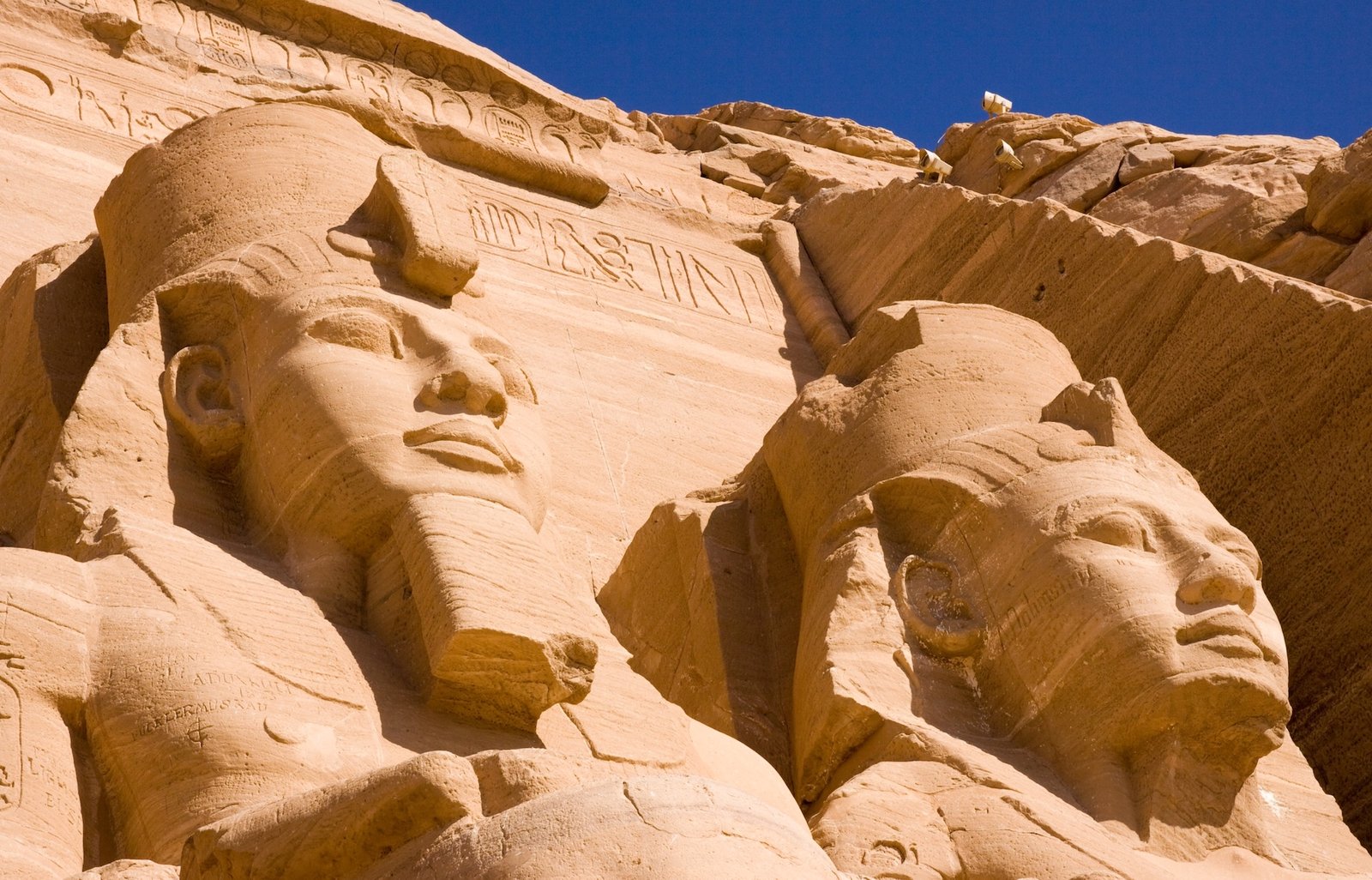
The journey with the modern passport of King Ramesses II
This strange incident started in 1975, when in the bright lights of the museum lab, experts were looking at the well-preserved body of King Ramesses II, which was originally found in 1881, and at that time, nothing much was known about it. Years after 1975, a nasty fungal infection was seen taking hold of the mummy. The conditions of the mummy start deteriorating and need quick medical attention.
During that time, the best and most qualified doctors and specialists were in Paris. Isn’t it ok that medical care is available for the fungal infection? Well, it’s not; the modern bureaucracy has created a peculiar incident in history.
That time, according to the French travel laws, it says that everyone entering the country, even if it’s the corpse of a long-deceased king, is required to have travel documents. Then, in 1976, the Egyptian government did something unbelievable.
They have issued Ramesses II with an original “passport” travel document, as said by the French government. While issuing the passport, at the occupation, he was declared a (king) long deceased.
Why is traveling to France important for Ramesses II, the king’s mummy?
The decision by the Egyptians was taken to save Ramesses II’s mummy from decaying. As it was not an ordinary mummy, it was a representation of the vital connection to history. He was one of the greatest kings and ruled during the golden period in the New Kingdom; it was also a source of Egyptian pride and rich history.
It is also a strategic move by the Egyptian government after learning valuable lessons about the disappearance and prolonged “borrowing” of Egyptian artifacts by other nations. The passport will ensure the stay in the country’s labs and also guarantee the return to Egypt. For the Egyptians and archaeological departments, it was a national treasure.
The arrival of the mummy in Paris is not a low-key welcome; he also received proper military honors and security, the same as a dignitary gets during their visits.
In Paris, after landing and passing the airport formalities, Mummy finally arrived at the expert’s lab, where they started the conserving process of the mummy. The experts also managed to halt the decay successfully. During their testaments, scientists have come up with fascinating insights about the mummy.
The reports say he is the tallest of his time, has reddish hair, and also suffered from some kind of tooth issues. Had pain-related issues like arthritis that affected the spine, and the condition caused him to bend in his old age.
Isn’t it all amazing and fascinating that scientists are able to gather such information from a 3,000-year-old mummy of a king from the ancient civilization? After his successful treatment, the “passport” gets stamped and is sent back to Egypt.
It is quite funny that a king who died has a passport nearly three millennia after his death. This story depicts how the bureaucracy shaped our world and gave us such bizarre incidents.
Conclusion
The efforts here by the Egyptian government have shown how precious the history is for the modern archaeological department. Every major excavated item is respected and considered a national treasure. Today, at the National Museum of Egyptian Civilization, Cairo, Egypt, tourists can see the Ramess II mummy located in the El-Fustat area of Old Cairo.
Book your Egypt tours with Cairo exploration and Nile cruises with us, and explore the rich history and culture of ancient Egypt in its most original form. Follow us to know about such interesting stories and major updates about Egyptian tourism.
Read our recently uploaded articles and know about updates in Egyptian tourism.