 Nile Cruisen Team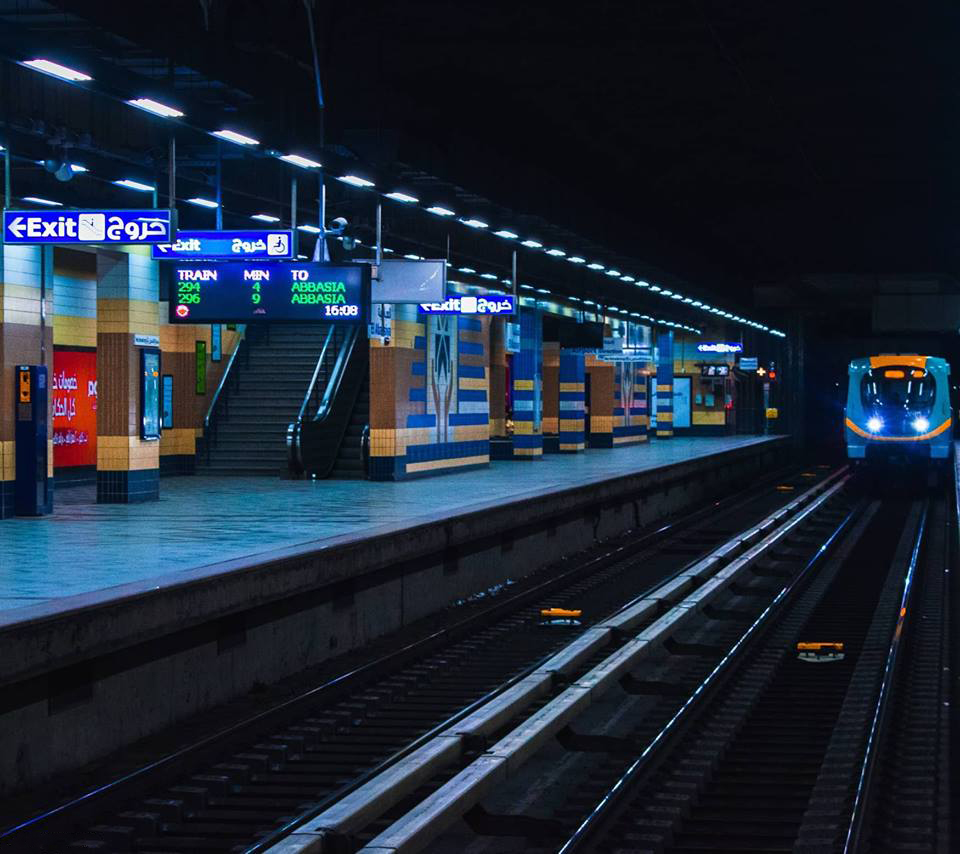
The Ministry of Transport on Monday has announced that excavation of the first tunnel is set to begin in mid-April. Egyptian transport organizations are assembling two tunnel boring machines, which potentially will be used for the second section of Phase I of Cairo Metro Line 4.
This step by the government is going to mark progress in Cairo’s one of the largest public transportation projects. The aim of the project is to ease the congestion, especially the link between Giza, central Cairo, and eastern districts, through planned and existing rail lines; it focuses on improving connections. Also, a second large machine is pre-scheduled to start drilling by mid-May on the same route from Fustat. The ministry also stated that now the tunneling work is marking its full start.
The construction of Phase I of Line 4 is generally carried out by local Egyptian contractors, which possibly extends to 19 kilometers. In this distance, around 17 stations are included; one of them is on the ground level, and 16 stations will be underground and connected to ground level through underpasses.
The route will start west of the Ring Road near 6th of October City and go through the Grand Egyptian Museum, Remaya Square, and Al-Haram Street before ending at Giza Station, where it will connect to Metro Line 2. It will also connect to Line 1 at King El-Saleh and end in Fustat. The construction is under process for phase I stations. In the first section, four large tunnel-boring machines are operating simultaneously. Among them, two are working in each direction.
One of the tunnel-boring machines has reached the Grand Egyptian Museum station, whereas the other machine is boring to reach the pyramid station. The other two tunnel-boring machines have arrived at Talbiya and Madkour Stations. Working for the Metro Line 4 in Phase I is progressing, and continuous efforts of the constructors are seen.
Additionally, while addressing the Phase I progress, the ministry has also passed the updates about the construction of Phase II. Its construction will extend to 26.9 km from Fustat to New Cairo and will feature around 21 stations, which will have six elevated stations and will have 15 underground stations.
This route is planned to connect with line 6 in the future at station Sayeda Aisha; it will connect to the East monorail at Aviation station, which is in Nasr City. It will continue to East Ring Road, which finally will connect with the Cairo-Suez Corridor.
In the announcement, the ministry has shared some insights about Phase III, which will be from Hadayek Al-Ashgar to Al-Hosary Square. It will be around 10.6 kms and will total 10 stations; it also extends to Phase IV, which is over 38.7 kms from New Cairo to the New Cairo Capital Airport. There it will connect to the light rail transit line.
The complex and technology-powered Cairo Metro Line 4 is one of the major public transportation projects that aims to reduce traffic jams, especially on the busy west-east route of the city linking 6th of October City, Giza, and central Cairo, with later phases also connecting to New Cairo and the new capital. This is also important as it will operate from the high-traffic areas that face congestion issues commonly.
Areas such as Al-Haram Street and the Grand Egyptian Museum are strategically important urban-tourist corridors that get highly congested and crowded during peak hours in the country. This metro line also will serve as a key interchange, which will connect metro lines 1 and 2, and also with the planned metro line 6, the East monorail, and the LRT (light rail transit) system.
The Egyptian transport ministry has accelerated the metro expansion in recent years. It is planned to shift the commuters away from informal transport and private cars, which automatically will reduce fuel consumption and also prevent the emissions and congestions at the major strategically important locations.
The capital of Egypt, the part Greater Cairo, houses around a population of 20 million people, which makes it one of the highest traffic areas in the country, especially for daily commuting. The travelling time and costs to travel in the high jams are pressuring economic productivity, so this metro line will solve issues of traffic and improve commuting conditions in the overall capital city.
Conclusion
Cairo is an important city in Egypt from both locals’ points of view and international travelers’, so improved traffic conditions will also elevate experiences for tourists around the globe. Get regular updates about Egypt with us; follow us for interesting travel-related news.
We are a cruising company as well, so if you need any assistance for Nile cruises, feel free to contact us.
Check out our other recently updated articles.