Archaeologists have discovered thousands-year-old rock art in South Sinai
An Egyptian archaeological mission from the Supreme Council of Antiquities in South Sinai revealed one of the most important archaeological sites of exceptional historical and artistic value, which was not known before, and is known as the Umm Arak Plateau.
Minister of Tourism and Antiquities Sherif Fathi described this discovery as a qualitative addition to the map of Egyptian antiquities, as it reflects the unique cultural and human richness that the land of Sinai abounds in, providing new evidence of the succession of civilizations in this important area of the land of Egypt over thousands of years.
The site of the Umm Arak Plateau is located in a sandy area about 5 kilometers north-east of the Serabit el-Khadim Temple and the copper and turquoise mining areas, in a distinguished strategic location overlooking a wide open space extending north to what is known as the Teyeh Plateau, which is likely to have been used throughout the ages as a lookout point and a gathering and resting place.
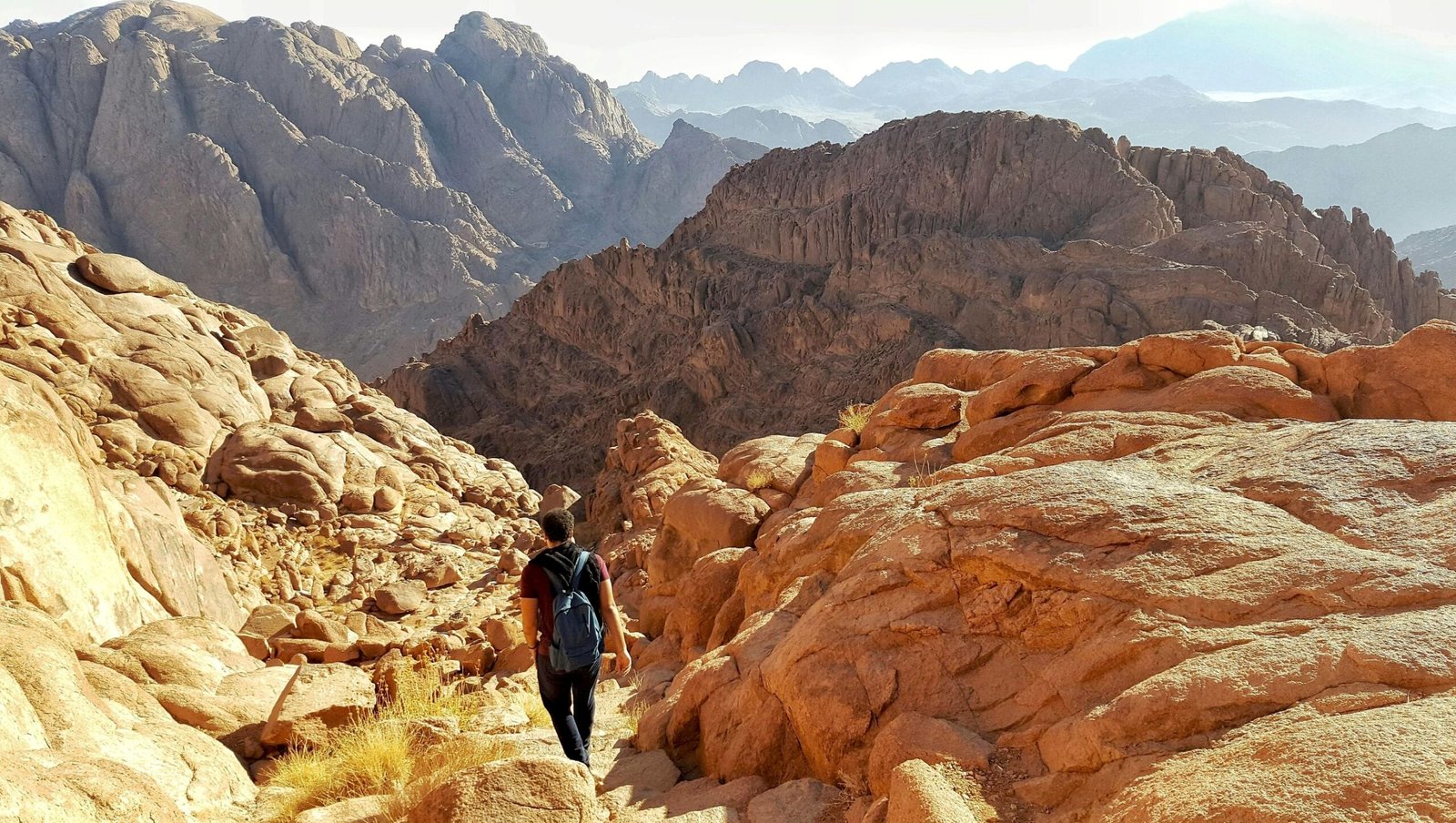
The Secretary-General of the Supreme Council of Antiquities, Hisham Al-Laithi, explained that the Kashf site is one of the most important rock art sites discovered recently, noting that the chronological and technical diversity of the rock inscriptions on the Umm Arrak Plateau makes it an open natural museum, documenting the development of human artistic and symbolic expression from prehistoric times to the Islamic periods, which gives the site exceptional scientific importance.
The ceiling of the rock shelter contains a large number of rock drawings executed in red ink, including scenes of animals and various symbols that are still under study, in addition to another group of drawings executed in gray, which were documented for the first time, as well as a number of inscriptions and scenes executed using multiple methods and techniques.
Head of the Egyptian Antiquities Sector, Mohamed Abdel Badie, pointed out that the site includes a natural rock shelter made of sandstone that extends on the eastern side of the plateau with a length of more than 100 metres, and its depth ranges between two and three metres, while the height of its ceiling ranges from about one and a half to half a metre.
The archaeological survey also resulted in the discovery of a number of tools, in addition to many pieces of pottery, some of which are likely to date back to the Middle Kingdom, while others date back to the Roman era, specifically the third century AD, which confirms the continued use of the site over thousands of years.
Head of the mission, Hisham Hussein, said that documentation work inside the rock shelter resulted in the discovery of large quantities of animal waste, which indicates its use in later eras as a shelter for humans and livestock to protect against rain, storms, and cold, in addition to the presence of stone divisions that formed independent living units, with the remains of fire layers in the middle, which confirms the recurrence of human activity at the site over successive periods of time.
According to the initial study, the rock inscriptions and drawings were divided into several chronological groups, with the oldest group being the one executed on the ceiling of the rock shelter using the red color, which initially dates back to the period between 10,000 and 5,500 years BC, and depicts scenes of different animals that reflect the nature of life in those early times.
It also includes inscriptions executed using the intaglio method showing a hunter using a bow to hunt ibex, accompanied by a number of hunting dogs, in a scene that reflects the patterns of living and economic activities of early human societies.
There are also other groups of inscriptions of scenes of camels and horses in various shapes, ridden by people carrying tools of war, some of which are accompanied by Nabataean inscriptions, which indicates later historical periods that witnessed diverse civilizational and cultural interactions in the region.
A group of writings executed in the Arabic language was also documented, representing an important witness to the continued use of the site during the early Islamic periods and those that followed.
Trusted Partners
Nile Cruisen: Chosen by Leading Brands as Egypt's Top Cruise Operator