Egypt isn’t just a country, it’s an intense sensory experience. It’s a stunning mix of great history, lovable chaos, extreme generosity in hospitality, and unexpected situations. For many, a journey to Egypt is the “dream of a lifetime,” but simple frustrations can cause this dream if you aren’t prepared for them.
The internet is full of perfect photos of the Pyramids and the calm Nile, but it rarely tells you the real “rules of the game” on the Egyptian street. Falling into common mistakes might cost you extra money, waste your time, or put you in awkward cultural situations.
In this detailed post, we have gathered the collective wisdom of experts and travelers to review the most common mistakes tourists make in Egypt and how to smartly avoid them to enjoy every moment in the “Land of the Quiver” (Egypt).
First mistake: Underestimating “Distances” and Weather Heat (Timing of the Visit).
The Mistake:
Many travelers look at Egypt map and think they can visit Pyramids in the morning, Luxor at noon, and Hurghada in the evening! Or they decide to visit Luxor and Aswan in July (the peak of summer) because the prices are cheaper.
The Reality:
Egypt is a massive country. The distance between Cairo and Luxor takes up to 10 hours by train or an hour by plane.
Summer in Upper Egypt (Luxor and Aswan) is literally fiery. Temperatures often exceed 45°C, making it impossible to enjoy the temples during the day.
The Solution and Advice:
Plan Geographically: Focus on your trip. If your time is short (for example, one week), choose only two regions (e.g., Cairo + Nile Cruise Luxor & Aswan Package, or Cairo + Hurghada in the Red Sea).
Respect the Sun: The best time to visit the south is winter (October – April). If you travel in the summer, schedule your visits very early in the morning (5 AM) or at sunset, and spend the afternoon at your hotel or a museum.
Second Mistake: Drinking tap water.
The Mistake:
A tourist might forget and fill their bottle from the hotel tap, or swallow water while brushing their teeth, assuming it is safe, just like in Europe or America.
The Reality:
Tap water in Egypt is treated with chlorine and is theoretically safe for locals whose bodies are accustomed to it. For foreign tourists, the difference in bacteria and minerals can cause severe intestinal distress known as “Pharaoh’s Revenge”.
The Solution and Advice:
– Rely entirely on bottled water for drinking.
– Ensure the bottle is “factory sealed” when buying (to avoid refilled bottles in untrustworthy places
– Use bottled water even for brushing your teeth if you have a very sensitive stomach.
Third Mistake: Ignoring “Baksheesh” (Tipping) Culture.
The Mistake:
Feeling annoyed or angry when someone asks for a “tip” in exchange for a simple service, don’t see it as a form of begging, or not carrying “faka” (small bills).
The ٍٍٍٍReality:
Baksheesh, in Egypt is not just a tip; it is an integral part of the culture and the service-based economic system. Base salaries for many service workers are very low, and they rely on tipping as a significant part of their income.
The Solution and Advice:
– Accept it: Treat tipping as a part of your travel budget, not as an annoying extra.
– Be Ready: Always keep your pocket full of small bills (10, 20, 50 Egyptian Pounds). You will need them for public restrooms, bellhops, and drivers.
– Pay with pleasure: A very small amount to you (like 1 dollar) might mean a lot to the worker and puts a genuine smile on their face.
Fourth Mistake: Accepting the first price (don’t negotiate)
The Mistake:
Entering a tourist bazaar or taking a taxi and immediately accepting the first price the seller asks for, or feeling shy about negotiating (Haggling).
The Solution and Advice:
– The golden rule: Start negotiating at half the offered price. If the seller says 200, you say 100, and you will eventually meet in the middle at 140 or 150.
– Make it a game: Negotiating in Egypt is done with a smile and humor, not with a fight. If you don’t like the price, walk away slowly; the seller will often call you back and give you a better offer.
– Exceptions: Don’t negotiate in restaurants with fixed menus, supermarkets, or shopping malls.
Fifth Mistake: Renting a Car to Drive Yourself.
The Mistake:
Tourist thinking: I will rent a car from the airport and rely on Google Maps to navigate Cairo freely.
The Reality:
Driving in Cairo is an “extreme sport” not recommended for the faint of heart! Traffic in Egypt has unwritten rules based on eye contact and the use of horns. A Western tourist will find themselves in a constant state of stress and will not enjoy the trip.
The Solution and Advice:
Use smart ride Apps: Apps like Uber and DriveIn are widely available. Their prices are very cheap compared to international standards, and they help you avoid negotiating with regular taxi drivers.
Hire a Private Driver: For long trips, hiring a private driver for a full day is a comfortable and safe option.
Sixth Mistake: Inappropriate Clothing (Ignoring the Cultural Code).
The Mistake:
Walking in the streets of Cairo or visiting mosques wearing very revealing clothes (very short shorts, tight or open tops), thinking the heat justifies it.
The Reality:
Egypt is a socially conservative country. While coastal cities (Sharm El-Sheikh, Hurghada) are very open and you can wear what you want there, Cairo, Luxor, and Aswan have a different character. Revealing clothes will attract uncomfortable stares and may prevent you from entering religious sites.
The Solution and Advice:
The “Knees and Shoulders” Rule: For both men and women, try to cover the shoulders and knees when walking in the streets and visiting tourist sites.
For Women: Carrying a lightweight scarf in your bag is always a smart idea to cover your head or shoulders when needed (like entering a mosque).
Fabrics: Wear loose-fitting clothes made of cotton and linen; they respect the culture and protect you from the heat better than short, skin-exposing clothes.
Seventh Mistake: Not Hiring a Tour Guide (Egyptologist)
The Mistake:
Relying only on Wikipedia or travel guidebooks when visiting temples and the Pyramids to save money.
The Reality:
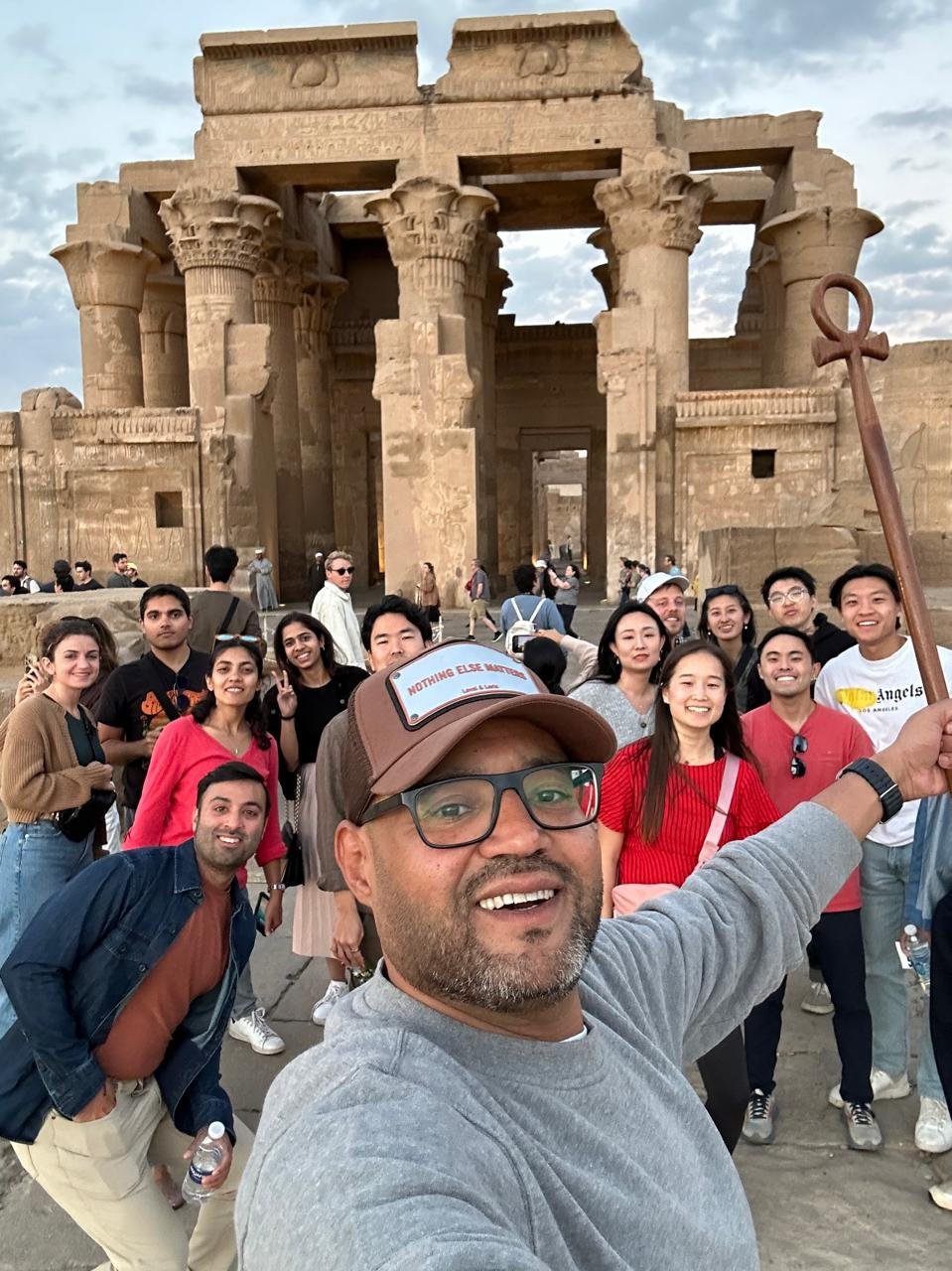
Egyptian monuments are silent and full of complex symbols. Without a guide, you will be walking and looking at “old stones,” without understanding the story, the secrets behind the details, the engineering, or the engineering and legendary details that make the stone speak.
The Solution and Advice:
– Invest in a licensed Egyptologist: Even if only for the main days (The Pyramids day, Luxor day tour). The information they provide will transform your journey from a just “vacation” to a “journey through time”.
– Make sure to agree with a guide in advance or through a reputable travel company in Egypt to avoid unlicensed guides standing in front of archaeological sites.
Eighth Mistake: Blind Trust in “Very Friendly Strangers” around Tourist Areas.
The Mistake:
Following a friendly person who approaches you at the Pyramids and says, “This way is closed, I’ll show you the other entrance,” or “Come visit my uncle’s shop, he works at the museum.”
The Reality:
This is one of the most famous tricks. These individuals sometimes lead you to perfume shops, papyrus galleries, or horse stables to sell services at inflated prices. Egyptians are friendly by nature, but in crowded tourist areas, caution is a duty.
The Solution and Advice.
– Be strict and polite. The phrase “La, Shukran” (No, thank you) is your strongest weapon. Say it firmly and keep walking without stopping.
– Do not believe anyone who tells you a site is “closed for prayer” or “closed for rest” unless they are an official security officer in uniform or at the official ticket window.
Conclusion: The Biggest Mistake is “Excessive Anxiety”.
Despite all these warnings, the biggest mistake is letting fear control you. Egypt is a very safe country for tourists, and incidents of violence are extremely rare. The chaos in the Egyptian street is “organized chaos” with its own special charm.
Our Final Advice:
Travel with an open heart, a wide smile, and a sense of flexibility. Accept that things may not move with the precision of a Swiss watch; this is part of the adventure. If you do, you will explore that Egypt is not just a tourist destination, but a place that steals your heart and makes you plan your return before you even leave.
Top-Rated 10 Days Egypt Itinerary Packages for an Unforgettable Trip
10-Day Egypt Itinerary: Cairo & Nile Cruise
Start from
$1209 / U$D
10-Day Egypt Itinerary: Cairo, Nile Cruise & Alexandria
Start from
$1219 / U$D
A 10-Day Egyptian Itinerary: Cairo, Nile Cruise & Siwa Oasis
Start from
$1299 / U$D
Trusted Partners
Nile Cruisen: Chosen by Leading Brands as Egypt's Top Cruise Operator