
How were the pyramids built so precisely?
Many travellers and Egyptologists, too, are amazed about how the pyramids of Giza, after 4,500 years, are standing tall and serving as a gateway to early civilization. Their size, precision, and technique, everything makes them unique and raises a number of questions about why they are still standing and how. Precise architecture and astronomical alignment are still at the center of debate in much archeological research. Let’s answer why the pyramids are so precise and durable even after ages.
In this blog, we are stating some points that make the Pyramid of Giza stand out as the last living world wonder and a major spot for tourists in the whole African continent. As a cruising company in Egypt, Nile Cruisen, we have also observed that every year, a number of tourists visit the pyramids of Giza while on their Egypt tours and also experience the Egypt river cruise on the Nile. Let’s know some facts and unknown things about the Great Pyramids and the Sphinx in Giza.
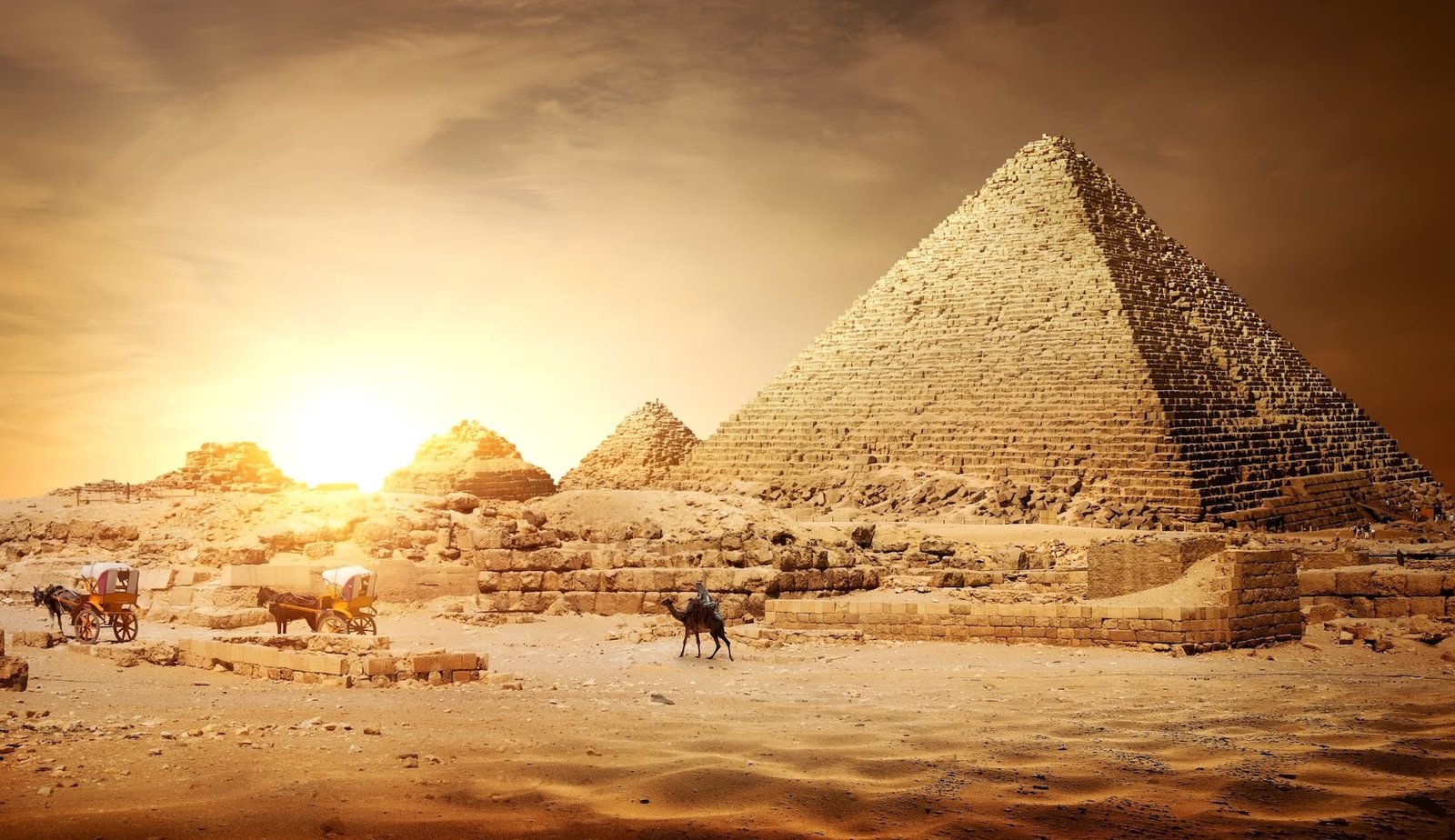
Reasons behind the precision of the pyramids
Their method of making the pyramids has a lot of secrets. Like how measurements are made, based on research, it is found that special wooden tools and proper marking are used to cut the stone.
To make them astronomically perfect, ancient Egyptian architects have used a star movement; like, by noticing from where it has risen and where it is setting, the center of it will be the north. So, stars become their compass and GPS that ensures the building is properly aligned with the astronomy.
How are the pyramids still standing?
The pyramids are still standing in a desert-covered area, which is still a mystery among many archeological studies. Many research papers say that water leveling is used to make the stand flat before construction.
- The ground was first leveled flat, and then the construction started. Also, the large base size can be a reason, as it helps in distributing the weight evenly.
- Gravity-friendly designs, with less on the top and most at the bottom, naturally moving weight downward, can be a reason for making pyramids stand today as well.
- The material, like granite and limestone coating, can be a reason, as these are durable and extremely suitable for dry climates. Easy availability in abundance made it possible for the architect to make the whole pyramid of these stones.
What makes the pyramids of Giza aligned so precisely?
- The pyramids do not have four sides; they have eight sides. Each side is a little concave, making it an amazing astronomical marvel. To create such a kind of building, the researchers say that the sun-shadow method is used. This means the construction takes place at different parts of the pyramids at different times.
- While making alignment was checked thoroughly by the architects at regular intervals and after every stage of the construction. The construction of pyramids is proof that the Egyptians are not just builders but also astronomers.
How did they lift the stones to build the pyramids?
- Each stone weighed around 2-15 tonnes, which is equal to the weights of the elephants. So the movement is a great debate, but archaeological researchers have proposed some theories by which these stones were moved:
- The water on the sand theory: some believers say that stones are dragged on the water and wet sand, as it reduces friction and makes it easier to get from one place to another.
- To move stones for building pyramids, they were likely moved using straight, zigzag, or spiral ramps made of mudbrick and limestone. Levers, simple machines, helped lift stones into place once they reached higher levels.
- The most important thing is the workforce: hundreds of workers moved each stone together, using rhythm and coordination to make this historical marvel hundreds of years ago. So, these pyramids are not magic; they are proof of dedication, human effort, and physics.
Who actually built the pyramids?
A contemporary myth is that pyramids were built by slaves. But in reality, skilled laborers, scholars, and astronomers with large coordinated workforces have created the pyramids.
It took around 20 to 30 years to build a pyramid during the early civilization.
Much archaeological evidence shows they were paid laborers, craftsmen, and engineers. All are well-fed and respected, as remains show they ate meat, bread, and vegetables and received medical care. The seasonal workforce includes many farmers who worked on pyramids during the Nile flooding, when farming paused. Highly organized teams of workers were divided into crews with names, showing pride and structure.
All these efforts, great coordination, and teamwork have made the pyramids a reality and proof of the Egyptians’ great and rich heritage.
How can we explore the pyramids of Giza?
From the capital of Cairo, their road transport is available for a 40-50 minute drive; by taking that, one can reach the Giza complex and can explore the Great Pyramids and Sphinx. Most travellers combine the pyramid exploration with the Nile cruise packages for a perfect adventurous and relaxing vacation.
Can tourists explore the inside of pyramids in 2026?
Yes, in recent years, proper walking paths have evolved inside the pyramid of Giza to let tourists explore inside the pyramids. If you are booking an itinerary from the best Nile cruise companies, then a proper guided tour is also included in the package for a much more enriching exploring option.
Conclusion
The pyramids of Giza are not mysterious because of missing proofs or misconceptions, but because human intelligence, teamwork, and determination achieved something extraordinary. The size, precision, and everything speak volumes of the architectural scholarship that the Egyptians had during the very early stages of their civilization.
Trusted Partners
Nile Cruisen: Chosen by Leading Brands as Egypt's Top Cruise Operator