 Nile Cruisen Team
There are many things to consider when traveling to Egypt. Whether you are looking to explore ancient temples, the pyramids of Giza, or cultural activities in Egypt, you must have a basic plan before your visit. If you are planning your trip to Egypt, you must be aware of Egyptian currency, which is the primary factor that every traveler should consider. In this blog post, we’ll shed light on the significance of learning about Egyptian currency before you visit.
Table of Content
-
What is the official currency of Egypt?
-
What is the Egyptian currency symbol?
-
Brief history of the Egyptian currency symbol
-
Basic exchange rate understanding
-
Should You Bring Cash or Cards in Egypt?
-
When Should You Carry Cash in Egypt?
-
Where Credit & Debit Cards Are Accepted in Egypt?
-
-
Where to Exchange Money in Egypt?
-
How Much Cash Should You Carry?
-
Common Money Mistakes Travelers Make
-
Money-Saving Tips for Visiting Egypt
-
Frequently Asked Questions
-
-
Conclusion
What is the official currency of Egypt?
Egyptian pound is commonly used in Egypt, abbreviated to EGP. It is primarily a paper currency, so you’ll be handling notes during your trip to Egypt. If you have any coins, they will be piastres.
Egyptian notes
- 25 piastres
- 50 piastres
- 1 pound
- 5 pounds
- 10 pounds
- 20 pounds
- 50 pounds
- 100 pounds
- 200 pounds
Egyptian coins
- 10 piastres
- 25 piastres
- 50 piastres
- 1 pound
What is the Egyptian currency symbol?
The Egyptian Pound is represented by E£ and often referred to locally as a ‘Genh’ in the local currency. Launched in the early 19th century during the era of Muhammad Ali Pasha, regarded by many as the father of modern Egypt, the Genh was to shape transactions that impacted Egypt both externally and internally. The pound currency had the introduction of a decimal system, with the currency divided into 100 ‘piastres’ with effect from 1834, and had several changes in design over the years, featuring aspects of Egyptian history and culture, including ancient Egyptian landmarks and important people.
Brief history of the Egyptian currency symbol
Egyptian pounds go back as far as 1834 and were named after the pound, as it was then a dominant world currency and currency of international finance at the time. Prior to 1834, Egypt did, however, issue the piastre, the Egyptian currency at that time, which was a derivative of the Turkish kurus, whilst we were under Ottoman rule.
Basic exchange rate understanding
The Egypt Exchange Rate is what one unit of currency is worth in terms of another currency. Egypt’s Exchange Rate is free-floating. Market Demand is the driver of fluctuation for this exchange rate.
Should You Bring Cash or Cards in Egypt?
You want to carry some cash and some cards. Most transactions in Egypt are made in cash, especially if you are venturing beyond the more central tourist areas. While major hotels and higher-end restaurants will readily accept credit cards, it is essential to carry cash for most transactions-markets (souks), tipping, daily transportation, and informal purchases at local shops and street food stands.
When Should You Carry Cash in Egypt?
Although the tourism infrastructure of Egypt has evolved, cash is still important to carry in Egypt if you are traveling from different countries. It’s often recommended to have some local currency in hand, which can make daily travel easier. There are various reasons to carry cash in Egypt, especially for:
- Local restaurants and small cafes
- Souvenir shops and local markets
- Public facilities
- Tipping
- Street food vendors
- Small transportation services
- Local shops located outside major tourist areas
However, many places in Egypt accept cards, but carrying cash helps avoid inconvenience.
Where Credit & Debit Cards Are Accepted in Egypt?
If you have credit and debit cards, you can use them in large establishments, such as:
-
Hotels and resorts
You can make payments with cards in hotels and resorts.
-
Restaurants
Restaurants in Egypt are primary places that many tourists visit to have their breakfast, lunch, or dinner. At these places, you can use debit or credit cards.
-
Major attractions
Major museums and attractions may also accept money from credit or debit cards. When visiting major attractions in Egypt, you should get a guided tour or a professional Egyptologist. You can get an experienced Egyptologist when you choose Nile Cruisen and book an all-inclusive Nile cruise.
-
Transportations
If you are going to take a ride-share, they may accept digital money. However, if you are traveling by taxi, you may need to pay in cash.
Where to Exchange Money in Egypt?
If you are looking to exchange foreign money in Egypt, then you need to exchange at official banks, like the National Bank of Egypt, or currency exchange offices regulated by the state for the best rates. You can also use ATMs to withdraw Egyptian Pounds directly.
How Much Cash Should You Carry?
Although it depends on individuals’ preferences for hotels, the type of cruise, food, shopping, and many other things, individuals must carry $200-$300 USD in cash for daily expenses, like street food, small souvenirs, tipping, and local taxis. Here’s the breakdown for a 7-day trip to Egypt with cash requirements:
- Tipping (baksheesh) may require you to carry around $50-$70 USD. You can use small EGP notes (10,20,50 EGP). Keep in mind that this is just an estimate of tipping.
- Souvenirs and bazaars: You may need $100-$200+ USD to keep on hand.
- Local transportation: You may need anywhere between $ 30 and $ 50 USD for local transportation. To travel through Uber or a taxi, only EGP is accepted.
- Street food: If you like street food, keep $40 – $80 USD on hand. It’s suggested to use the EGP currency.
Common Money Mistakes Travelers Make in Egypt
When traveling to Egypt, many travelers make mistakes that can be expensive. Here’s the breakdown of common money mistakes that many travelers make during their Egypt trip:
- Exchanging all money at the airport: As there are places where USD currency can be used, so avoid exchanging all money at the airport.
- Carrying too much cash: Instead of completely relying on cash, you should carry debit or credit cards, as there are many places where you can use digital money.
- Accepting poor exchange rates: You should compare and then exchange money because there are some agencies that might offer you poor exchange rates.
- Paying in foreign currency when EGP is accepted: Many travelers make mistakes when they pay their bill for anything in foreign currency rather than in EGP. Therefore, it’s always suggested to carry both USD and EGP in hand, so you can use both currencies where accepted.
Money-Saving Tips for Visiting Egypt
Here, we’ve listed a few money-saving tips if you are planning to visit Egypt:
- Use local currency: Make sure to use local currency when visiting Egypt to save money. Instead of using foreign currency, it would be better to use local cash.
- Compare exchange rates: When exchanging money, keep in mind to compare exchange rates and find a high rate, then proceed with the exchange.
- Keep emergency cash: Remember to keep emergency cash with you.
- Track your spending: Many travelers make the mistake of not tracking their spending when they are on a trip. It’s always suggested to keep track of your spending so you know how you have spent and how much balance you have in your purse or account.
Frequently Asked Questions
-
Can I use US Dollars or Euros in Egypt?
Many tourist areas accept Euros in Egypt (EUR), GBP in Egypt, and US dollars in Egypt. Foreign cash is accepted by:
- Large international hotels
- Tour operators
- High-end bazaars in tourist hotspots
- Some major resort bars and restaurants.
-
Are credit cards widely accepted in Egypt?
If you are thinking of only relying on credit or debit cards during your Egypt tour, you are mistaken here. Because credit cards are not accepted everywhere in Egypt. There are a few places where you can use credit cards, including large hotels, restaurants, and major chain stores. So, always keep in mind to get enough cash to make payments in Egypt easier.
-
Should I exchange money before arriving in Egypt?
The short answer is: Wait until you arrive in Egypt. This is because you may get better rates when exchanging money in Egypt.
-
How much should I budget per day in Egypt?
The minimum budget is as little as $20 a day, but with this amount, you won’t be able to enjoy a luxurious experience. If you want a luxurious experience, you need to exceed the limit of your budget, anywhere between $200 and $300 per day per person, including tipping, street food, and local taxis.
Conclusion
If you are packing your bags to visit Egypt, make sure you have a basic understanding of the Egyptian currency. The blog sheds light on the basics of the Egyptian currency, what mistakes you should avoid to save money when visiting Egypt, and what budget you need to set.
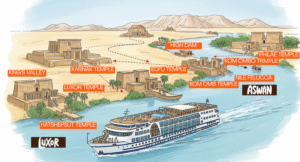
Moreover, if you are curious to sail between Luxor and Aswan along the Nile River, book a Nile Cruise in Egypt with Nile Cruisen.

This article was created by the team at Nile Cruisen, one of the best tour operators in Egypt for Nile cruises and tailor-made Egypt tours.
With years of experience sailing between Luxor and Aswan, our team knows the Nile better than anyone.
We share trusted travel advice, from the best time to visit and what to pack to simple tips for avoiding crowds.
Our goal is to help you enjoy the timeless beauty of Egypt with comfort, confidence, and an unforgettable travel experience.
- Nile Cruisen Team

- Nile Cruisen Team
- Nile Cruisen Team

- Nile Cruisen Team