 Nile Cruisen Team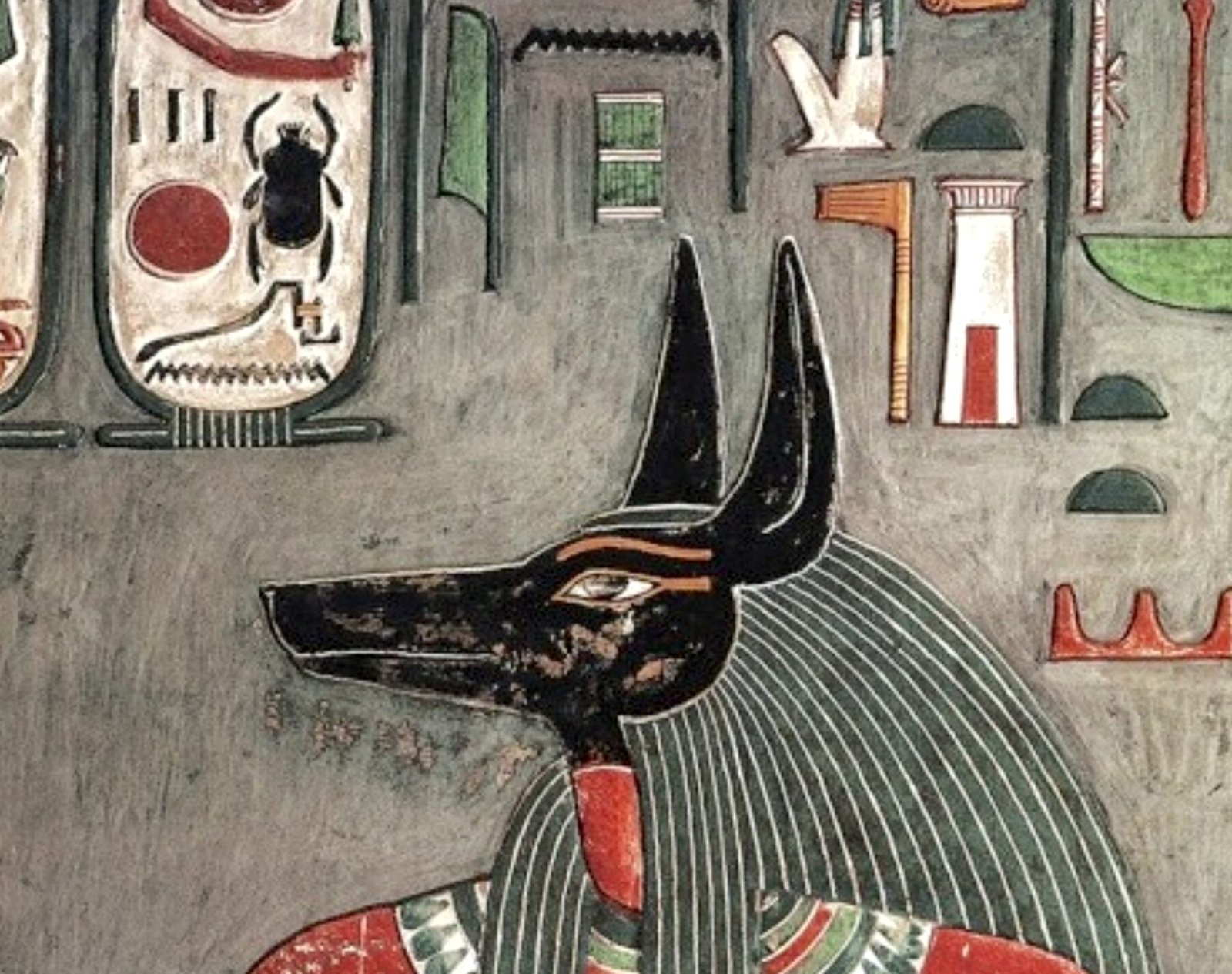
Table of Contents
-
Brief Summary
-
Who is the Egyptian god Anubis?
-
What does the Egyptian god Anubis look like?
-
Symbols of Anubis
-
Where are the carvings of the god Anubis?
-
Conclusion
Brief Summary
Anubis, the Egyptian god, is a prominent deity who is associated with death, mummification, and the soul’s journey in the afterlife. According to the ancient scriptures, the key role of God Anubis is the protector of the graves and body; in some contexts, he is also called the god of the afterlife. He has a significant role and is respected in Egyptian mythology and was worshipped from the Old Kingdom of ancient Egypt, as early as the 2nd and 3rd dynasties.
The carvings on the tombs and sarcophagi, and the walls of the chambers and burial places, depict the importance of Anubis in Egyptian mythology. In this piece of content, we discuss the God of Death, Anubis, his appearance, and his role. Everything below was discussed in detail. Also mentioning where tourists can see hieroglyphics or paintings of Anubis while exploring Egypt.
Who is the Egyptian god Anubis?
The name Anubis comes from the Greek translation of Inpu, Inpw, or Jnpw; these are names that are mentioned in the ancient Egyptian language. The meaning of the names is roughly associated with terms like “the royal child” or “the one who is on the mountain”; here, “mountain” in the meaning of the name depicts cemeteries located outside of the city.
The god Anubis was the child of the gods Osiris and Nephthys, which was believed during the Old and Middle Kingdoms of ancient Egypt. Later in the new kingdoms, beliefs shift, and Anubis is seen as a creation by the supreme god Ra. Overall, the god Anubis is highly respected and strictly worshipped with proper rituals; his major roles are explained here.
God of Mummification
In mythology, the sole role of Anubis is depicted as the embalmer, one who prepares the body of the deceased for the funerary rites. It is an act of preserving the human body by treating it with chemicals; in ancient times, it was considered an important act after death, before placing the deceased in the coffins. The whole process is called mummification. That is the reason Anubis, the Egyptian god, is closely related to the process of mummification, a major rite for the dead in ancient Egypt.
Guardian of the Dead
The depictions on the tombs and cemeteries show ancient beliefs about the god Anubis protecting the bodies of the deceased from decay and evil spirits. In ancient Egyptian mythology, he is worshipped to keep graves safe from robbery and damage.
Judge of the Dead
Anubis, the Egyptian god, also performs the ceremony of the “weighing of the heart.” In this ritual, the head of the dead was weighed against the feather of truth, the Ma’at, depicting honesty and justice. One is only allowed to enter the afterlife if their heart weighs less than or balances equal to the feathers. This ritual shows that Anubis was not just a guardian but also an important figure in moral judgment.
What does the Egyptian god Anubis look like?
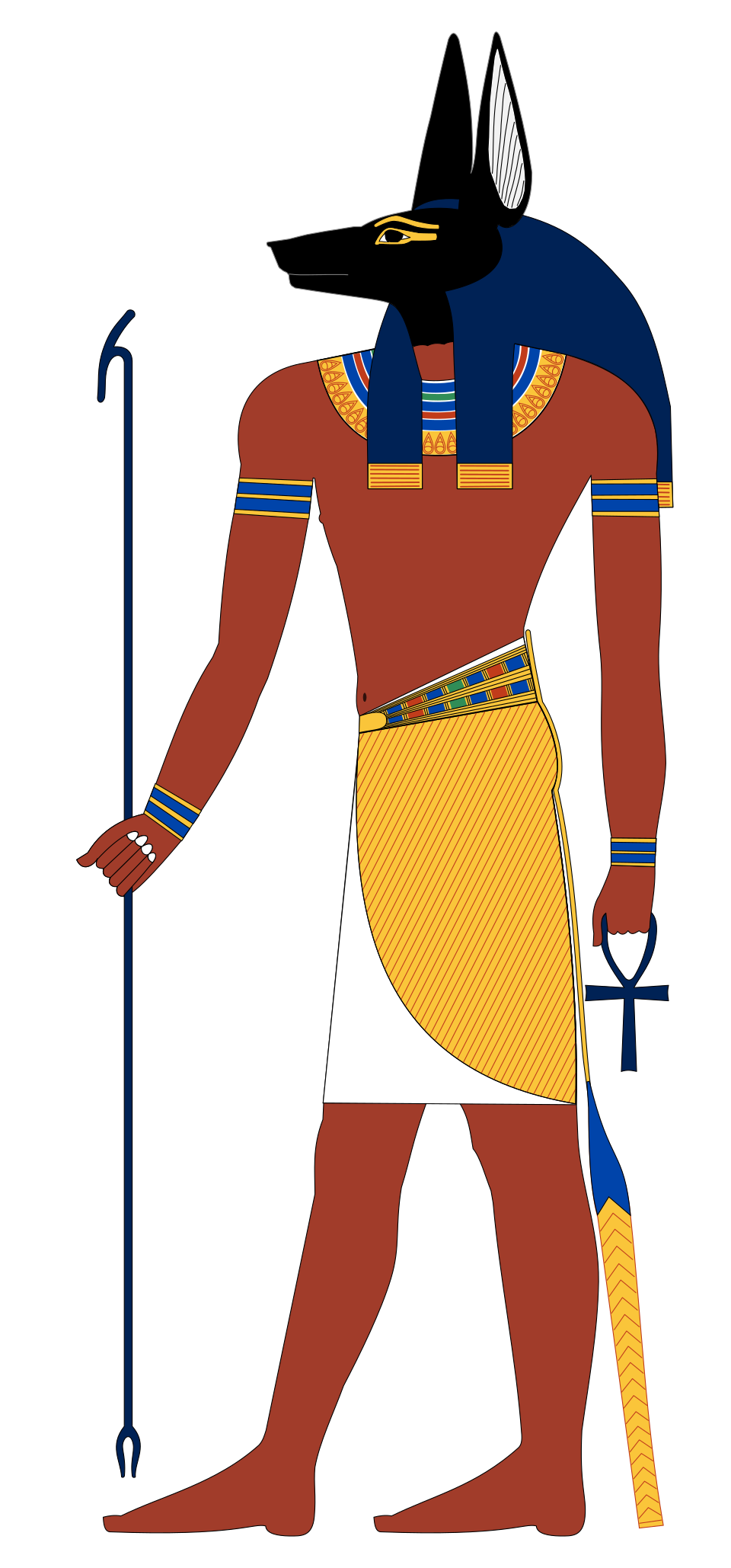
The god Anubis has an appearance usually depicted with the head of a jackal and the body of a human. Ancient Egyptians believed this because jackals are mostly seen near dry desert burial sites, often known as the jackal-headed god. The roaming of jackals around the tombs and near them is believed to be as if they were guarding the royal burial places.
The skin color of God Anubis appears black or fur-like; the black color symbolizes the Nile soil along the river that depicts the circle of life and death. It signifies that after death in human form, one’s new life journey begins in the afterlife. He was usually dressed in royal clothing and often dressed in ceremonial clothes. There are some symbols that depict Anubis, which are mentioned below.
Symbols of Anubis
The jackal in hieroglyphics represents the protection of cemeteries.
Scales of Judgment are used during the weighing of the heart ceremony, mostly seen on the tombs’ walls.
Mummification tools represent his role in burial rituals and embalming the body of the dead.
Where are the carvings of the god Anubis?
From early dynasties to the New Kingdom, God Anubis played a major role, so here we mention major locations where tourists, while on the Nile cruise from Luxor, can explore the hieroglyphs and paintings of the Egyptian deity Anubis.
- The Tomb of Seti I (KV17) is a well-preserved tomb and has wall reliefs of Anubis.
- The Tomb of Horemheb (KV57) also has paintings depicting the god Anubis taking the pharaoh to the afterlife.
- Also, the Tomb of Amenophis II (KV35) and the Tomb of Ramesses III (KV11) have paintings of gods alongside the god Osiris.
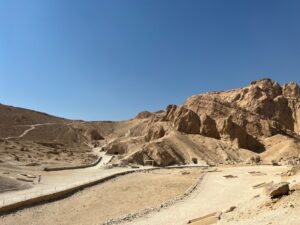
- The tourists can explore the Valley of the Kings while on the Nile cruise in Egypt, with their stop at Luxor’s west bank. These paintings are proof of beliefs for Anubis and its significance in the afterlife.
- In Cairo, at the Egyptian Museum in Tahrir Square, also exhibited is the Anubis shrine, a jackal-headed statue, which was found in Tutankhamun’s tomb. At the Grand Egyptian Museum, extensive collections of items related to God Anubis are placed so that tourists can see them.
Conclusion
Anubis is among the major deities in Egyptian mythology; he has a prominent role. The ancient Egyptians’ mythology has a bunch of gods that are responsible for smooth functioning. So, if you are curious about knowing more about the unique Egyptian mythology, then a trip to Egypt is waiting. Witness the archaeological mastery and hear the fascinating mythology stories from tour guides throughout your majestic Egypt tour.
Other Useful Links
Who was Ramesses the Great, and what is its role in Egypt?

This article was created by the team at Nile Cruisen, one of the best tour operators in Egypt for Nile cruises and tailor-made Egypt tours.
With years of experience sailing between Luxor and Aswan, our team knows the Nile better than anyone.
We share trusted travel advice, from the best time to visit and what to pack to simple tips for avoiding crowds.
Our goal is to help you enjoy the timeless beauty of Egypt with comfort, confidence, and an unforgettable travel experience.
- Nile Cruisen Team

- Nile Cruisen Team

- Nile Cruisen Team

- Nile Cruisen Team